Style & Context
Influences
Francis Bacon, Joel-Peter Witkin, Body Worlds exhibitions, pathology textbooks
Location
This Backwoodz Studioz release exemplifies the label's commitment to challenging visual aesthetics that match uncompromising sonic experimentation.
Visual Language
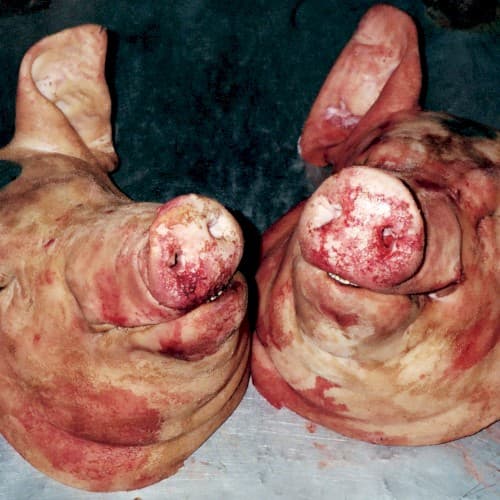
The unflinching medical gaze transforms human anatomy into confrontational abstract forms that resist aesthetic comfort.
Symbols
Paired organs
The dual forms mirror the collaborative nature of Billy Woods and Elucifah Starr while suggesting divided consciousness.
Medical specimen presentation
The clinical framing transforms human tissue into object, critiquing how capitalism commodifies Black bodies and labor.
Exposed veins and capillaries
The visible vascular networks represent underground connections and the hidden systems sustaining marginalized communities.
Where Sound Meets Image
The album dissects American empire, policing, and racial capitalism with surgical precision, making the exposed organ imagery perfectly aligned. Woods and Elucifah's dense, knotty verses resist easy interpretation just as the cover resists comfortable viewing. The raw flesh mirrors tracks that strip away rhetorical protection to examine power's effects on Black life. The paired forms represent their complementary voices exploring shared trauma and resistance.
This cover established new territory for hip-hop artwork's willingness to embrace medical horror aesthetics without exploitation. It influenced subsequent underground releases to trust audiences with genuinely challenging imagery that demands intellectual engagement. The design proves that abstract hip-hop's sonic adventurousness can extend to visual presentation, rejecting commercial palatability for conceptual coherence.