Style & Context
Influences
René Magritte, Richard Mosse, disaster photojournalism, protest art
Location
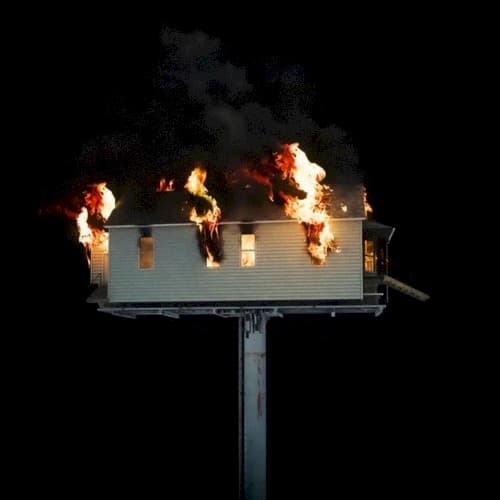
The modest Midwestern house architecture references Chicago's South Side working-class origins Kanye frequently revisits.
Visual Language
The surrealist composition borrows from Magritte's floating objects while the documentary-style clarity evokes crisis imagery.
Symbols
Burning house
Represents Kanye severing ties with his Chicago roots and the commercial music establishment simultaneously.
Billboard pole elevation
The home floats at advertising height, suggesting childhood memories are commodified and publicly consumed spectacles.
Illuminated windows
Light from within before flames consume suggests life and warmth exist even as everything burns.
Where Sound Meets Image
The unfinished, abrasive production throughout Donda 2 mirrors the cover's destructive imagery—both reject traditional completeness and accessibility. Tracks dealing with divorce, faith struggles, and industry betrayal find visual expression in this burning monument to the past. The suspended house's instability reflects the album's chaotic rollout and constantly evolving tracklist, never quite landing on solid ground. Just as flames consume structure, the cloud rap and drill beats dismantle conventional hip-hop architecture.
This cover reinforced the trend of major artists using stark, provocative imagery over traditional rap luxury aesthetics. Its refusal to feature Kanye's face or any text continued the Donda era's minimalist approach, influencing subsequent releases that prioritize conceptual weight over marketability. The burning house became shorthand for artistic self-destruction as creative statement, a visual language trap and emo rap artists adopted when exploring themes of internal collapse.