Style & Context
Influences
Photojournalism, protest art, confrontational portraiture, social realism
Location
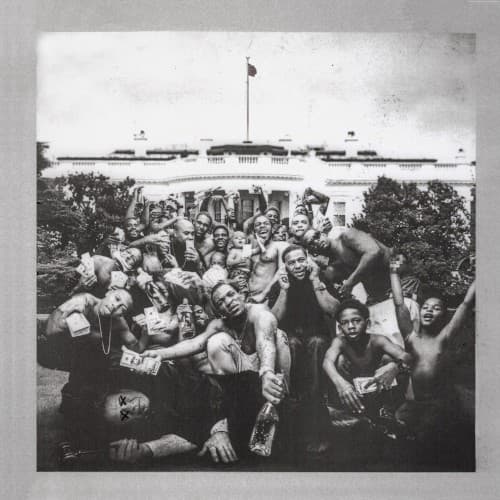
The White House lawn, a place of national authority, is dramatically re-contextualized into a space for Black collective power and celebration.
Visual Language
The raw, unpolished photographic style provides an urgent, documentary feel, granting the image an immediate sense of authenticity and historical weight.
Symbols
The White House
America's seat of power looms in the background, a symbol of systemic authority being defiantly confronted and reclaimed by the people.
Dead Judge
The figure of a judge, eyes X'd out, lies defeated at the group's feet, representing the overthrow of a corrupt justice system.
Stacks of Money
Money clutched by many figures symbolizes newfound economic power and the complex temptations accompanying success within a capitalist system.
Where Sound Meets Image
The visual perfectly encapsulates 'To Pimp a Butterfly's' exploration of systemic racism, self-love, and the pressures of fame within Black America. The celebration on the lawn mirrors tracks like 'Alright,' an anthem of hope and resilience, while the dead judge and money allude to the album's deeper critiques of institutional failure and the pitfalls of success, as heard in 'King Kunta' and 'Wesley's Theory.' This cover serves as a stark visual prologue to Kendrick’s complex narrative of personal and communal struggle for liberation.
This cover significantly pushed the boundaries of what a hip-hop album cover could be, elevating it from mere branding to a powerful political statement. Its unapologetic confrontation of power dynamics and raw depiction of Black joy and defiance set a new standard for socially conscious visual art in music. It remains a frequently referenced image in discussions about hip-hop's role in cultural commentary.