Style & Context
Influences
concert photography, punk zines, raw documentary aesthetics, street culture
Location
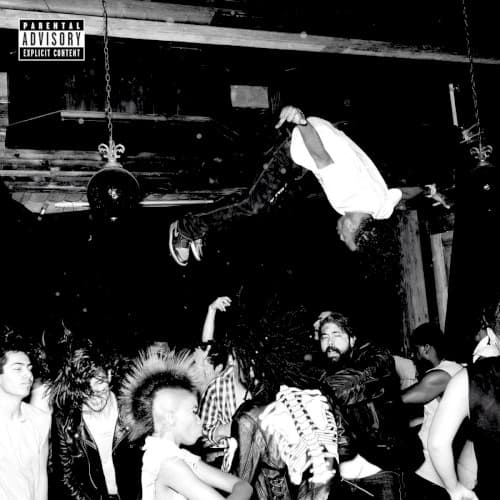
The dark, unassuming venue suggests a dive bar or warehouse party, places where authentic, underground hip-hop truly thrives.
Visual Language
The kinetic concert photography, influenced by raw punk aesthetics, perfectly captures the album's chaotic, unpolished energy and live experience.
Symbols
Playboi Carti's stage dive
This acrobatic leap represents unbridled rebellion, surrender to the music, and the artist's total command over his chaotic audience.
The mosh pit
The swirling crowd embodies the collective release of energy, communal catharsis, and the wild, uninhibited nature of a trap concert.
Low-fi photography style
The grainy texture and flash blur capture the authentic, unfiltered underground feel of a genuine hip-hop punk show.
Where Sound Meets Image
The sheer velocity of Playboi Carti’s stage dive directly mirrors the album’s relentless, high-octane trap beats and Carti's signature ad-libs, often referred to as 'baby voice.' Tracks like 'R.I.P.' and 'FlatBed Freestyle' pulsate with an urgent, mosh-pit ready energy that the cover's frenetic action perfectly visualizes. The chaotic crowd reflects the album's embrace of hedonism and uncontrolled enthusiasm, inviting listeners into a wild, unrestrained sonic experience. This visual encapsulates the feeling of 'dying lit' — living life to the fullest, even if it means losing control.
Die Lit set a visual precedent for the Soundcloud rap era, solidifying the raw, black-and-white concert photo as a legitimate hip-hop cover aesthetic. It inspired countless artists to embrace a grittier, less polished approach, proving that authentic energy could outperform high-budget production. The cover remains a benchmark for capturing untamed youth culture and the symbiotic relationship between artist and crowd, leaving a lasting mark on visual storytelling in hip-hop.