The Sound of Black Rage: Public Enemy's Revolutionary Vision
When Public Enemy emerged from Long Island in the mid-1980s, hip-hop had never heard anything like them. Led by Chuck D's authoritative baritone and Flavor Flav's chaotic energy, backed by the Bomb Squad's dense sonic architecture, they didn't just make records—they issued manifestos. Where other rap groups pursued party anthems or street narratives, Public Enemy weaponized sound itself, creating music that felt like urgent communiqués from the frontlines of America's racial divide.
Formed in 1985 by Carlton "Chuck D" Ridenhour and William "Flavor Flav" Drayton alongside Terminator X and Professor Griff, the group transformed hip-hop from entertainment into confrontation. Their approach borrowed from Black Power rhetoric, Malcolm X's uncompromising analysis, and the sonic experimentation of production team The Bomb Squad, who built tracks from hundreds of samples layered into chaotic, information-dense soundscapes. Songs didn't groove—they assaulted, challenged, demanded response.
Public Enemy's significance extends beyond any single album or era. They proved hip-hop could carry complex political analysis without sacrificing musical innovation. They demonstrated that rap groups could build careers on confrontation rather than crossover appeal. Most importantly, they created a template for consciousness in hip-hop that remains influential decades later, even as the culture moved in radically different commercial directions.
Sonic Warfare: The Bomb Squad's Revolutionary Production Aesthetic
The Bomb Squad—Hank Shocklee, Keith Shocklee, Eric "Vietnam" Sadler, and Chuck D himself—approached production like architects of controlled chaos. Their tracks employed dozens, sometimes hundreds of samples: James Brown screams, sirens, jazz fragments, soul breaks, all colliding at high velocity. The result wasn't smooth or welcoming. It was deliberately abrasive, reflecting the urgency and anger of the group's political message. Where other producers sought clean breaks and melodic hooks, the Bomb Squad created dense walls of sound where rhythm and noise occupied the same contested space.
Chuck D's delivery provided the anchor point in this sonic storm. His voice—deep, commanding, precise—cut through the production with sermonic authority. He rapped like he was addressing a rally, not a club. Every syllable carried weight, every line constructed for maximum rhetorical impact. The contrast with Flavor Flav's manic interjections and ad-libs created necessary tension, preventing the music from becoming too serious or monolithic. Flavor Flav functioned as court jester and relief valve, his clock necklace and wild energy balancing Chuck's gravitas.
Terminator X's scratching added another layer of aggression, treating the turntables as percussion instruments rather than melodic tools. Cuts came hard and sharp, punctuating rather than ornamenting. The overall effect was music that felt militarized, organized for battle. Public Enemy tracks didn't provide escape—they demanded engagement, forcing listeners to confront uncomfortable truths about American society while simultaneously moving to some of the most innovative production hip-hop had yet produced.
From Long Island to Global Resistance: Public Enemy's Cultural Assault
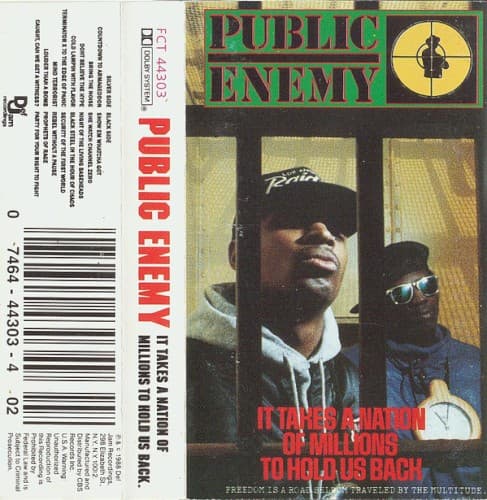
Public Enemy's 1987 debut "Yo! Bum Rush the Show" announced their presence with aggressive force, but 1988's "It Takes a Nation of Millions to Hold Us Back" detonated like nothing hip-hop had experienced. The album married political fury with production genius, tracks like "Bring the Noise" and "Rebel Without a Pause" creating new standards for density and intensity. "Don't Believe the Hype" addressed media misrepresentation while "Black Steel in the Hour of Chaos" told a prison break narrative over haunting Isaac Hayes samples. The album achieved something unprecedented: ten-out-of-ten critical consensus, commercial success, and genuine cultural controversy simultaneously.
"Fear of a Black Planet" followed in 1990, expanding the sonic palette while maintaining confrontational politics. "Fight the Power," commissioned for Spike Lee's "Do the Right Thing," became perhaps their most recognized anthem, a direct challenge to cultural hierarchies that remains protest music shorthand. The album addressed interracial relationships, media control, and structural racism with sophistication that matched its sonic ambition. Public Enemy had become not just a rap group but a cultural phenomenon, their concerts feeling like political rallies, their interviews generating headlines.
The early nineties brought both creative heights and internal challenges. "Apocalypse 91... The Enemy Strikes Black" maintained their uncompromising stance, but Professor Griff's controversial statements and subsequent departure created fractures. As hip-hop entered its commercial golden age, Public Enemy's militant approach felt increasingly out of step with the mainstream. They continued releasing albums throughout the decade—"Muse Sick-n-Hour Mess Age," "He Got Game"—but the cultural moment had shifted. Gangsta rap dominated commercial attention, and conscious hip-hop found itself marginalized.
Rather than chase trends, Public Enemy doubled down on independence. They embraced the internet early, releasing material online before most major artists considered digital distribution viable. Albums came regularly—sometimes too regularly for sustained quality—but they maintained creative control and political integrity. "Rebirth of a Nation" (2006) saw them collaborating with Paris, returning to explicitly political themes. Later projects like "How You Sell Soul to a Soulless People Who Sold Their Soul?" maintained their confrontational stance even as the hip-hop landscape transformed around them.
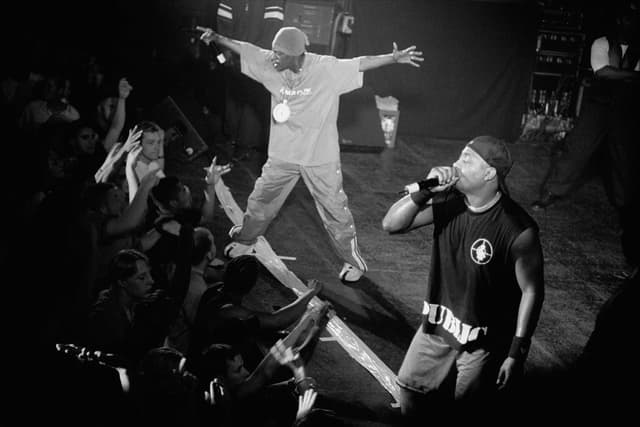
Their live shows remained powerful experiences, Chuck D's voice aging into even deeper authority, Flavor Flav's energy undiminished. They performed not as nostalgia act but as ongoing resistance, treating classic material as still-relevant commentary. The group's longevity comes not from reinvention but from consistency of purpose—they've been saying similar things for nearly forty years because, from their perspective, the fundamental issues remain unresolved.
The Prophetic Legacy: Public Enemy's Enduring Impact on Hip-Hop Consciousness
Public Enemy's influence operates on multiple levels. Musically, the Bomb Squad's production aesthetic anticipated everything from Industrial hip-hop to the sample-heavy maximalism of producers like RZA and the dense layering of contemporary experimental rap. Their willingness to prioritize intensity over accessibility gave permission for artists to reject commercial compromise. You hear their impact in everyone from Run the Jewels to Kendrick Lamar's more confrontational moments, in any rapper who treats music as vehicle for social analysis rather than mere entertainment.
Politically, they established consciousness as viable hip-hop lane, proving that explicit Black nationalism and commercial success weren't mutually exclusive. Groups like Dead Prez, Immortal Technique, and entire movements within underground hip-hop follow paths Public Enemy cleared. Even mainstream artists reference their legacy when addressing social issues—the fact that political rap exists as recognized category owes much to Public Enemy's uncompromising example. They demonstrated that hip-hop could function as Black CNN, delivering news and analysis the mainstream media ignored or distorted.
Their cultural impact extends beyond music. The visual iconography—the crosshairs logo, the militaristic imagery, Flavor Flav's clock—became part of hip-hop's visual language. Their confrontational stance toward media and authority provided template for how rap artists could position themselves against establishment power. The idea that hip-hop artists could be intellectuals, could speak to college audiences and political rallies as comfortably as clubs, stems partly from Public Enemy's example. They proved that intelligence and street credibility weren't contradictory, that reading books and making hard rap were compatible pursuits.