The Sonic Revolution That Redefined Hip-Hop's Possibilities
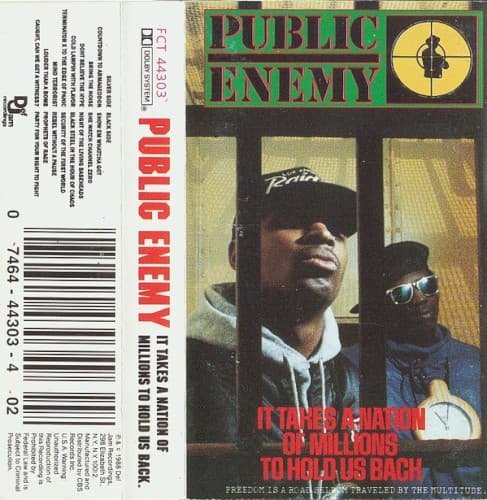
In 1988, Public Enemy and the Bomb Squad delivered a production thesis that fundamentally altered what hip-hop could sound like. It Takes a Nation of Millions to Hold Us Back didn't just raise the bar for political rap — it demolished conventional notions of how dense, chaotic, and intellectually challenging rap music could be while remaining viscerally exciting. Where contemporary hip-hop leaned toward cleaner, more radio-friendly production, the Bomb Squad constructed a wall of sound so thick with samples, sirens, and noise that it felt like listening inside a revolution. The album opens with "Countdown to Armageddon," a 56-second overture of scratching, vocal fragments, and mounting tension that serves as fair warning: this project operates by different rules. Chuck D's baritone commands attention like a megaphone at a protest, while Flavor Flav's manic energy provides necessary release valves in an album built for confrontation. The production team — Hank Shocklee, Eric "Vietnam" Sadler, and Keith Shocklee — layered samples with the precision of architects and the chaos of guerrilla fighters, creating beats that sound like they're actively resisting containment. This isn't background music; it's foreground, middle-ground, and overhead assault all at once, cementing its place in Public Enemy's discography as their defining statement.
Controlled Chaos: The Bomb Squad's Production Masterclass
The genius of this album's production lies in organized disorder. The Bomb Squad developed a technique they called "production-as-collage," stacking dozens of samples into single tracks until the sonic density approached overload without crossing into incomprehensibility. "Bring the Noise" exemplifies this approach perfectly — beneath Chuck D's delivery, you'll find James Brown screams, horn stabs, guitar screeches, and percussion hits all fighting for space in the mix, yet somehow forming a cohesive battering ram of sound. The beat doesn't breathe; it attacks. Traditional hip-hop production wisdom suggested space and clarity, but the Bomb Squad understood that sometimes the message requires claustrophobia and urgency. The mixing philosophy here is radical: nothing sits comfortably in the background. Vocals push forward in the mix, but so do the samples, so do the scratches from Terminator X, so do the sirens and noise elements. This creates a listening experience where your ear constantly searches for anchor points, mimicking the sensory overload of the political and social chaos the lyrics address. "Rebel Without a Pause" rides a relentless saxophone loop that sounds like an alarm you can't silence, paired with a drum pattern that refuses to settle into comfortable pocket. It's funk stripped of joy and weaponized for consciousness-raising. The album's tempo choices favor urgency over groove. Most tracks sit in aggressive BPM ranges that deny the listener any opportunity to relax into the music. "Don't Believe the Hype" maintains a driving pace that mirrors paranoia, while "Black Steel in the Hour of Chaos" slows down to a methodical mid-tempo that feels like calculated rebellion rather than chaos. That track, built around a Isaac Hayes sample, demonstrates the Bomb Squad's range — when they strip back the layers, the space feels intentional and heavy rather than empty. The scratching throughout serves as punctuation, emphasis, and additional instrumentation. Terminator X doesn't just scratch between verses; his cuts slice through bars, interrupt thoughts, and create rhythmic counterpoints that add percussive complexity. "Terminator X to the Edge of Panic" showcases this philosophy as a feature rather than background element, treating turntablism as lead instrument. The sequencing creates a sonic arc that maintains intensity while varying the attack angle. Interludes like "Show 'em Whatcha Got" provide brief respite before the assault continues, while the placement of "Cold Lampin' With Flavor" early in the tracklist offers a momentary shift in tone before diving back into the density. The album never truly relaxes, but it modulates its aggression strategically. What makes this production truly revolutionary is how it matched form to content. The cluttered, sample-heavy approach wasn't aesthetic choice alone — it sonically represented the information overload, media saturation, and systemic complexity that the lyrics critiqued. Every layer of noise reflected another layer of societal dysfunction. The Bomb Squad made beats that sounded like the problems they were rapping about.
The Tracks That Built Hip-Hop's Most Uncompromising Statement
"Black Steel in the Hour of Chaos" stands as perhaps the album's most complete artistic statement, where Chuck D narrates a prison break over a menacing Isaac Hayes loop that the Bomb Squad stretched and darkened into something cinematic. The production breathes differently here — fewer layers, more space, allowing the narrative to unfold with novelistic detail. The beat sounds like inevitability, each element locked into a groove that suggests planning and precision rather than chaos. "Bring the Noise" represents the opposite extreme: maximum density, maximum aggression, production as assault weapon. The track became a template for how abrasive hip-hop could be while remaining undeniably compelling. Every element fights for dominance, yet the chaos feels controlled, purposeful. When Chuck D demands the beat, the Bomb Squad gives him a beat that demands back. "Rebel Without a Pause" achieves the rare feat of building an entire track around a single looped element — that screaming sax sample — without it ever becoming monotonous. The Bomb Squad layered percussion, vocal samples, and scratches around the loop until it became less a sample and more a sustained note of resistance. The minimal chord progression allows the rhythm and Chuck D's delivery to carry the entire weight, and they do so effortlessly. "Night of the Living Baseheads" tackles the crack epidemic over a frenetic production that sonically represents addiction's chaos, while "She Watch Channel Zero?!" critiques media consumption with television sample fragments bleeding into aggressive drums. Both tracks demonstrate how the Bomb Squad could address different subjects while maintaining sonic coherence across the project.
The Album That Proved Hip-Hop Could Be Art Without Compromise
It Takes a Nation of Millions to Hold Us Back doesn't have weaknesses in the traditional sense — every choice, no matter how abrasive or unconventional, serves the album's confrontational mission. If forced to identify critique, one might note that the density can be exhausting across 16 tracks, but that exhaustion is the point. This isn't music for passive consumption. The Bomb Squad's production remains unmatched in ambition and execution decades later. They proved that hip-hop production could be as intellectually rigorous and sonically adventurous as any genre while losing none of its visceral impact. The techniques pioneered here — extreme layering, noise as instrument, sampling as commentary — influenced everyone from the Dust Brothers to El-P to Kanye West's maximalist periods. This album sits firmly in the conversation for greatest hip-hop album ever recorded, not despite its difficulty but because of it. Public Enemy and the Bomb Squad understood that revolutionary content required revolutionary form, and they delivered both without apology or compromise. The production alone justifies the album's canonical status, but paired with Chuck D's militant delivery and Flavor Flav's strategic chaos, it becomes something closer to essential cultural artifact than mere album. Thirty-plus years later, it still sounds like the future that most hip-hop hasn't caught up to yet.
Track Listing
Countdown to Armageddon
▲This opening salvo sets the tonal and sonic parameters for everything that follows. Terminator X's scratching creates a montage of tension over 56 seconds, pulling vocal fragments and noise into a brief overture that warns listeners they're entering hostile territory. The production feels like tuning a radio through frequencies of chaos, establishing the album's aesthetic of information overload and controlled disorder. It's less a song than a mission statement in audio form, and it's perfectly executed as such.
Bring the Noise
▲Maximum density production that became the blueprint for aggressive hip-hop. The Bomb Squad layers James Brown screams, horn stabs, guitar scratches, and percussion until the mix feels like it might collapse under its own weight, yet everything holds together through sheer force of will. Chuck D's delivery matches the production's intensity, while the beat itself becomes an argument for hip-hop as legitimate art form. The sonic assault here influenced decades of producers seeking to capture similar controlled chaos.
Don't Believe the Hype
▲Built around a relentless drum pattern and paranoid energy, this track weaponizes media critique through production that mirrors information saturation. The scratching punctuates Chuck D's bars like editorial comments, while the samples create a claustrophobic soundscape of voices and noise. The mixing pushes everything forward simultaneously, denying the ear any rest, which perfectly complements the lyrical theme of media manipulation and misinformation. It's anxious, aggressive, and unapologetically confrontational.
Cold Lampin' With Flavor
▲Flavor Flav takes the spotlight over a comparatively lighter groove that provides necessary tonal variation early in the album. The production still carries the Bomb Squad's layered approach, but the energy shifts toward playful rather than militant. The beat bounces where most of the album attacks, and Flav's persona provides comic relief without undercutting the project's seriousness. It's strategically placed to give listeners a moment to breathe before the intensity ramps back up.
Terminator X to the Edge of Panic
▲An instrumental showcase that treats turntablism as lead instrument rather than background element. Terminator X's scratching drives the entire composition, slicing through samples and creating rhythmic patterns that most producers would relegate to drums. The Bomb Squad surrounds his cuts with just enough production framework to create structure, but this is fundamentally about demonstrating that DJing can carry a track alone. It's a thesis on scratching as art form.
Mind Terrorist
●A brief interlude that maintains the album's aggressive momentum through vocal samples and noise elements arranged into something closer to audio collage than traditional beat. It serves as sonic punctuation between longer tracks, keeping the energy high while providing rhythmic variation. The production feels like fragments of radio transmissions and protest chants assembled into organized chaos, reinforcing the album's themes of information warfare and psychological resistance.
Louder Than a Bomb
▲The production here builds tension through layered sirens, alarm sounds, and samples that create genuine sonic anxiety. The Bomb Squad constructs a soundscape that feels like emergency broadcast over hostile drums, while Chuck D delivers warnings with apocalyptic gravity. The mixing is deliberately abrasive, with elements fighting for space in ways that mirror the lyrical content about explosive knowledge and dangerous truth. It's intentionally uncomfortable and all the more effective for it.
Caught, Can We Get a Witness?
▲This track directly addresses sampling's legal complexities through production that ironically demonstrates the Bomb Squad's mastery of the technique being litigated. The beat layers reference points and interpolations in ways that feel like artistic statement about ownership and creation. The drums hit hard beneath the sample collage, creating a groove that remains danceable despite the density. It's both defense of sampling as legitimate art and demonstration of why it matters.
Show 'em Whatcha Got
●A brief showcase moment that lets individual elements breathe slightly more than the album typically allows. The production still carries the Bomb Squad's signature layering, but the arrangement provides space for call-and-response dynamics and momentary clarity. It functions as palate cleanser in the album's sequence, offering rhythmic variation before diving back into maximum density. The track proves the production team could pull back when strategic, even if they rarely chose to.
She Watch Channel Zero?!
▲Television sample fragments bleed into aggressive drums as the Bomb Squad sonically represents media consumption's mind-numbing effects. The production feels deliberately scattered and chaotic, with channel-surfing sound bites creating disorienting layers beneath Chuck D's critique of passive entertainment. The beat maintains driving urgency while the samples provide satirical commentary, demonstrating how the Bomb Squad could use production itself as editorial voice. It's among the album's most conceptually complete moments.
Night of the Living Baseheads
▲The crack epidemic gets sonically represented through frenetic, anxious production that mirrors addiction's chaos and desperation. The Bomb Squad layers frantic samples and drums that never settle into comfortable groove, creating perpetual tension that reinforces the lyrical subject matter. The mixing intentionally overwhelms, with elements competing for attention in ways that feel like sensory overload. It's difficult listening by design, refusing to make devastation sound pleasant or digestible.
Black Steel in the Hour of Chaos
▲Perhaps the album's production masterpiece, built around a slowed, darkened Isaac Hayes sample that the Bomb Squad transformed into menacing cinema. The arrangement strips back the typical density, allowing space for Chuck D's prison break narrative to unfold with novelistic detail. Every element feels deliberate and weighted — the drums land with finality, the sample creates ominous atmosphere, and the minimal approach lets the story breathe. It demonstrates the Bomb Squad's range and restraint, proving they could devastate through space as effectively as through chaos.
Security of the First World
●A brief interlude that maintains intensity through vocal samples and noise arranged into rhythmic patterns. The production feels like overhearing fragments of political discourse and protest chants assembled into sonic collage. It serves structural purpose in the album's flow, providing transition between longer statements while reinforcing thematic threads. The Bomb Squad treats even brief interludes as opportunities for production experimentation rather than throwaway moments.
Rebel Without a Pause
▲Built entirely around a screaming saxophone loop that the Bomb Squad transformed from sample into sustained alarm. The production achieves the rare feat of maintaining interest across a track dominated by single looped element, layering percussion, scratches, and vocal samples until the loop becomes less sample and more foundational tone. The minimal chord progression allows rhythm and Chuck D's delivery to carry full weight, and the result is one of hip-hop's most influential production templates. It's aggressive, uncompromising, and completely effective.
Prophets of Rage
▲The production builds mounting tension through layered samples and drums that feel like gathering storm. The Bomb Squad creates soundscape of impending confrontation, with elements stacking into dense wall of noise that never quite tips into chaos. Chuck D's delivery rides the intensity perfectly, while Terminator X's scratching provides percussive punctuation. It's late-album positioning serves the sequence well, maintaining urgency when lesser albums would coast toward conclusion.
Party for Your Right to Fight
▲The album closes with production that weaponizes funk elements into final statement of resistance. The Bomb Squad layers horn stabs, drums, and samples into a beat that grooves despite its density, proving revolutionary music doesn't require abandoning rhythm. The mixing maintains the album's signature forward-push approach, with everything competing for prominence until the chaos itself becomes the groove. It's a powerful conclusion that refuses to relent even in final moments, leaving listeners energized rather than exhausted.