Style & Context
Influences
Afrofuturism, archival art, glitch aesthetics, Sankofa philosophy
Location
This aesthetic reflects underground New York's intellectual rap scene where theory meets street knowledge daily.
Visual Language
The technique merges documentary photography with digital corruption to interrogate historical truth and memory.
Symbols
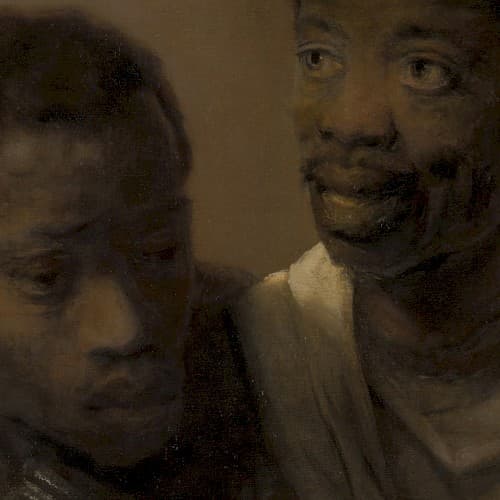
Doubled/overlapping portraits
The layered faces represent fragmented identity and the multiplicity of Black experience across diaspora.
Archival photograph aesthetic
The antique quality connects contemporary struggle to ancestral memory and historical continuity of displacement.
Image deterioration/grain
Visual degradation mirrors how official histories erase and obscure Black lives and contributions.
Where Sound Meets Image
The visual distortion mirrors woods' layered production and oblique storytelling throughout Aethiopes. Just as the doubled portraits create disorienting overlap, tracks like 'Soft Landing' and 'Chernobyl' stack historical references atop personal narrative until past and present collapse. The archival quality reflects album themes of diaspora, colonialism, and how official histories fail to capture lived experience. The deteriorated image quality parallels woods' aesthetic of intentional lo-fi roughness and refusal to polish or simplify complex truths.
This cover helped establish archival manipulation as a visual language for contemporary conscious rap. The aesthetic influenced underground hip-hop's turn toward historical imagery as commentary rather than nostalgia. It demonstrated that experimental rap could use visual distortion to convey conceptual density without relying on surrealism or sci-fi tropes, opening space for covers that treat photography as archaeological evidence.