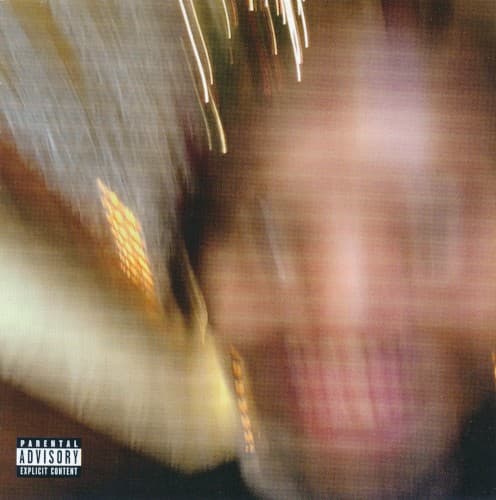
billy woods Aethiopes — The Diaspora as Haunted House
You cannot map this album. Every attempt to pin down its geography dissolves into contradictions — Brooklyn basements, Dutch harbors, Parisian suburbs, African ports that exist only in memory. billy woods has spent a career refusing to explain himself, and Aethiopes might be his most deliberately disorienting work yet. The title references ancient Ethiopia, but the album sprawls across centuries and continents like trauma transmitted through bloodlines.
This is diaspora rap as fever dream, where historical atrocity and corner-store mundanity occupy the same psychic space. No other rapper treats colonialism and everyday survival as interchangeable horrors. The production here matches that dislocation perfectly. Sample sources range from Ethiopian jazz to industrial noise to what sounds like field recordings from abandoned factories.
Nothing settles. Drums stutter and drop out mid-verse. Melodies appear once and never return. woods operates in the same underground sphere as Armand Hammer and Elucid, but Aethiopes pushes further into abstraction than even his previous solo work.
Is this his most accomplished album? Probably. Is it his most unforgiving? Absolutely.
The casual listener looking for hooks and narrative clarity will find neither. This demands the kind of attention most rap albums never ask for — multiple listens, lyric sheet open, willingness to sit with confusion. What he offers instead of accessibility is depth that keeps revealing itself months later.
Collapsing Time Through Broken Samples
The sonic palette here feels like archaeology conducted in reverse — digging up the future instead of the past. Producers including Preservation, Messiah Muzik, Junglepussy, and Child Actor construct beats that refuse to behave like traditional rap instrumentals. Preservation's work especially stands out for its textural density, layering sounds that seem designed to evoke specific kinds of decay. A loop might sound gorgeous for eight bars before something corroded creeps in underneath.
This is not boom bap.
This is not jazz rap in any traditional sense, though Ethiopian scales appear throughout. The production philosophy seems rooted in disruption — how quickly can you make the listener forget where they are? woods matches this approach with his most fragmented vocal delivery to date. He abandons punchlines entirely in favor of image accumulation.
Bars pile up like evidence photos from different crime scenes, and it becomes your job to find the connecting thread. His voice stays flat, almost documentary in tone, which makes the most violent imagery land harder. Lyrically he moves between first-person memoir, historical observation, and something close to prophecy without signaling the shifts. You are never sure whose perspective you are hearing.
Colonial violence appears beside rent checks. Slave ships appear beside subway delays. The effect is exhausting by design. This is not an album that wants you comfortable.
One persistent weakness surfaces in the album's pacing. The middle stretch occasionally loses momentum as woods piles abstraction on top of abstraction without enough sonic variation to carry it. A few tracks blur together when heard in sequence, and the deliberate difficulty starts feeling like obscurity for its own sake. He trusts the listener to keep up, which is admirable.
But he occasionally forgets to give us reasons to want to?
Thirteen Fragments That Refuse to Form a Whole
The sequencing here operates less like a traditional album arc and more like a series of historical exhibits arranged in no particular order. You move through rooms without understanding the curatorial logic until the exit. The opening stretch establishes the album's method immediately — drop the listener into scenes mid-action, provide no context, move on before resolution arrives. There is no easing in.
The first three tracks function as immersion therapy for woods' most uncompromising instincts. The middle section introduces enough sonic variety to prevent complete listener fatigue. A few tracks here incorporate something resembling melody, though nothing approaching a traditional hook. This is where the album's ambition occasionally outpaces its execution — too much density without enough air.
woods seems aware that he is testing patience, and he doubles down rather than offering relief. Is that confidence or stubbornness? Probably both.
The closing run reconfigures everything that came before by stripping away some of the abstraction. Not much, but enough. The final tracks feel like woods acknowledging that he has put the listener through something and offering a small gesture of resolution. Not catharsis, nothing so clean.
Just the sense that you have reached the end of a difficult text and survived it. The album never builds to a climactic moment because that would betray its entire structure. This is not music designed around peaks and valleys. This is sustained immersion in a particular headspace, and whether you can tolerate that headspace determines whether this album works for you at all.
The Most Accomplished Argument Against Accessibility
This sits near the top of woods' discography, which means it sits near the top of underground hip-hop this decade. Only History Will Absolve Me and Hiding Places rival it for sheer density of ideas, but Aethiopes feels more cohesive in its vision even as it fragments in execution. Who should listen to this? Fans of Armand Hammer, Mach-Hommy, and MIKE who want even less concession to traditional structure.
Listeners who treat albums like literature and do not mind rereading difficult passages. Anyone exhausted by rap that explains itself too clearly. Who will hate this? Anyone expecting bangers, hooks, or moments designed for playlists.
Listeners who need narrative through-lines spelled out. Fans who came to rap for energy and performance rather than density and allusion. This album has aged beautifully in the two years since release because it never tried to sound contemporary. It exists outside trend cycles entirely.
Five years from now it will sound exactly the same — which means it will sound even more singular as everything around it chases whatever replaces rage and plugg. Essential tracks: the opening sequence through Wharves establishes everything; Protoevangelium offers the closest thing to a thesis statement. Similar listens include Armand Hammer's Haram for similar abstraction with more aggression, Ka's Descendants of Cain for comparable historical density with starker production. Mach-Hommy's Pray for Haiti covers diaspora themes rendered more impressionistically.
Long-term influence remains uncertain — this is too uncompromising to spawn imitators. But it establishes a ceiling for how much abstraction rap can sustain while remaining rap. You will not enjoy this album on first listen. That is not a warning, that is the point.
Track Listing
Asylum
▲The album opens mid-sentence, mid-thought, mid-crisis. Preservation builds the beat around what sounds like manipulated vocal samples stretched until they become purely textural. woods enters without introduction, voice bone-dry, describing institutional violence and personal paranoia in the same breath. The production technique here sets the template for everything that follows — sounds appear, mutate, disappear before you can identify their source. His flow stays conversational even as the content veers between decades and geographies. No hook arrives because hooks would imply resolution. Instead the track just ends, like someone turned off a documentary mid-scene. This functions less as a song and more as a mission statement: you are entering uncomfortable territory and there will be no tour guide.
No Hard Feelings
▲The title implies forgiveness but the track delivers the opposite — a catalog of grievances rendered in flatline delivery that makes them hit harder. Child Actor's production incorporates dissonant strings that saw back and forth without ever resolving into melody. woods' writing here demonstrates his technical approach at its sharpest: he stacks concrete images — specific brands, specific streets, specific acts of violence — until they accumulate into something larger than their parts. The verse structure abandons traditional bar patterns entirely. He phrases across the beat rather than with it, which creates constant rhythmic tension. Nothing about this aims for listenability in a traditional sense. It aims for the feeling of listening to someone work through old wounds in real time, which is far more compelling and far less comfortable.
Wharves
▲Here the geographic dislocation that defines the album becomes explicit. Wharves as locations where goods and people arrive from elsewhere, where diaspora begins. Messiah Muzik's production feels waterlogged, sounds echoing like voices in a shipping container. woods moves between first-person and third-person perspective without signaling the shifts, which creates the disorienting effect of hearing multiple testimonies at once. His vocal delivery stays so understated that the most brutal lines land almost casually. This might contain his most vivid historical imagery on the album — colonial ports, slave routes, contemporary displacement rendered as continuous rather than sequential. The track never builds or climaxes. It just exists in a state of sustained dread, which feels entirely intentional. By the end you understand exactly what kind of project this is: not entertainment, not catharsis, but documentation.
Sauvage
●The title references both wildness and the French colonial term for indigenous peoples, and woods explores that double meaning across three minutes of his most fragmented writing. The production incorporates what sounds like field recordings beneath skeletal drums — distant voices, machinery, unidentifiable scraping. He abandons linear narrative entirely here in favor of image collage: luxury perfume ads next to refugee camps, haute couture next to street violence. His phrasing becomes increasingly clipped, almost telegraphic, as if transmitting information under duress. Some listeners will find this exhilarating in its refusal to explain itself. Others will find it exhausting. Both responses feel valid. This is woods testing how much context he can strip away before the content collapses into pure abstraction. He approaches that line without quite crossing it.
The Doldrums
●Named for the windless oceanic regions where ships used to stall for weeks, and the track mirrors that stasis perfectly. Nothing moves. The beat barely qualifies as a beat — more like ambient drift with occasional percussive punctuation. woods sounds more exhausted here than aggressive, his voice drained of affect as he describes various kinds of paralysis: financial, creative, existential. This is the album's first true dip in momentum, and it is unclear whether that represents intentional pacing or genuine lag. The track works as an interlude stretched to full length, which means it overstays its purpose. Interesting as a conceptual piece about stagnation. Less interesting as something to actually listen to multiple times. By the outro the stillness has made its point and then some.
NYNEX
▲The title references the old New York telephone company, and woods uses that obsolete infrastructure as metaphor for communication that no longer functions. Preservation returns with production built from chopped soul samples that never cohere into warmth — they stay fragmented, isolated, like overheard conversations through apartment walls. woods' verse here hits different because he allows brief moments of something resembling nostalgia before immediately undercutting them. He describes pre-gentrification New York not as paradise lost but as a different flavor of struggle. His flow finds pockets in the beat that should not exist, phrasing against every natural emphasis until the entire track feels deliberately off-balance. This contains some of his most quotable bars on the album, which makes it as close to accessible as Aethiopes gets. Still not very close. But the density here rewards attention in ways the more abstract tracks occasionally do not.
Christine
▲Named for someone specific — a woman, probably, though woods never clarifies the relationship or context. The production feels more traditionally musical than most of the album, almost pretty in places, which makes the lyrical content land harder by contrast. He describes intimacy and violence as overlapping experiences, not sequential ones. His vocal delivery stays measured even when describing scenarios that should inspire rage or grief. The effect is deeply unsettling in ways that more aggressive performances would not achieve. This track demonstrates woods' understanding that horror works best when delivered calmly. The second half introduces a slight beat switch that destabilizes everything established in the first — nothing drastic, just enough to remind you that resolution will not arrive. By the outro you realize you never learned who Christine was or why this track bears her name. That absence feels intentional and cruel in equal measure.
Heavy Water
▲The title references deuterium oxide, used in nuclear reactors, and the track explores toxicity that looks harmless on the surface. The production incorporates industrial sounds — metal on metal, hydraulic hisses — beneath a deceptively smooth melodic sample. woods delivers one of his most technically impressive verses here, his internal rhyme schemes so dense they almost collapse under their own weight. He moves between scientific terminology and street vernacular without adjusting his tone, which creates the sense that all these registers describe the same underlying violence. This is abstract hip-hop at its most demanding and its most rewarding. You will miss half the references on first listen. You will catch new layers on the fifth. Whether that sounds appealing or exhausting determines your tolerance for woods' entire approach.
Haarlem
▲The Dutch spelling clarifies that this explores the Netherlands' colonial relationship with New York rather than just the uptown neighborhood. The production samples what sounds like European classical music warped until it becomes unsettling — familiar melodies rendered alien through processing. woods traces the lineage of exploitation from Amsterdam to Harlem to wherever the diaspora scattered next. His writing here demonstrates his strength as a researcher as much as a rapper — he incorporates historical details most artists would never encounter, then embeds them in personal narrative so smoothly you almost miss the transition. This track requires the kind of close reading usually reserved for poetry. Some bars only make sense if you catch the triple meaning. Others only land if you know the specific history he references. That is not a flaw. That is woods refusing to compromise his vision for accessibility that would betray the content.
Versailles
●Another European reference, another excavation of colonial violence masked by beauty and decadence. The production here might be the most sonically dense on the album — layered strings, buried vocals, percussion that sounds like it was recorded in a cathedral then destroyed through compression. woods matches that density with some of his most allusive writing. Nearly every bar contains multiple reference points, and tracking them all simultaneously becomes nearly impossible. This is the moment where the album's ambition most clearly outpaces its execution. Too much information compressed into too little space without enough sonic variation to carry it. Admirable as an artistic statement. Difficult to actually enjoy as music. By the end you respect what he attempted even as you acknowledge it does not fully succeed. Still more interesting than most rap albums' best moments.
Protoevangelium
▲The title references the earliest gospel texts, and woods uses that framework to explore mythology versus memory. The production strips away much of the density that defines earlier tracks, leaving space that makes his voice feel more exposed. He addresses the album's themes most directly here: how do you narrate trauma that predates your birth but shapes your entire existence? His answer involves abandoning linear time entirely. He moves between first-person accounts, historical events, and speculative future scenarios as if they occupy the same moment. The flow here sounds less like rapping and more like witness testimony, which gives even his most abstract observations unexpected emotional weight. This is probably the closest thing to a thesis statement Aethiopes offers. It arrives too late to organize everything that preceded it, but early enough to reframe everything that follows. Whether that counts as effective sequencing or structural weakness depends entirely on how much patience you have left by track eleven.
Remorseless
●The title describes woods' entire approach on this album, and this track delivers exactly that: no apology for difficulty, no concession to listener comfort. The production returns to the corroded sample work that defines the project's best moments — gorgeous source material processed until it sounds haunted. woods delivers some of his coldest observations here, his voice so drained of affect that the most violent content arrives like weather reports. His technical skill remains undeniable even as the content refuses to offer anything resembling hope or resolution. This is nihilism rendered with such precision that it becomes almost beautiful. Almost. The track would work better if it arrived earlier in the sequence — by this point the listener has already endured so much abstraction that even woods' sharpest writing struggles to land with full impact. Still stronger than most underground rap released this decade. Just not quite as devastating as it could have been with different placement.
Smith + Cross
▲The album closes with its most deceptively straightforward track. Named for Jamaican overproof rum, the kind that burns going down and keeps burning after. The production here allows more space than almost anything prior, which makes woods' voice the clear focus for the first time. He sounds exhausted. Not defeated, but genuinely tired of carrying the weight this album demanded. His closing verse functions less as summary and more as acknowledgment that he put both himself and the listener through something difficult, possibly necessary, definitely unpleasant. The last few bars might contain the only moment of something resembling vulnerability across the entire project. Then the track ends abruptly, no fadeout, no resolution, because resolution would betray everything he spent twelve tracks building. You are left exactly where he wants you: disoriented, implicated, unable to return to easier music without feeling like you are avoiding something. That is the highest compliment I can offer this album. It ruins you for lesser work.