Style & Context
Influences
Baroque portraiture, minimal album design
Location
The cover's aesthetic speaks to the aspirational dreams forged in the streets of Compton and Long Beach, now reaching global recognition.
Visual Language
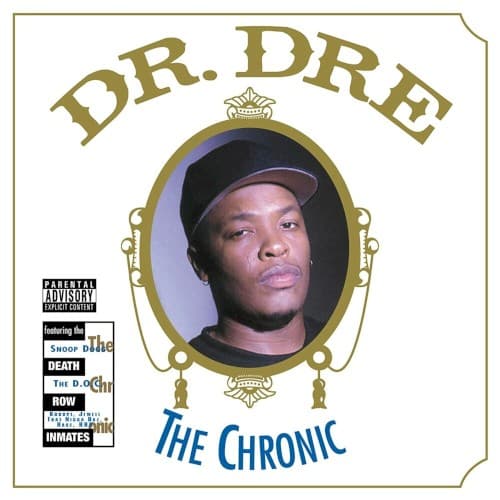
The cover cleverly juxtaposes classical portraiture elements with contemporary hip-hop aesthetics, creating a unique visual language for the G-Funk era.
Symbols
The Regal Frame
The elaborate gold frame represents Dr. Dre's elevation to kingpin status within the hip-hop landscape, asserting his newfound dominance.
Dr. Dre's Gaze
His direct, unyielding stare communicates confidence and an assertive control, reflecting the album's authoritative sound and lyrical themes.
Death Row List
This prominent list highlights the collective power and burgeoning talent of the Death Row roster, signaling a new dynasty.
Where Sound Meets Image
The majestic gold frame and Dr. Dre's composed demeanor perfectly echo the smooth, laid-back yet potent G-Funk sound introduced on the album. Tracks like "Nuthin' but a 'G' Thang" and "Let Me Ride" exude a similar confident, almost regal swagger that the cover art visually embodies. It speaks to the relaxed confidence of cruising through the L.A. streets, a central theme woven throughout the album's sonic tapestry. The cover's clean, direct approach mirrors the album's clear vision and pioneering production quality.
The Chronic cover established a blueprint for West Coast hip-hop visuals, influencing countless albums with its blend of stark confidence and aspirational grandeur. Its memorable composition and clear assertion of power solidified its place as a design touchstone for a generation of artists and fans. The album art remains an enduring symbol of G-Funk's Golden Age and Dr. Dre's unparalleled influence.