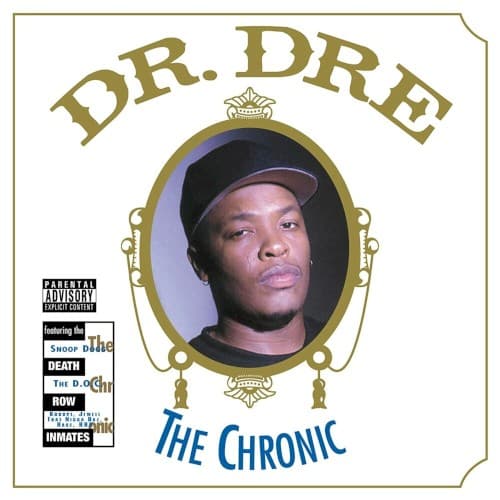
Dr. Dre The Chronic — The Day West Coast Rap Stopped Apologizing
No album has ever announced its dominance this loudly while sounding this smooth. Death Row Records had something to prove in late 1992, and Dre had just walked away from the most important rap group of the decade with nothing but a lawsuit and a plan. What he built in those months became the blueprint every West Coast producer would chase for the next fifteen years.
The Chronic did not just shift the balance of power in hip-hop geography. It introduced a sonic philosophy that made funk samples feel like acts of rebellion, that turned bass lines into weapons, that proved you could sound expensive and street at the same time. Dr. Dre's production legacy was not the first to sample Parliament, but he was the first to make those samples feel like they belonged to Compton. He slowed everything down, let the low end breathe, and gave every snare hit enough space to echo.
The album arrived when New York still controlled the narrative, when the East Coast defined what serious rap sounded like. Within six months, that conversation was over. Radio belonged to California. MTV played nothing but Lowriders and palm trees.
And every rapper with a record deal suddenly needed a G-funk beat. The genius of The Chronic was not just the production. It was the way Dre stepped back and let his roster do the talking. Could an unknown teenager really sound like the most inevitable star in rap history?
Snoop Dogg was exactly that when these sessions started. By the time the album dropped, he was already there. Dre knew what he had, and he built the entire album around that voice.
When the Bass Drop Became the Main Event
The sound of The Chronic is deceptively simple. Take a Parliament or Funkadelic sample, slow it down until it feels underwater, add a snare that cracks like a whip, and let the bass do all the heavy lifting. Dre was not trying to be innovative in the traditional sense. He was trying to make music that sounded perfect coming out of a car stereo with the windows down.
Every frequency was calculated. The kick drums hit low enough to rattle trunks. The hi-hats stayed crisp enough to cut through traffic noise. The synths floated above everything else like smoke.
This was music designed for movement, for cruising, for taking up space. Dre produced or co-produced every track here, but the real architects of the sound were Colin Wolfe on bass and Chris "The Glove" Taylor engineering. The bass lines were melodic, almost pretty, which gave the violent lyrics something to push against. When Dre raps about warfare, the music sounds like a summer day.
That contrast became the signature of West Coast gangsta rap for the next decade. The vocal production was just as important as the beats. Dre knew his own limitations as a rapper. His flow was competent but not exceptional, his voice authoritative but not dynamic.
So he surrounded himself with voices that could carry the album. Snoop appears on nearly half the tracklist, and his delivery is so effortless it makes everyone else sound like they are trying too hard. Daz Dillinger, Kurupt, RBX, and The Lady of Rage all get their moments, and each one brings a different energy. The album works because Dre understood curation.
He knew when to step forward and when to let someone else take the verse.
Lyrically, The Chronic is about power, revenge, and victory. Dre had just left N.W.A, and he spent a significant portion of this album settling scores. The diss tracks are vicious, personal, and often funny. But the album is not all beef.
There are weed anthems, street tales, and moments of near-philosophical reflection about life in the hood. The writing is uneven, but the performances sell it. Dre was not trying to be Rakim. He was trying to sound like the guy who won.
The one consistent flaw across the album is the treatment of women in the lyrics. Even by early-90s gangsta rap standards, some of the content here is gratuitously misogynistic. It has aged poorly, and it is impossible to ignore when revisiting the album today. Does that erase the musical achievement, or does it simply complicate the legacy?
How Dre Sequenced a Takeover
The Chronic does not ease you in. The intro is a warning shot, and then the album goes straight into battle mode with Fuck Wit Dre Day (And Everybody's Celebratin'), a full-scale attack on former collaborators. From there, the pacing is almost perfect. The first half of the album is relentless, moving from confrontation to celebration without ever losing momentum.
The middle stretch introduces more variety. You get a reflective street narrative, a posse cut, a bass-heavy banger, and a skit that somehow does not kill the energy. The sequencing feels instinctive, like Dre knew exactly when the listener needed a breather and when to hit the gas again.
The back half is where the album starts to sag slightly. A few tracks feel like they are there to pad the runtime rather than serve the larger narrative. The energy dips, the features start to blur together, and the album loses some of its focus. But even the weaker moments are elevated by the production.
Dre never lets the sound get boring. The closing stretch tries to recapture the intensity of the opening, and it mostly succeeds. The album ends on a note that feels both exhausted and triumphant, like the last song at a house party that went too long but nobody wanted to leave.
The flow of the album mirrors the way Dre wanted you to experience West Coast rap. Start aggressive, settle into the groove, let the bassline carry you, and end knowing that the power dynamic in hip-hop had shifted permanently. It is not a flawless listening experience, but it is a complete one.
The Album That Redrew the Map
The Chronic is the most important debut in West Coast rap history, and it is still the best pure G-funk album ever made. Within Dre's discography, only his follow-up comes close, and even that album leans more toward perfection than cultural impact. The Chronic was a movement. It launched Death Row Records, made Snoop Dogg a superstar, and gave California a sound that felt like its own declaration of independence from New York.
It also proved that a producer could be the main event. Dre was not the best rapper on his own album, and that did not matter. He was the architect, and the album is a monument to his vision.
Who should listen? Anyone trying to understand why West Coast rap dominated the mid-90s, anyone who wants to hear where G-funk came from, anyone who cares about production as much as performance.
Who might not enjoy it? Listeners who need lyrical complexity, fans of East Coast boom bap who never made peace with the West, anyone uncomfortable with the explicit content and dated attitudes toward women.
How has it aged? The production still sounds incredible. The bass is eternal, the grooves are timeless, and the best tracks remain untouchable. The lyrics have aged unevenly.
Some lines are still quotable. Others belong to a moment in rap that we have moved past. The influence is clear. Without The Chronic, there is no Doggystyle, no Tupac solo career, no Aftermath Records, no Eminem, no 50 Cent, no Kendrick Lamar's good kid, m.A.A.d city.
The entire West Coast lineage traces back to this album. Essential tracks to start with: Fuck Wit Dre Day (And Everybody's Celebratin'), Nuthin' but a "G" Thang, and Let Me Ride will tell you everything you need to know. If you want more of this sound, go straight to Snoop's debut, then Dogg Food by Tha Dogg Pound, then Above the Rim soundtrack. If you want to hear how Dre refined this approach, his follow-up album is the next step.
The Chronic was not the first West Coast gangsta rap album, but it was the one that made the rest of the country stop and listen.
Track Listing
The Chronic (intro)
▲Dre opens with a skit that sets the tone immediately. It is confrontational, it is funny, and it establishes the album as a direct response to everyone who doubted Death Row. The production is minimal, just enough to let you know what is coming. Snoop's voice appears here for the first time, and even in a throwaway intro, his charisma is undeniable. This is not filler. It is a mission statement.
Fuck Wit Dre Day (And Everybody's Celebratin')
▲This is one of the most vicious and effective diss tracks in rap history. Dre goes directly at Eazy-E and Luke Skywalker, and he does it over a beat that sounds like a victory lap. The Funkadelic sample is flipped perfectly, the bassline is menacing, and Snoop's closing verse is so calm it feels like a threat. The hook is undeniable, the energy is relentless, and the entire track feels like Dre burning bridges and building a new empire at the same time. The video became iconic. The song became a blueprint for how to publicly end a rivalry. Every bar is personal, every insult is designed to sting, and the whole thing sounds so smooth you can forget how ruthless it actually is. This is the track that proved Dre did not need N.W.A. He had already moved on, and the rest of the industry needed to catch up. Nearly every producer in the following decade tried to recreate the way this beat rides.
Let Me Ride
▲This is the smoothest song on the album, and it might be the most perfectly executed G-funk track ever recorded. The Parliament sample is gorgeous, the synths are warm, and the whole thing feels like cruising through Los Angeles at sunset with nowhere to be. Dre's flow here is relaxed, confident, almost lazy in the best way. He is not trying to prove anything. He is just letting you know he won. The production is deceptively simple, but every element is exactly where it needs to be. The bassline carries the entire track, the vocal samples float in and out, and the drums stay minimal to let the groove breathe. This is the song you play when you want someone to understand what West Coast rap sounded like in its prime. It is not aggressive, it is not flashy, it is just effortlessly cool.
The Day the Niggaz Took Over
●This is one of the rawest moments on the album. Dre steps back and lets Daz Dillinger and Snoop handle most of the verses, and the result is chaotic, urgent, and unapologetically violent. The production is darker than most of the album, with a more ominous sample and drums that hit harder. The track is loosely inspired by the L.A. riots, and the anger is palpable. The energy is intense, but the track suffers from uneven verses and a structure that feels more like a posse cut than a fully realized song. It is powerful in moments, but it does not have the replay value of the album's best tracks.
Nuthin' but a "G" Thang
▲This is the song that defined G-funk for the entire world. The beat is perfect. The bassline is iconic. Snoop's opening verse is one of the greatest introductions in rap history. Dre sounds comfortable, Snoop sounds inevitable, and the whole thing feels like the summer of 1993 condensed into four minutes. The Leon Haywood sample is flipped so well it sounds like it was always meant to be a rap beat. The groove is hypnotic, the hook is unforgettable, and the production is so clean it still sounds modern three decades later. This is the track that proved Dre was not just a great producer. He was a hitmaker. It became the biggest song of his career up to that point, and it is still the song most people think of when they hear his name. It is not just a classic West Coast anthem. It is one of the most important rap songs ever recorded. Every element works, nothing is wasted, and the influence is still everywhere.
Deeez Nuuuts
●This is a skit stretched into a full track, and it mostly works because of Dre's comedic timing and the absurdity of the concept. The Warren G feature is solid, the Rudy Ray Moore sample ties it together, and the whole thing feels like an inside joke that somehow became a radio single. The production is minimal, just a bassline and some light drums, because the focus is on the punchline. It is funny the first few times, but it does not hold up as well as the more serious tracks. Still, it shows Dre's range and his willingness to not take himself too seriously even on an album full of score-settling.
Lil' Ghetto Boy
▲This is one of the most underrated tracks on the album. Snoop takes the lead here, and his storytelling is vivid, personal, and surprisingly emotional. The production is somber, with a Donny Hathaway sample that gives the track a melancholy feel. Dre stays in the background, letting Snoop's narrative carry the weight. The song deals with poverty, violence, and survival in a way that feels more reflective than confrontational. It is one of the few moments on the album where the lyrics feel like they are reaching for something beyond braggadocio and beef. The track drags slightly in the second half, but the first verse is strong enough to make the whole thing worthwhile. This is the kind of song that reminds you Snoop was more than just a charismatic voice. He could write when he wanted to.
A Nigga Witta Gun
●This is the darkest track on the album, and it feels like Dre leaning into the most aggressive side of gangsta rap. The beat is menacing, the verses are violent, and the whole thing is designed to make you uncomfortable. D.O.C.'s ghostwriting is evident here, as the wordplay is sharper than most of Dre's solo verses elsewhere. The production is stripped-down, with minimal melody and maximum aggression. It works as a statement of intent, but it does not have the staying power of the album's more melodic tracks. It feels like Dre proving he could still make hardcore street rap even while he was refining the G-funk sound.
Rat-Tat-Tat-Tat
●Another posse cut, this time with more structure and better pacing than the earlier group efforts. The beat is hypnotic, with a looping sample that never quite resolves, which gives the track a sense of unease. Snoop, Dre, and the rest of the Death Row roster trade verses about violence and retaliation, and the performances are solid across the board. The production carries the track more than the lyrics, but that is true for most of the album. This is the kind of song that works better in the context of the full album than as a standalone single. It is a solid deep cut, but not essential.
The $20 Sack Pyramid
●A game-show skit about weed that overstays its welcome. It has a few funny moments, mostly thanks to the chemistry between the voices, but it kills the momentum of the album. The production is minimal because it is not really a song. It is the kind of interlude that made sense on a CD in 1992 but feels skippable today. The concept is clever enough, but the execution drags.
Lyrical Gangbang
▲This is a showcase for The Lady of Rage, Kurupt, and RBX, and all three deliver. Rage in particular stands out with one of the most ferocious verses on the entire album. Her flow is aggressive, her wordplay is sharp, and she completely holds her own alongside two of Death Row's best young rappers. The beat is solid, with a mid-tempo groove that gives each rapper room to work. The track feels like Dre flexing his roster, proving that Death Row had depth beyond just him and Snoop. It is one of the strongest posse cuts on the album, and it holds up better than most of the other group efforts.
High Powered
▼This is one of the weaker tracks on the album, and it feels like it is here to fill space more than serve a purpose. The beat is decent but not memorable, and the verses from RBX and Dre are competent but lack the energy of the album's best moments. The concept is generic gangsta rap posturing, and nothing about the track stands out. It is not bad, but it is forgettable, especially when sandwiched between stronger material.
The Doctor's Office
●A comedy skit featuring a fake radio show. It has a few amusing moments, mostly from the absurd premise, but it is not essential. The production is minimal because it is not meant to be taken seriously. It serves as a brief interlude before the final stretch of the album. Skippable, but harmless.
Stranded on Death Row
▲This is the most cinematic track on the album, with a moody beat and a sense of dread that sets it apart from the rest of the tracklist. Kurupt, RBX, Dre, and Snoop all contribute verses, and the performances are strong across the board. The production is layered, with eerie synths and a bassline that rumbles underneath everything. The track feels like a statement about Death Row's dominance, with each rapper taking turns proving why the label was untouchable in 1992. It is one of the darker moments on the album, and it works as a late-album highlight. The pacing is a bit uneven, but the atmosphere more than makes up for it.
The Roach (The Chronic Outro)
●A weed-themed outro that ties the album together thematically. It is a posse cut with RBX, Daz, and others trading verses about smoking, and the beat is mellow and hypnotic. It works as a come-down after the intensity of the previous tracks, and it reinforces the laid-back stoner persona that Dre and his crew were cultivating. Not essential, but a solid way to close out the album before the hidden track.
Bitches Ain't Shit
▼This is the hidden track, and it is one of the most controversial moments on the album. The production is stripped-down, almost minimalist, with a simple piano loop and sparse drums. Dre, Snoop, Jewell, and Kurupt all contribute, and the lyrics are explicit, misogynistic, and uncomfortable even by the standards of early-90s gangsta rap. Jewell's sung hook adds an ironic layer, but it does not soften the content. The track has aged worse than anything else on the album, and it is hard to defend lyrically. Musically, it is interesting because of how minimal the production is, but the subject matter makes it difficult to revisit.