Style & Context
Influences
Gordon Parks documentary work, Spike Lee film posters, Kehinde Wiley compositions
Location
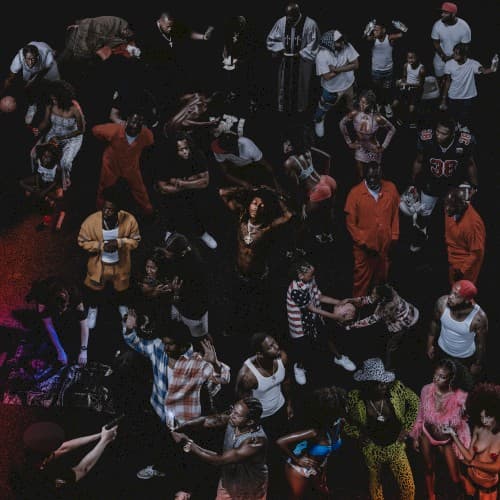
The diverse clothing and natural poses evoke East Atlanta's Edgewood neighborhood where multiple generations and stories intersect on any given block.
Visual Language
The photographic realism combined with theatrical staging creates a documentary aesthetic that feels both spontaneous and carefully orchestrated, matching JID's blend of raw storytelling and technical precision.
Symbols
Aerial perspective
The overhead vantage point positions the viewer as an omniscient observer, mirroring how JID recounts stories from multiple perspectives throughout the album.
Scattered bodies in motion
Each figure caught mid-gesture represents a frozen moment in someone's forever story, illustrating how individual narratives exist simultaneously within shared spaces.
Athletic wear and casual clothes
The everyday attire grounds the album's themes in working-class Atlanta reality rather than hip-hop luxury, honoring JID's origins in Zone 6.
Where Sound Meets Image
The scattered figures mirror the album's structure of interconnected vignettes spanning JID's family history, personal trauma, and Atlanta upbringing. Just as each person on the cover has their own story, tracks like 'Dance Now' and 'Sistanem' zoom into specific characters and moments. The darkness surrounding the community reflects the album's unflinching examination of violence, poverty, and loss, while the human warmth in the frame matches JID's determination to find meaning and beauty within hardship. The frozen motion captures the album's title concept—these moments are simultaneously fleeting and eternal.
This cover helped shift Dreamville's visual identity toward more conceptual, art-directed photography after years of straightforward portrait covers. The aerial community portrait has influenced subsequent Southern rap visuals that prioritize collective identity over solo bravado. Its success demonstrated that introspective, concept-driven album art can resonate commercially in an era dominated by social media thumbnails, proving thoughtful design still matters when the music demands it.