From East Atlanta to Elite Status: JID's Technical Revolution
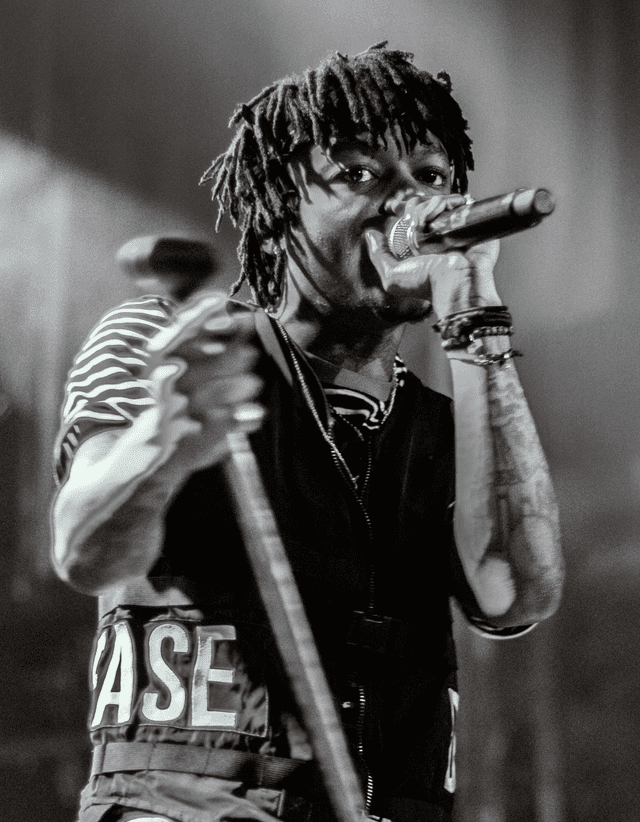
Destin Choice Route — better known as JID — emerged from East Atlanta's Zone 6 with a vocal instrument that sounds like it's constantly accelerating toward its own breaking point. His approach to rapping defies the trap-dominant conventions of his regional contemporaries, instead weaponizing syllabic density and rhythmic contortion in ways that recall East Coast tradition filtered through Southern energy. Signed to J. Cole's Dreamville Records in 2017, JID represents a bridge between technical virtuosity and contemporary hip-hop accessibility, proving that lyrical complexity doesn't require abandoning melodic sensibility or commercial viability.
What distinguishes JID isn't just speed or dexterity — plenty of rappers possess those tools. It's his refusal to let technical ability become his only personality. His storytelling carries weight and specificity, rooted in the realities of growing up in Atlanta's Eastside, navigating family struggles, abandoned football dreams, and the contradictions of early success. By the time The Forever Story arrived in 2022, he'd established himself as one of the most exciting voices in contemporary rap, someone capable of matching bars with Kendrick Lamar while maintaining his own distinct identity. His trajectory reflects a generational shift in hip-hop values, where technical mastery coexists with vulnerability and conceptual ambition.
Rhythmic Architecture: JID's Multi-Dimensional Flow Mechanics
JID operates like a percussionist who happens to use words instead of drumsticks. His flow construction prioritizes rhythmic complexity over predictable pocket riding, treating each bar as an opportunity for syncopated experimentation. He'll cram seventeen syllables into a space most rappers would fill with eight, then abruptly shift to a slower, more deliberate cadence, creating constant textural variation. This approach demands serious technical control — the breath control alone requires athletic conditioning — but JID never makes it sound like mere exercise. The rhythms feel intuitive, even when they're mathematically intricate.
Vocally, he operates across multiple registers, from rapid-fire staccato bursts to melodic half-sung passages that reveal his early singing aspirations. His voice carries a slight rasp that adds grit to his more aggressive moments without sacrificing clarity during his most dense lyrical sequences. Production-wise, JID gravitates toward beats with space and movement — producers like Christo, Hollywood JB, and Cody Jon have crafted soundscapes that complement rather than compete with his vocal gymnastics. The sonic palette leans toward soulful samples, live instrumentation, and drums that hit hard without overwhelming the mix.
Lyrically, JID balances technical wordplay with grounded narrative detail. He's not an abstract poet or a pure punchline rapper — he's somewhere in between, constructing verses that reward close attention while remaining emotionally direct. His writing explores family dynamics, survivor's guilt, relationship complications, and the psychological toll of ambition. The specificity matters: he doesn't just rap about struggle in general terms but about his father's health issues, his brother's incarceration, his own near-miss with a different life. This combination of technical prowess and emotional transparency gives his music unusual depth for an artist often praised primarily for his rapping ability.
Building the Forever Story: JID's Path from Spillage Village to Dreamville Stardom
JID's musical origins trace back to Spillage Village, the Atlanta collective he co-founded with EarthGang, Hollywood JB, and others while attending Hampton University. That creative community provided his early artistic foundation, establishing collaborative relationships that would persist throughout his career. His 2017 breakthrough came through The Never Story, his Dreamville debut that announced his technical abilities and storytelling instincts to a wider audience. Tracks like "Never" and "EdEddnEddy" showcased his flow versatility, while "D/vision" addressed family trauma with uncommon vulnerability for a debut project.
The DiCaprio series — DiCaprio 2 arrived in 2018 — cemented his reputation as one of rap's most exciting technical performers. "Off Deez" with J. Cole became a showcase for competitive lyricism, while "151 Rum" demonstrated his ability to navigate unconventional production. The project benefited from Dreamville's infrastructure and Cole's mentorship without sounding derivative of his label head's style. JID maintained his identity while gaining access to higher-profile features and production.
Between solo projects, JID appeared on Dreamville's Revenge of the Dreamers III compilation, holding his own alongside label mates and guest artists across multiple tracks. His verse on "Off The Grid" and contributions throughout the project reinforced his status as Dreamville's most technically gifted rapper. He toured extensively, building live reputation and expanding his audience beyond streaming platforms.
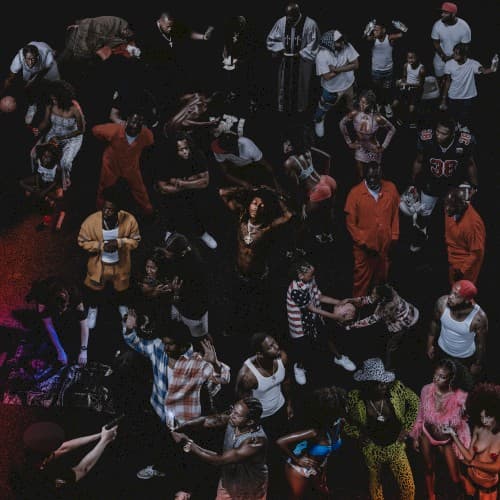
The Forever Story, released in August 2022, represented JID's most ambitious and fully realized work. The album expanded his sonic palette while digging deeper into personal narrative, particularly his complicated relationship with his father and the weight of success amid family struggle. Production came from a diverse roster including Kaytranada, DJ Dahi, James Blake, and longtime collaborators like Christo and Hollywood JB. Features from Yasiin Bey, Lil Wayne, 21 Savage, and others elevated the project without overshadowing JID's voice.
Tracks like "Raydar," "Dance Now," and "Surround Sound" balanced technical rapping with melodic accessibility, while "Can't Punk Me" and "Kody Blu 31" showcased his storytelling at its most affecting. The album debuted in the top five of the Billboard 200, marking JID's commercial breakthrough without creative compromise. Critics recognized the growth — our review scored it 8.7/10, praising its emotional depth and technical execution. The project positioned JID as more than a rapper's rapper, proving he could construct cohesive albums with conceptual through-lines and emotional arcs.
Since The Forever Story, JID has maintained momentum through features and live performances, including festival appearances and the Dreamers Tour. His approach continues evolving — recent guest verses suggest he's pushing his technical boundaries even further while refining his melodic instincts. The question for his next move isn't whether he can rap — that's established — but how he'll continue expanding his artistic range while maintaining the technical foundation that made him compelling in the first place.
Technical Excellence Meets Emotional Honesty: JID's Impact on Contemporary Hip-Hop
JID's significance extends beyond his individual accomplishments to what he represents within hip-hop's current ecosystem. At a moment when melodic trap and sing-song flows dominate commercial rap, JID proves technical lyricism can coexist with contemporary relevance. He's not a throwback revivalist or an underground purist — he's a modern artist who happens to prioritize rapping ability. That positioning matters for younger artists who grew up on both Kendrick Lamar and Future, who see no contradiction between lyrical density and melodic experimentation.
His influence appears most clearly in a new generation of technically focused rappers who reject the false choice between accessibility and skill. Artists like Smino, EarthGang, and other Spillage Village affiliates share his commitment to musicality and wordplay, creating a regional alternative to Atlanta's trap orthodoxy. JID's success provides a template for how technical rappers can build substantial audiences without compromising their approach or chasing trends.
Culturally, JID represents Atlanta's ongoing creative diversity. The city's musical identity has been dominated by trap production and melody-forward flows for over a decade, but JID demonstrates the city's capacity to produce artists who honor different hip-hop traditions. His Zone 6 upbringing and Atlanta roots are central to his identity, yet his musical approach draws from broader hip-hop lineage. That combination — regional authenticity without stylistic limitation — offers an alternative model for how artists relate to their geographic origins.
The Forever Story's critical and commercial success validated his artistic vision, proving that albums built on lyrical complexity and emotional vulnerability can connect with substantial audiences. Whether JID becomes a generational icon or remains a respected specialist depends on his next creative moves, but his impact on contemporary rap's technical standards is already secure. He's raised the bar for what counts as elite rapping in the 2020s, reminding audiences and artists alike that flow, wordplay, and vocal control still matter. In an era of diminishing attention spans and viral-driven success, that contribution carries real weight.