Style & Context
Influences
Blue Note jazz records, liturgical art, Yves Klein monochromes
Location
This visual language deliberately distances itself from Chicago's South Side aesthetics that shaped his early work.
Visual Language
The approach borrows from mid-century modern album design while invoking the meditative simplicity of religious devotional objects.
Symbols
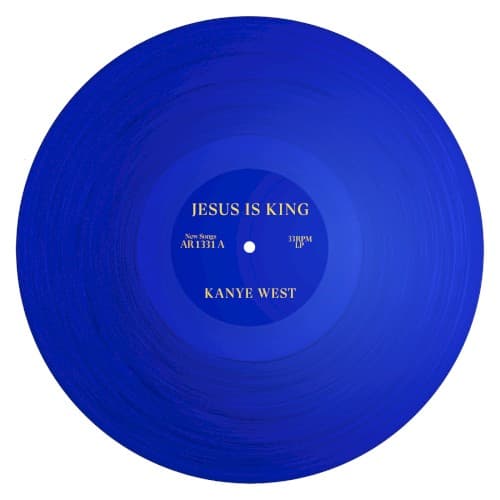
Vinyl record as canvas
The physical music medium becomes the art itself, suggesting transparency and directness in faith.
Centered text placement
The typography's central position mirrors the Christian cross, making the declaration inescapable and focal.
Absence of human imagery
Removing Kanye's image or any figures emphasizes the divine over the self, a departure from ego-driven covers.
Where Sound Meets Image
The monochromatic blue vinyl mirrors the album's sonic minimalism, where traditional gospel choirs and organs replace trap's typical sonic density. Just as the cover removes all distractions, tracks like 'Selah' and 'Follow God' strip beats to their essential elements, creating space for worship. The gold text's proclamation matches the album's unapologetic evangelical messaging, where Kanye abandons metaphor for direct testimony. The circular vinyl shape echoes the cyclical, repetitive song structures built around congregational call-and-response patterns.
This cover challenged hip-hop's visual conventions by proving a major rap album could succeed without photography, portraiture, or lifestyle imagery. The design influenced subsequent Christian rap releases to embrace minimalism as spiritual statement rather than budget constraint. Its vinyl-as-art approach anticipated the physical media revival among collectors, where the object itself carries meaning beyond its contents.