Style & Context
Influences
Estevan Oriol street photography, NWA press shots, classic automotive portraiture
Location
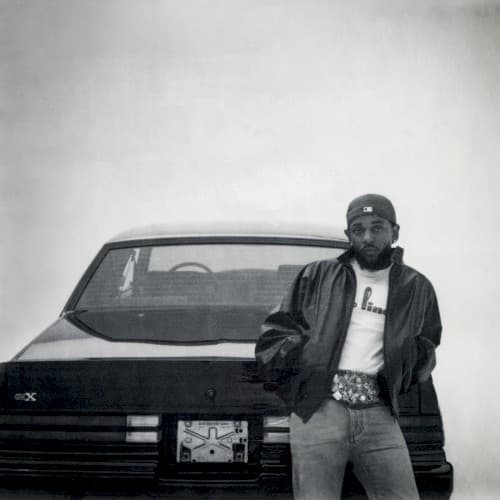
The GNX nameplate directly references Compton's car culture where modified Buicks represented accessible power and neighborhood pride.
Visual Language
The square format and centered framing recall vintage album photography from the golden age of West Coast rap.
Symbols
Buick GNX automobile
The 1987 Buick Grand National Experimental represents eighties West Coast street culture and raw American muscle power.
Minimal white backdrop
The void-like background suggests isolation, clarity of vision, and stripping away superfluous elements to reveal core identity.
Casual stance and attire
Kendrick's relaxed posture beside luxury machinery communicates earned confidence rather than performative wealth or status.
Where Sound Meets Image
The stripped-down visual mirrors GNX's sonic approach—leaner production after the jazz-fusion density of To Pimp a Butterfly and theatrical scope of Mr. Morale. Just as the cover shows Kendrick alone with a classic machine, the album finds him reasserting dominance through West Coast fundamentals: bounce rhythms, g-funk undertones, and pointed lyricism. The automobile imagery connects to tracks exploring movement, legacy, and the machinery of fame. The black-and-white treatment suggests unfiltered perspective, matching the album's direct confrontations and cultural commentary.
This cover will likely influence a return to minimalist hip-hop photography after years of maximalist digital art and AI-generated imagery. The choice to feature an obscure muscle car rather than a Lamborghini or Rolls-Royce signals shift toward subcultural specificity over generic luxury. By using such restrained visual language, Kendrick demonstrates that his cultural position no longer requires elaborate packaging—the name and the car alone communicate volumes to those who know.