Style & Context
Influences
Documentary photography, vintage street photography, film noir aesthetics
Location
It places the narrative squarely in Compton, California, portraying its streets as the central stage for Lamar's coming-of-age story.
Visual Language
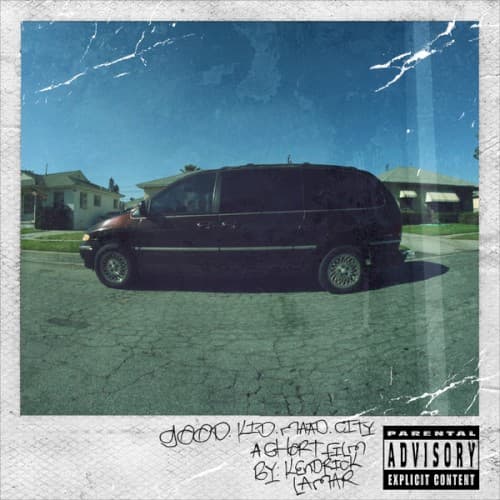
The cover employs a raw, almost found-footage photographic technique, lending an immediate sense of gritty realism and personal recollection.
Symbols
The Minivan
The minivan represents the mundane yet pivotal vehicle for everyday life and illicit activities within the album's narrative.
The Polaroid Frame
The distressed Polaroid frame signifies a raw, unfiltered snapshot from a specific time and place, emphasizing memory and authenticity.
Cracked Asphalt
The cracked asphalt symbolizes the harsh, weathered environment of Compton streets and the struggles faced by its residents.
Where Sound Meets Image
The minivan on the cover directly correlates to the album's narrative, serving as the vehicle for pivotal moments like the drive-by shooting in "Sing About Me, I'm Dying of Thirst" and the crew's escapades. The weathered aesthetic mirrors the lyrical themes of innocence lost and the harsh choices presented by the "m.A.A.d city" environment. It sets the stage for a "short film" feel, much like the album itself unfolds with cinematic storytelling and vivid character development. The raw, almost mundane setting perfectly introduces Kendrick's detailed, autobiographical account of growing up in Compton's complex landscape.
This cover asserted a powerful visual identity for a new wave of West Coast realism, shunning typical gangster rap tropes for a more introspective, yet equally potent, street narrative. Its simple, archival photo style influenced subsequent hip-hop artists to explore personal history and local landscapes with greater authenticity. It remains a benchmark for how minimalist, deeply personal imagery can resonate universally within hip-hop culture.