Style & Context
Influences
Portraiture, surrealism, hip-hop maximalism, pop art
Location
The image evokes a journey from the gritty streets of Hollygrove, New Orleans, to global fame, a narrative central to Cash Money's rise.
Visual Language
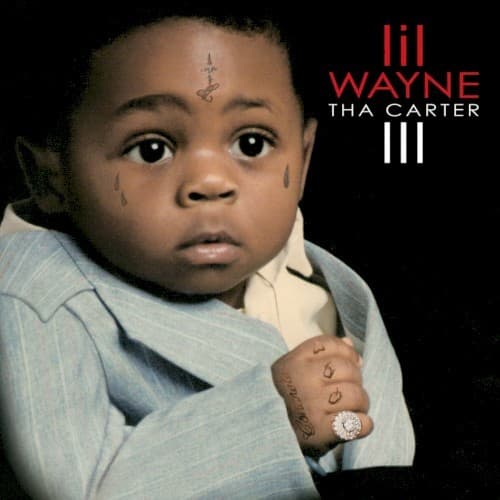
The photographic technique uses high contrast and focused lighting to create a dreamlike yet realistic portrayal of the infant, blurring lines between reality and metaphor.
Symbols
Baby Lil Wayne
The infant portrayal represents the artist's lifelong dedication to his craft, suggesting a predestined path to hip-hop prominence and a raw, foundational authenticity.
Facial Tattoos
The infant wearing Wayne's distinct facial tattoos immediately projects a sense of identity and legacy, marking him as forever connected to the Cash Money empire.
Diamond Ring
The oversized diamond ring on the baby's finger symbolizes wealth, power, and the early embrace of rap's opulent lifestyle, even from an implied humble beginning.
Where Sound Meets Image
The cover art for Tha Carter III perfectly encapsulates the album's expansive themes of growth, legacy, and undeniable reign. Wayne himself frequently explored his past, his struggles, and his inevitable rise on tracks like "A Milli" and "DontGetIt." The visual suggests a full-circle moment, an artist reflecting on his origins while sitting atop the rap world, a king from day one. It visually sets the stage for an album that is both deeply personal and universally ambitious, blending street anthems with introspective bars.
This cover art set a precedent for personal and introspective album visuals within mainstream hip-hop, inspiring other artists to use childhood imagery to reflect on their journeys. It demonstrated how a simple yet profoundly symbolic image could communicate complex narratives without relying on literal representations. The visual has become instantly recognizable, adding another layer to Wayne's powerful brand and his place in rap history.