New Orleans' Most Prolific Voice
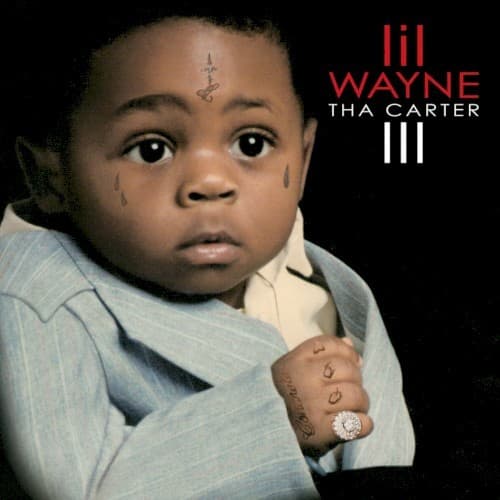
Lil Wayne redefined what prolific output meant in hip-hop. Born Dwayne Michael Carter Jr. in 1982 in the Hollygrove neighborhood of New Orleans, he was rapping professionally before most kids finish middle school. Cash Money Records co-founder Birdman signed him at age nine, and by eleven he was recording with the Hot Boys alongside Juvenile, B.G., and Turk. That early immersion in a professional studio environment gave Wayne a head start that compounded over decades. By the time Tha Carter series began in 2004, he had already released four solo albums and appeared on countless Cash Money compilations. The sheer volume of his output across albums, mixtapes, features, and loosies is staggering. Between 2005 and 2008, Wayne operated at a pace that made him omnipresent on radio, in clubs, and across the internet. Tha Carter III became the culmination of that run, debuting with over a million copies sold in its first week and earning him a Grammy for Best Rap Album. His influence on the generation of rappers that followed, from Drake to Young Thug, is difficult to overstate.
Metaphor-Heavy Wordplay and Genre Fluidity
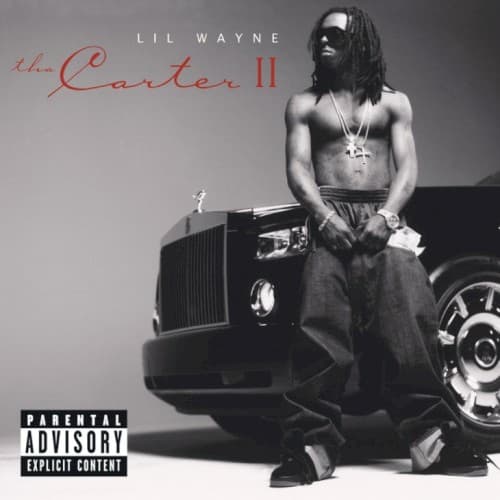
Wayne's rapping style defies clean categorization. His early work sits firmly in Southern hip-hop tradition, with the drawling cadences and bounce-influenced rhythms of his New Orleans roots. But starting around Tha Carter II, something shifted. His wordplay became denser, his metaphors more abstract, and his delivery more unpredictable. He began treating verses like jazz improvisation, following ideas wherever they led rather than sticking to conventional structures. The punchline density in his peak-era work is remarkable. Wayne stacks metaphors and double entendres at a rate that rewards repeated listening, each playback revealing connections missed the first time. His voice itself became an instrument. The nasal tone, the ad-libs, the occasional shift into singing all created a sonic signature that was immediately identifiable. Production-wise, Wayne worked across an unusually wide sonic range. He rode minimalist Southern beats with the same confidence he brought to pop-oriented productions. His willingness to experiment with rock influences on Rebirth, while commercially divisive, showed an artist who refused to stay in a lane. The mixtape era, particularly Da Drought 3 and Dedication 2, showcased his ability to take other rappers' beats and completely reimagine them with new vocal approaches, a tradition that Jay-Z and The Blueprint had popularized in the early 2000s.
Child Prodigy to Cultural Institution
The timeline of Lil Wayne's career reads like a compressed history of Southern rap's ascent. As the youngest member of the Hot Boys, he absorbed the energy of late-1990s Cash Money, a label that was reshaping the geography of hip-hop influence away from the traditional New York and Los Angeles power centers. His solo debut Tha Block Is Hot went platinum in 1999 when he was just seventeen. The follow-ups Lights Out and 500 Degreez showed growth but did not yet signal the artistic leap that was coming. Tha Carter in 2004 marked the beginning of his most important creative arc. That album established the series format and showed Wayne moving beyond regional expectations. Tha Carter II in 2005 elevated his critical standing significantly, with complex lyricism that earned respect from the same purist circles that had initially dismissed Southern rap. Then came the mixtape flood. Between 2006 and 2008, Wayne released a relentless stream of free music that dominated internet rap culture. Da Drought 3, Dedication 2, and The Drought Is Over series turned him into the consensus best rapper alive by popular vote. Tha Carter III arrived in June 2008 as the commercial validation of that grassroots coronation. He became the first rapper since the peak of Kanye West and 50 Cent's rivalry to generate that level of first-week anticipation. Wayne's prison sentence in 2010 for gun charges interrupted his momentum. The albums released during and after his incarceration, from I Am Not a Human Being through Tha Carter V, received mixed reception. The long delay of Tha Carter V due to his legal battle with Cash Money became one of hip-hop's most-watched sagas. When it finally arrived in 2018, it debuted at number one, proving his commercial pull remained strong even as the landscape shifted.
The Mentor Who Reshaped a Generation
Lil Wayne's influence operates on multiple levels. Musically, his melodic approach to rapping, his willingness to blur the line between singing and spitting, and his abstract metaphorical style directly shaped the sound of the 2010s. Young Thug has openly credited Wayne as his primary influence. Drake launched his career through Wayne's Young Money imprint, and the mentorship Wayne provided gave Drake the platform to become one of the best-selling artists in music history. Nicki Minaj's career followed the same pathway. The Young Money label, whatever its business complications, served as an incubator for multiple generation-defining talents. Beyond his proteges, Wayne changed how rappers approached output. The mixtape-as-art-form concept existed before him, but Wayne weaponized it. His prolific free releases set an expectation for constant engagement that every subsequent rapper has had to contend with. The idea that a rapper could maintain relevance through sheer volume of quality material, bypassing traditional album cycle timelines, traces directly back to Wayne's 2006-2008 run. His impact on Southern hip-hop's credibility in lyrical conversations was also significant. Before Wayne and OutKast's Aquemini era, the South was often dismissed by East Coast purists as lacking in lyrical substance. Wayne's technical evolution on the Tha Carter series forced a recalibration. He proved that Southern rappers could compete at the highest level of wordplay while maintaining the regional flavor that made their music distinctive. Eminem acknowledged Wayne's pen game repeatedly in interviews, a cosign that carried weight given Eminem's own reputation for technical precision.