Style & Context
Influences
Afrocentric album art, Egyptian Revival aesthetics, X-Clan imagery, Public Enemy's visual philosophy
Location
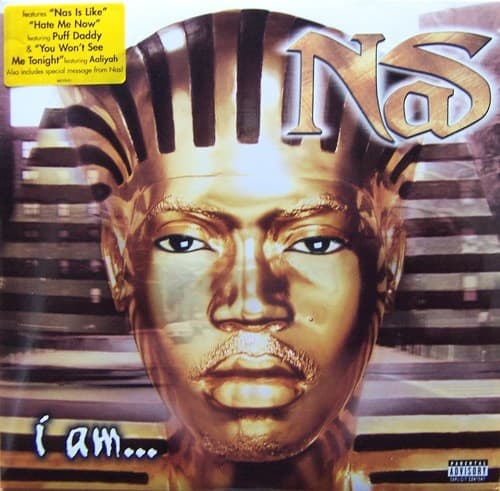
The pharaoh imagery contrasts sharply with Queensbridge housing projects, creating tension between origins and aspirations.
Visual Language
The cover employs early digital manipulation to achieve its otherworldly gold effect and supernatural presence.
Symbols
Pharaoh transformation
Nas claims lineage to African kings, rejecting colonial narratives while asserting hip-hop monarchy.
Gold plating effect
The metallic finish represents both ancient treasure and contemporary wealth accumulation in late-90s rap.
Horizontal striping
The bands mimic hieroglyphic tomb walls, suggesting Nas is inscribing his legacy into hip-hop history.
Where Sound Meets Image
The pharaoh imagery connects directly to tracks exploring legacy, power, and survival in the rap game's brutal hierarchy. The gold treatment reflects the album's more polished production compared to Illmatic's raw boom-bap, with tracks like 'Hate Me Now' embracing controversy and kingship. The ancient Egyptian theme parallels Nas's lyrical time-traveling between street corners and historical consciousness, while the metallic sheen matches the album's bigger budgets and radio ambitions.
This cover helped normalize Afrocentric symbolism in mainstream hip-hop marketing beyond underground conscious rap. The digital manipulation techniques influenced early 2000s album art's embrace of Photoshop effects and fantastical transformations. The pharaoh aesthetic became a recurring motif in rap's visual language, from Jay-Z references to countless mixtape covers asserting royal status.