Scorecard: 6.5/10 · Good
How we score- Writing(25%)
- 7.5
Nas retains his eye for detail on highlights like the sequel to State of Mind, but too many tracks settle for brand names and revenge fantasies instead of the introspection the title promised.
- Production(25%)
- 6.0
Premier's two contributions sound sharp, but the Trackmasters polish and the overstocked producer roster yield a flattened, somber sound that rarely matches the intensity of the writing.
- Delivery(15%)
- 7.0
Nas' flow remains technically precise and his voice carries authority, but the guest verses from Puff Daddy and DMX feel like label obligations rather than artistic choices.
- Cohesion(15%)
- 5.5
The leaked sessions forced Nas to patch the album with replacement material, and the seams show: no clear narrative arc, wildly inconsistent tone, and sixteen tracks with no clear reason for the length.
- Originality(10%)
- 6.0
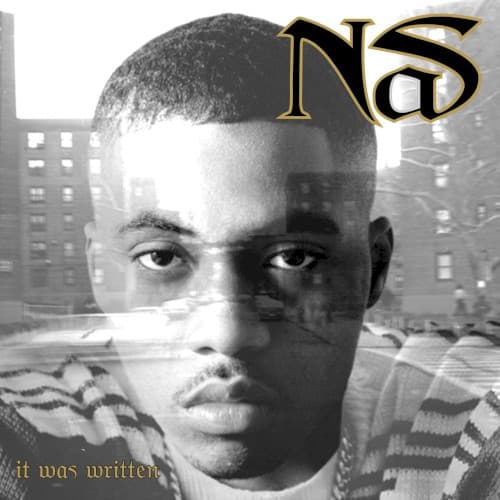
The album tries to split the difference between Illmatic's street focus and It Was Written's commercial reach, landing in a safe middle ground that adds little to either approach or to the catalog.
- Replay value(10%)
- 6.5
The Premier tracks and a handful of storytelling moments hold up, but the somber production and the filler back half make this a front-loaded listen that wears thin on repeat.
Nas I Am — The Autobiography That Became a Compromise
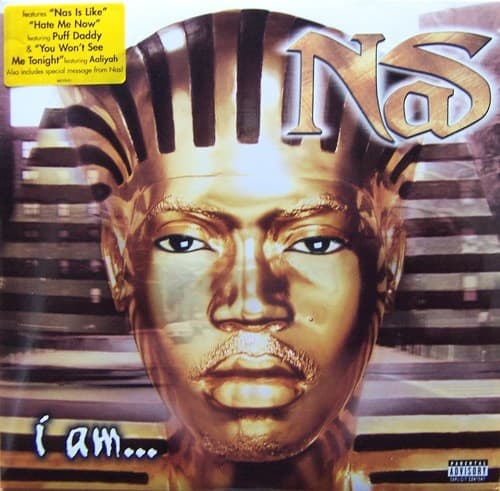
Nas spent 1999 explaining what could have been. The original I Am was supposed to be a double album, an autobiography in sound that tracked his life from the womb to the throne. Then the sessions leaked online in MP3 format, one of the first high-profile casualties of file-sharing, and the plan collapsed. What arrived on April 6, 1999 was a single disc patched together with replacement material, half of it recorded in a scramble to meet the release date. The thesis was supposed to be the complete picture of Nasir Jones; what we got was a commercial hedge that tried to please everyone and ended up satisfying no one completely.
The album debuted at number one and sold nearly half a million copies in its first week, proof that Nas was still a commercial force three years after It Was Written. But the music tells a different story. This is the sound of an artist caught between the gritty storytelling that made Illmatic a classic and the radio ambitions that made It Was Written a double platinum success, unable to fully commit to either. The result is Nas' most uneven album to that point: a handful of tracks that rank with his best work, a larger handful that sound like they were made to fill space, and a running time that makes the weak spots impossible to ignore. The question is not whether I Am has great moments—it does—but whether those moments justify the hour of music around them.
The Sound of Caution
The production on I Am reflects the album's compromised origins. DJ Premier contributes two tracks and both are immediate standouts: the drums on the State of Mind sequel hit hard, and his work on the album's centerpiece demonstrates the chemistry that made their Illmatic collaborations untouchable. Timbaland shows up for the Aaliyah duet and delivers one of his stuttering, off-kilter beats that was already becoming his signature by 1999. But those three tracks are the exceptions.
The rest of the album is dominated by the Trackmasters, L.E.S., and a long list of co-producers who deliver a polished, string-laden sound that flattens the peaks and valleys Nas needs to operate at full capacity. The somber keyboard loops and the soft-focus mixing make too many of these beats sound interchangeable, background music for rapping rather than the kind of urgent, grimy production that pushed Nas to his best performances.
Nas is still a technically gifted writer, and when he locks into a story or a specific scene the old instincts show up. He can still pack a verse with detail, still construct internal rhyme schemes that other rappers were not attempting in 1999, still describe a block or a crime scene with enough specificity that you see it. But too much of I Am settles for broader strokes.
The album is heavy on fame commentary, revenge talk, and the material rewards of success—money, women, status—and light on the kind of personal detail or narrative depth the title implies. Brand names replace imagery. Threats replace storytelling. The album was supposed to be an autobiography, but most of these songs could be by any successful rapper in 1999 reflecting on the downsides of celebrity.
When Nas reaches for introspection he often lands on cliché, and when he reaches for profundity he gets vague. The guests do not help. Puff Daddy raps an entire verse on the lead single and adds nothing. Scarface shows up for one track and sounds like he is fulfilling a contract.
DMX contributes a growled verse that has no thematic connection to anything Nas is doing. Aaliyah is the only guest who serves the song she is on, her voice providing the softness the concept requires. The rest feel like label ideas, names on the tracklist to move units. The album does not sound like a crew effort or a collaboration; it sounds like Nas making music in a vacuum and letting Columbia fill in the guest slots.
A Front-Loaded Sequence With No Payoff
I Am opens with its two best songs back to back and then spends the next hour unable to match that energy. The State of Mind sequel and the Premier-produced centerpiece establish a standard the rest of the album never meets. After that the pacing sags. The middle of the album is a string of mid-tempo tracks that blur together, and the back half includes a skit about sexual conquests and a storytelling exercise about a fatal attraction that both feel like ideas Nas already explored better on It Was Written. By the time the album reaches its final three tracks the momentum is gone.
The sequencing does not build toward anything. There is no arc, no sense that the album is moving from one emotional or thematic space to another. Songs appear in what feels like random order, as if Nas and his team were assembling a tracklist from whatever was available rather than shaping an album. The tribute to Tupac and Biggie sits in the middle of the album with no setup and no follow-through. The Timbaland track with Aaliyah could have been a moment of vulnerability, but it is surrounded by boasts and threats that undercut its impact. At sixteen tracks I Am is too long by at least four songs, and the extra length does not add depth or variety—it just exposes how much of this material was made to fill space rather than to serve a vision.
The Album That Should Have Been Shelved
I Am is the weakest album in Nas' 90s run, a commercial success that remains a creative disappointment twenty-five years later. It ranks below Illmatic and It Was Written by a wide margin, and it set the template for the inconsistency that would define the next phase of his career. The two DJ Premier tracks and the Timbaland collaboration are worth hearing, and there are moments scattered across the tracklist where Nas' writing flashes the brilliance that made Illmatic essential. But those moments are surrounded by filler, stitched together with no clear concept, and weighed down by a somber production style that makes the album feel longer and more monotonous than it is. This is Nas trying to have it both ways—street credibility and radio play, autobiography and commercial rap—and ending up with neither.
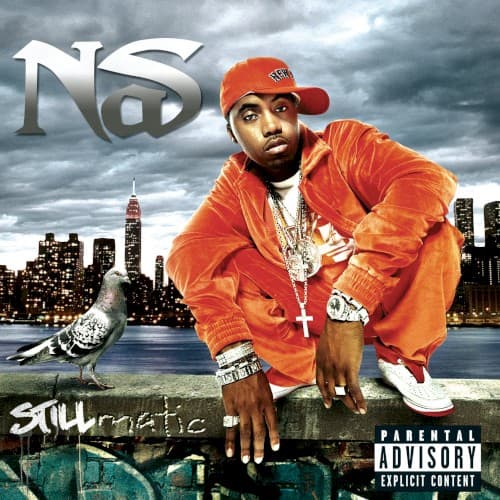
The album is for Nas completists and for listeners who want to hear the full arc of his career, peaks and valleys included. Casual fans should start with the two Premier tracks and the Aaliyah duet and skip the rest. If you want to understand what I Am could have been, track down The Lost Tapes, the 2002 compilation that collected some of the leaked material from the original double album sessions. Those songs have the focus and the narrative ambition this album needed. For the next step in the catalog, go forward to Stillmatic, the 2001 comeback that proved Nas could still make a complete, focused album when the circumstances demanded it.
Track Listing
N.Y. State of Mind, Part II
▲The sequel to one of Illmatic's defining tracks was always a risky move, and Nas mostly earns it. DJ Premier returns with a beat built from ominous piano and the same kind of tense, cinematic atmosphere that made the original untouchable, and Nas responds with a verse that updates the Queensbridge narratives for 1999: the paranoia is about fame and enemies in the industry now, not just the streets, but the eye for detail remains sharp. The technical skill is there, the flow is there, and the writing holds up next to the original without embarrassing itself. This is the kind of sequel that justifies its existence, a song that stands on its own while nodding to what came before. The album peaks here and never gets back to this level.
Hate Me Now
●The lead single is built around a sample from Carl Orff's Carmina Burana, a bombastic orchestral backdrop that Nas uses to address his critics and defend his success. The beat is loud and aggressive, designed for arenas and music video sets, and it works as a pure spectacle. Puff Daddy's verse is unnecessary and adds nothing to the song's concept—he is here because he was a commercial draw in 1999, not because the song needed him. The Hype Williams video caused controversy for its crucifixion imagery, and the song became a hit, but the music itself is more effective as a statement of defiance than as a piece of writing. It is one-note, but the note is loud enough to make an impact.
Small World
▲Nas constructs a story about crossing paths with an old partner who turned informant, and the writing is specific enough to work as narrative rather than just threat. The production from the Hitmen is soft-focus and melodic, too polished for the subject matter, but Nas keeps the energy up with a flow that moves through the verses without stopping for air. The song does not reinvent the wheel, but it is a solid piece of storytelling with enough detail to make the characters feel real. One of the album's better mid-tier tracks.
Favor for a Favor
●Scarface shows up for a duet about loyalty and betrayal, and both rappers deliver workmanlike verses over a L.E.S. beat that sounds like a dozen other beats from 1999. The writing is competent but generic—threats, street codes, the usual material—and Scarface's verse does not add a new perspective or elevate the concept. This is the kind of song that fills space on a too-long album without offering a reason to return to it. Functional but forgettable.
We Will Survive
●The tribute to Tupac and Biggie doubles as a shot at Jay-Z, with Nas taking aim at rappers who claimed New York's crown after Biggie's death. The song has been cited as an early salvo in the Nas versus Jay-Z feud, and the writing makes the targets clear even without naming them directly. The production from Trackmasters is somber and string-heavy, appropriate for a eulogy, but the track never builds to the emotional weight the subject deserves. Nas is more interested in settling scores than in mourning, and the result is a song that feels more like positioning than tribute. Historically significant, musically flat.
Ghetto Prisoners
▲Dame Grease delivers a thumping, hard-edged beat and Nas responds with a verse about incarceration, systemic injustice, and the cycle of poverty that feeds the prison system. The writing has moments of real insight, and the production gives Nas the kind of urgent backdrop that brings out his best instincts. But the song is too short, and it ends just as it starts to build momentum. One of the album's stronger tracks, but it needed another minute to fully develop its ideas.
You Won't See Me Tonight
▲Timbaland's production is immediately recognizable: the off-kilter percussion, the stuttering hi-hats, the empty space in the mix that makes every sound hit harder. Aaliyah provides the hook and she is the best guest on the album, her voice adding a vulnerability that the song requires. Nas tells a story about a man planning to leave a relationship, and the writing is detailed enough to make the scenario feel lived-in rather than hypothetical. The song works as a showcase for all three contributors, and it is one of the few moments on I Am where the production, the guest, and the concept all serve the same goal. A standout.
I Want to Talk to You
▼Nas addresses a woman, possibly a love interest or a mother figure, over a L.E.S. beat that is too polished and too soft to create any tension. The writing is vague, full of generalities about communication and understanding, and the song never lands on a specific image or a concrete detail that would give the concept weight. This is Nas reaching for introspection and coming up with greeting card sentiment. Filler.
Nature's Shine
●This track is not on the provided tracklist and does not appear on the standard release of I Am.
Dr. Knockboot
▼A two-and-a-half-minute skit about sexual conquests, delivered with a smirk and no real writing. Nas runs through a series of boasts about women and positions, the Trackmasters provide a funk loop, and the whole thing feels like a leftover from a 1997 album that should have stayed in the vault. Completely skippable.
Life Is What You Make It
▼DMX shows up for a duet about survival and self-determination, and both rappers deliver competent verses over a L.E.S. beat that sounds like every other mid-tempo track on the album. The writing is full of platitudes—life is hard, you make your own choices, keep your head up—and neither rapper brings enough specificity or energy to make the concept feel urgent. DMX's growled delivery does not fit the song's reflective tone, and the result is a mismatch that goes nowhere. Another track that exists to fill time.
Big Things
▼Nas reflects on success and ambition over a muted, keyboard-driven beat that has no momentum. The writing is broad and unfocused, full of references to wealth and status but light on the kind of detail that would make the observations stick. The song feels like a rough draft, an idea that needed more time in the studio before it was ready to be recorded. One of the album's weakest moments.
Nas Is Like
▲DJ Premier's second contribution is the album's centerpiece and its best track, a showcase for both Nas' technical skill and Premier's ability to build a beat from drums and scratches. Premier cuts up vocal samples from It Ain't Hard to Tell and constructs a hypnotic loop that gives Nas room to operate, and Nas responds with some of the sharpest writing on the album: vivid imagery, internal rhyme schemes, wordplay that rewards close listening. The song works as pure craft, two masters of their respective disciplines pushing each other to deliver their best work. This is the standard the rest of I Am needed to meet, and it is the song that keeps the album from being a complete disappointment. Essential.
K‐I‐SS‐I‐N‐G
●Nas tells a story about a woman who plays both sides of a conflict, and the writing has enough detail to work as narrative. The production from L.E.S. and Alvin West is competent but uninspired, another mid-tempo track that blends into the background. The song is solid but unremarkable, the kind of track that would have been a highlight on a weaker album but gets lost in the middle of this one.
Money Is My Bitch
●Nas reflects on wealth and its relationship to power, and the writing is more focused than most of the album's other money-talk tracks. The Trackmasters production is polished and radio-friendly, built around a looped vocal sample and a soft bassline, and Nas delivers the verses with enough energy to keep the song from sagging. Not a standout, but a competent closer to the album's main body.
Undying Love
●The album's final track is a story-rap about obsession and murder, told from the perspective of a man who kills for a woman and ends up betrayed. The writing is detailed and the narrative is clear, and L.E.S. provides a dark, minimal beat that serves the concept. But the idea is not new—Nas already explored similar territory on It Was Written's Shootouts, and this version does not add enough to justify the retread. A solid piece of storytelling that arrives too late in a too-long album to make the impact it needs.