Style & Context
Influences
Renaissance religious paintings, Scarface power imagery, blaxploitation film posters, medieval heraldry
Location
Queensbridge housing projects inform the image's tension between luxury and struggle, throne rooms and project hallways existing simultaneously.
Visual Language
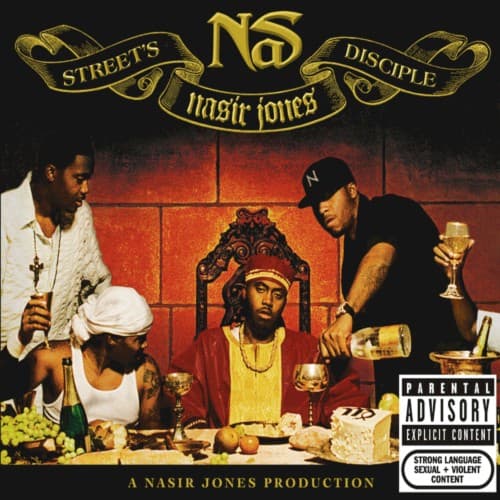
The composition borrows from Leonardo da Vinci's Last Supper but replaces divine sacrifice with street mentorship and survival wisdom.
Symbols
Throne positioning
Nas occupies the central seat of power, framing himself as the prophetic voice of street knowledge passed down to followers.
Gold chalices and feast
The abundance of food and drink symbolizes hard-earned success while evoking communion, blending material wealth with spiritual nourishment.
Ornate scrollwork banners
The elaborate calligraphy mimics illuminated manuscripts, positioning rap lyrics as sacred text worthy of scholarly study and preservation.
Where Sound Meets Image
The lavish yet serious presentation mirrors the album's sprawling 25-track attempt to address everything from politics to personal relationships. Just as the cover mixes opulence with weight, tracks like 'American Way' and 'Bridging the Gap' balance social commentary with accessible storytelling. The throne room setting reflects Nas's self-positioning as hip-hop royalty defending his crown, while the disciples represent the audience he's trying to guide through wisdom rather than just entertain with punchlines.
The cover reinforced hip-hop's ongoing dialogue with religious iconography, following Jay-Z's 'Blueprint' cathedral and preceding Kanye's 'Jesus Walks' martyrdom. Its boldness influenced how veteran rappers could visually reposition themselves as teachers rather than just stars, paving the way for more conceptual, symbolic album art in the mid-2000s. The ornate typography became a template for representing lyrical complexity through visual opulence.