Style & Context
Influences
Photojournalism, Civil Rights Movement documentation
Location
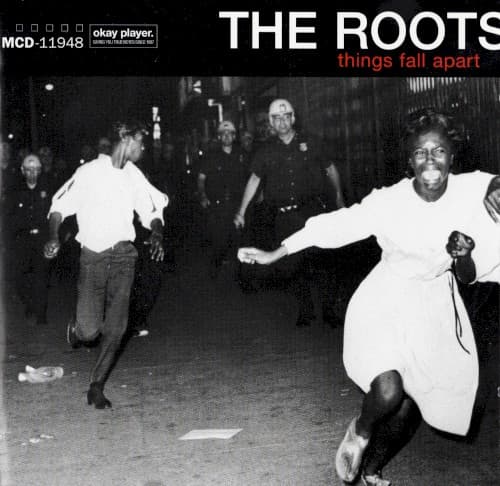
The chaotic street scene powerfully evokes urban battlegrounds where racial tensions historically erupted and continue to simmer.
Visual Language
The raw, unfiltered photographic style lends historical authenticity and immediate emotional weight to the cover's critical statement.
Symbols
Fleeing Figures
These individuals represent the vulnerability and courage of those confronting systemic oppression, echoing persistent struggles for justice within Black communities.
Police Officers
The blurred, pursuing officers in the background symbolize the oppressive forces and institutional resistance faced by activists.
Woman's Expression
Her open mouth and outstretched arm convey a visceral cry of anguish and determined resistance against injustice, resonating deeply.
Where Sound Meets Image
The chaotic image directly mirrors the album's title and its lyrical exploration of societal breakdown, injustice, and the struggle for personal and collective identity. Tracks like "Double Trouble" and "Act Too (Love of My Life)" delve into the complexities of their lives and the world, resonating with the cover's raw emotional honesty. The album's signature live instrumentation and conscious lyrics further amplify this sense of urgency and introspection, urging listeners to confront uncomfortable truths and question societal norms.
This cover's powerful appropriation of a historical photograph set a precedent for hip-hop album art to directly engage with social commentary and historical memory. It moved beyond standard portraiture, demonstrating how a singular, potent image could encapsulate an entire album's weighty themes. This approach influenced subsequent artists to utilize documentary-style imagery for deeper artistic and cultural statements.