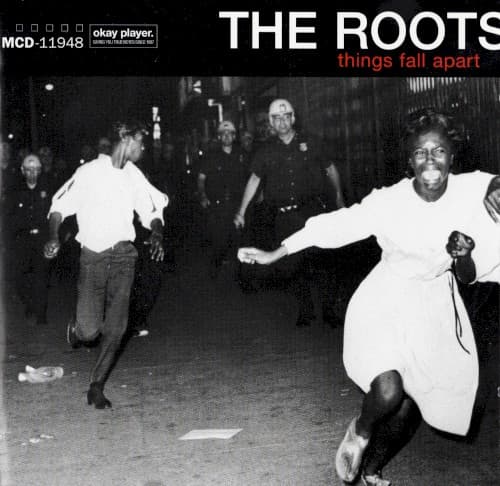
The Roots Things Fall Apart — When the Band Saved Hip-Hop From Itself
February 1999. A month when Juvenile owned radio, Eminem was about to blow and Ruff Ryders ran the streets. That same month, The Roots released an album built entirely around live instrumentation at a moment when hip-hop was racing toward synthesizers and drum machines. It was career suicide on paper. Instead, Things Fall Apart became the blueprint for how far you could push the culture without leaving it behind. Black Thought and Questlove spent the mid-90s proving a live band could exist in hip-hop without sounding like a college coffee shop. Do Philly A.M. showed technical skill. Illadelph Halflife showed ambition. But neither album cracked the mainstream code.
Things Fall Apart solved that problem by refusing to chase trends. While Puff Daddy sampled entire choruses and No Limit pressed up CDs like newspapers, The Roots recorded an album that sounded like nothing else on commercial radio. MCA Records somehow greenlit a project where the drummer was the primary producer. The lead single featured a singer nobody had heard of yet. The album title came from a Nigerian novel about colonialism.
This is the album where The Roots' evolution as artists transformed them from being the weird live band from Philly into something essential. It sits at the exact intersection of underground credibility and commercial accessibility that most artists spend entire careers chasing. They got there by ignoring every rule about what hip-hop was supposed to sound like in 1999.
The Revolution Questlove Programmed By Hand
Questlove built this album like a architect designing around natural light. Every drum break, bass line and piano chord serves the song instead of showcasing the musician. The production philosophy here rejects both the sample-heavy boom bap of the East Coast and the synth-driven sound taking over the South. What you hear instead is a band that spent years playing six nights a week learning how to make organic instrumentation knock like a beat tape.
The palette stays remarkably focused across eighteen tracks. Upright bass anchors the low end. Live drums provide the swing. Fender Rhodes and acoustic piano handle the melodic space. Kamal Gray's keyboard work throughout the album proves you can create atmosphere without reaching for samples. The guitars stay minimal, appearing only when a song demands texture rather than flash. Scott Storch contributed keys before he became a hitmaker, and his playing here shows restraint most producers never learn.
Black Thought operates in a different weight class than he did on previous albums. His flow tightened, his vocabulary expanded, and his ability to ride unconventional rhythms improved dramatically. Where earlier Roots albums sometimes felt like Thought was battling the band, here he treats the live instrumentation like a sparring partner. His delivery stays conversational even when the rhyme schemes get technical. Lyrically he balances socially conscious themes with battle rap credibility, avoiding the preachy tone that sank countless conscious rap albums in the late 90s.
The guest verses get selected with editor precision. Mos Def, Common and Beanie Sigel each bring different energies without disrupting the album's cohesion. The weakest moment comes when the album occasionally indulges its own musicianship, letting instrumental sections run longer than necessary. A tighter hand in the editing room would have shaved five minutes without losing anything essential.
The Journey From Struggle to Victory Lap
The opening stretch establishes the thesis immediately. You get the scene-setting intro, the mission statement, then The Next Movement hits like proof of concept. The album front-loads its accessibility, making sure casual listeners hear the hooks and momentum before the band gets experimental. That sequencing choice saved the album from underground-only status. The middle section takes more risks. The energy dips intentionally, making space for reflection and storytelling. The pacing slows without losing forward motion, a difficult balance most hip-hop albums fail to achieve. The instrumental interludes function as breathing room rather than filler, resetting the listener's attention before the next statement piece.
The back half rebuilds toward catharsis. After the commercial peak arrives mid-album, The Roots could have coasted to the finish. Instead they reload with their hardest material, refusing to let the album drift into victory lap mode. The sequencing demonstrates the advantage of musicians who understand album construction beyond tracklist order. They built this like a live set, with peaks and valleys engineered for maximum impact. The final stretch pulls off the nearly impossible task of ending an eighteen-track album without exhausting the listener.
The Album That Proved the Pen Still Mattered
Things Fall Apart ranks as The Roots' commercial and creative peak. It sits above Phrenology for accessibility and above Illadelph Halflife for focus. Only their later work with John Legend and runtime discipline comes close to matching the impact this album achieved. The album succeeded by trusting listeners to appreciate craftsmanship over gimmicks at a moment when the entire industry was betting against that idea.
Anyone who claims hip-hop lost its soul in the late 90s never listened to this album. It provides the counterargument to every think piece about the genre's artistic decline during the shiny suit era. New listeners should start here before exploring the deeper catalog cuts of Phrenology or the raw energy of Do You Want More. The album aged beautifully precisely because it ignored its own era's production trends. Twenty-five years later it sounds fresher than most albums that chased 1999's sonic trends.
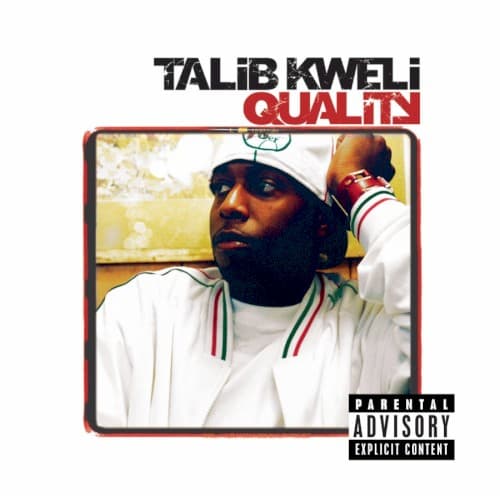
Essential tracks for first-time listeners: The Next Movement, Dynamite, You Got Me, and Adrenaline prove the band's range. Fans of this album should explore Common's Like Water for Chocolate, Talib Kweli's Quality, and later Little Brother records. The album's influence echoes through every rapper who later worked with live bands, from Kendrick's jazz experiments to Anderson .Paak's entire approach. Things Fall Apart didn't just prove The Roots could compete commercially. It redrew the boundaries of what hip-hop could sound like without losing its identity. That matters more now than it did in 1999.
Track Listing
Act Won (Things Fall Apart)
▲Questlove opens with a drum pattern that sounds like a heart rate monitor before flatlining, then resurrects itself. The title references Chinua Achebe's novel about cultural collapse, setting the thematic weight immediately. Black Thought's voice enters over minimal bass, delivering the mission statement in measured tones. The production stays sparse intentionally, refusing to compete with the words. It's a thesis paragraph in song form.
Table of Contents, Parts 1 & 2
▲The Blueprint. Part one catalogs the album's themes over a bass line that walks like it's going somewhere important. Black Thought name-checks the crew, the city, the mission. Part two shifts into pure musicianship, the band stretching out to prove they can play. It's the moment where The Roots announce this won't sound like anything else you bought in 1999.
The Next Movement
▲The commercial breakthrough hidden in plain sight. DJ Jazzy Jeff's scratches provide the hook, a perfect marriage of hip-hop tradition and live band innovation. Questlove's drums knock harder here than on anything the group had released prior. Black Thought rides the pocket with the confidence of someone who knows he's delivering a classic. The bass line alone could carry a lesser song. The way the piano stabs punctuate Thought's rhymes shows a band operating as a single unit rather than accompaniment. This is the song that proved The Roots could make a hit without compromising their vision. Radio programmers didn't know what to do with it at first, then couldn't stop playing it.
Step Into the Realm
▲Combat mode. Black Thought and Beanie Sigel trade verses over a drum break that sounds like it's chasing someone down an alley. Beans brings the Philly street energy, proving The Roots could exist in the same space as Roc-A-Fella's roster. The production stays aggressive without relying on obvious tough-guy cues. It's battle rap that earned its stripes instead of performing them.
The Spark
▲The exact moment where the album shifts into a higher gear. The drums hit with jazz fusion complexity while maintaining hip-hop's rhythmic foundation. Black Thought and Malik B split the workload, their contrasting deliveries creating natural tension. The keyboard work in the background adds atmosphere without demanding attention. This is musicians flexing technical skill in service of the song rather than showing off for other musicians. The second verse contains some of Thought's sharpest wordplay on the entire album, proof that he was evolving into one of the most complete MCs in the game.
Dynamite!
▲The hardest they ever went. Questlove's drums sound like they're trying to break through the speakers. Black Thought delivers battle rap that actually sounds dangerous instead of performative. The Bomb Squad-style production energy gets filtered through live instrumentation, creating something that hits like a Public Enemy track without sampling a single record. The urgency here is real, not manufactured. When Thought says "the principles of true hip-hop have been forsaken," it lands because the entire album exists as evidence for the prosecution. This is the song that convinced underground heads The Roots hadn't sold out by signing to MCA.
Without a Doubt
▲Mos Def arrives and immediately raises the temperature. His verse sits comfortably next to Thought's best work, two different styles achieving the same goal. The production stays stripped down, just drums and bass for long stretches, trusting the MCs to carry the weight. The scratch hook adds texture without disrupting the momentum. It's a posse cut that avoids the chaos most posse cuts devolve into.
Ain't Sayin' Nothin' New
▲Questlove's drums get almost combative here, pushing against the bass line instead of locking with it. The tension works. Black Thought addresses hip-hop's repetitive nature while demonstrating how to say familiar things in unfamiliar ways. The irony isn't lost, and that self-awareness elevates the entire track. The keyboard stabs feel like punctuation marks, emphasizing points rather than decorating them.
Double Trouble
▲Mos Def returns, this time paired with Thought for a full collaboration. The chemistry between them suggests these sessions were actual conversations rather than assembled verses. The production sits in a mid-tempo pocket, creating space for both MCs to explore ideas instead of racing to the next punchline. The musicianship takes a backseat here, which proves The Roots understood when to let the band recede.
Act Too (The Love of My Life)
▲Common shows up sounding more focused than he did on his own album that year. The track builds around a bassline that could soundtrack a late-night drive through the city. It's a conversation between Philly and Chicago's conscious rap movements, proof that the underground had national reach even when commercial radio ignored it. The production stays understated, making room for both voices without competition.
100% Dundee
●Malik B's showcase. His flow operates at a different frequency than Thought's, more percussive and less concerned with clarity. The drums match his energy, getting busier and more technical. It's the album's deepest dive into pure technical skill, which makes it slightly less accessible but more rewarding for listeners willing to meet it halfway.
Diedre vs. Dice
●A brief sparring session that functions as a palate cleanser. The instrumental lets the band stretch out for a moment before the album's final push. It's not filler exactly, but it's not essential either. The positioning works better than the content.
Adrenaline!
▲Beanie Sigel returns harder than his first appearance. The production sounds like it's racing against a deadline, all forward momentum and urgency. Dice Raw delivers the hook with the right amount of aggression to match the track's intensity. This is The Roots proving they could make street records that satisfied the same audience buying DMX and Ja Rule. The drums here hit with the same impact as any DJ Premier beat from the era, which is the highest compliment you can give a live drummer trying to compete in hip-hop. The energy never lets up, making this one of the most replayable deep cuts on the entire album.
3rd Acts: ? vs. Scratch 2… Electric Boogaloo
●An interlude that earns its runtime. The scratch work demonstrates technical skill without showboating. It functions as a moment to breathe before the album's commercial peak.
You Got Me
▲The crossover moment. Erykah Badu's voice turned this into The Roots' biggest hit, though Jill Scott wrote and originally recorded the vocals. The production here is their most accessible work, built around a guitar line and drum pattern that could work on adult contemporary radio. Black Thought's verse about relationship insecurity shows vulnerability that balances the album's harder moments. The song's success proved The Roots could write hits without abandoning their identity. It won a Grammy, got added to pop radio, and somehow didn't alienate the underground fans who supported them from the beginning. The bridge section where the band drops out entirely shows confidence most groups never achieve.
Don't See Us
●Dice Raw gets a full solo spotlight and delivers. The production stays in a relaxed groove, providing space for his storytelling. It's a strong individual performance that shows The Roots had depth beyond their two primary MCs. The song works as a reminder that the crew was deeper than just Black Thought and Questlove.
The Return to Innocence Lost
▲The thesis statement arrives in the album's final stretch. Black Thought reflects on hip-hop's evolution and his place within it. The production gets introspective, matching the lyrical content's contemplative tone. The piano work throughout this track carries as much emotional weight as the verses. It's the sound of a artist taking stock before the final statement. The second verse contains some of the album's most personal writing, proof that Thought could do confessional rap without losing his edge.
Act Fore… The End?
▲The victory lap that doesn't feel like one. Black Thought addresses the doubters and the future in equal measure. The production circles back to the album's opening themes, creating bookend symmetry. Questlove's drums get one final showcase, reminding everyone that a live drummer was behind this entire project. The fade-out feels earned rather than abrupt, like the band is walking offstage after the performance of their career. It's an ending that suggests continuation rather than conclusion, which turned out to be prophetic.