Style & Context
Influences
Hypebeast culture, action figure packaging, contemporary sculpture, minimalist studio
Location
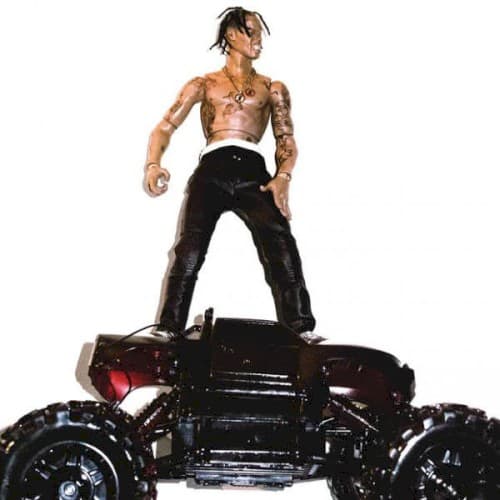
This cover evokes Houston's robust car culture and gritty ambition, reflecting the city's influence on trap's sound.
Visual Language
The clean, high-contrast studio photography elevates the action figure concept, giving it an unsettling, art-gallery quality.
Symbols
Action Figure
This represents Travis Scott as a self-aware, constructed persona, a plaything of fame commanding his own narrative.
Monster Truck
The oversized vehicle signifies raw power, an unstoppable force, and the aggressive, larger-than-life nature of trap music.
White Background
It creates a stark, minimalist stage, isolating Travis Scott and highlighting his singular journey to prominence.
Where Sound Meets Image
The action figure's confident stance on a monster truck directly mirrors the album's aggressive trap sound and Travis Scott's ambitious lyrics about navigating fame and hustling. Songs like "Antidote" and "90210" explore the highs and lows of his wild journey, echoed by the controlled chaos of the doll's pose. The synthetic, almost unreal quality of the figure aligns with the album's heavy auto-tune use and atmospheric, psychedelic production, creating a cohesive, immersive world for the listener.
Rodeo's cover solidified Travis Scott's visual brand, influencing a wave of artists to embrace surrealism and action-figure aesthetics in their own releases. Its stark, high-concept approach elevated album art, proving that even a simple image can carry deep meaning and resonate within the culture. It remains a recognizable symbol of modern trap's emergence and a testament to distinct artistic branding.