Style & Context
Influences
Martial arts cinema, urban realism, comic book aesthetics
Location
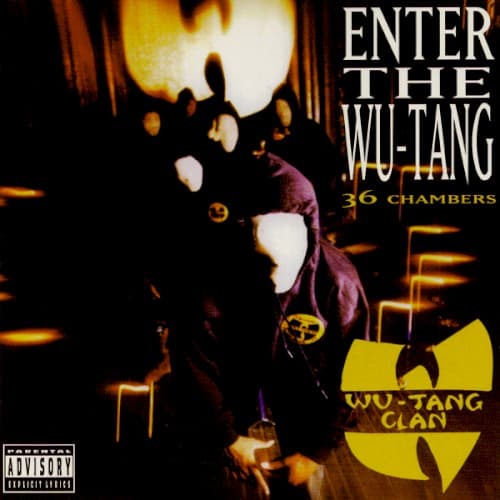
This visual evokes the grim, economically challenged landscape of Staten Island, often called Shaolin, where the Clan originated.
Visual Language
The gritty, high-contrast photography captures an authentic street ethos, reflecting the raw, unfiltered narratives characteristic of boom bap hip-hop.
Symbols
Hooded Figures
The obscured individuals represent the collective, unified strength of the Clan, embodying anonymity and their formidable presence.
Wu-Tang 'W' logo
The bold, stylized 'W' serves as a beacon, symbolizing the Clan's rising power and their distinctive martial arts philosophy.
Glowing Architectural Lines
These abstract lines hint at the "36 Chambers," suggesting a complex, maze-like journey of self-mastery and struggle.
Where Sound Meets Image
The visual directly mirrors the album's dark, gritty, and often confrontational sound, rooted in boom-bap production. The shadowy figures and "36 Chambers" concept are central to tracks like "C.R.E.A.M." and "Protect Ya Neck," which explore street survival and the collective strength of the Clan. The mysterious aura perfectly prefaces the diverse, yet unified, lyrical styles of its nine members and their unique narrative universe.
This cover established a visual language for a new wave of hardcore hip-hop, influencing countless artists to embrace darker, more enigmatic aesthetics. Its blend of martial arts iconography and urban grit created a distinct brand identity that remains highly recognizable and often imitated, cementing Wu-Tang's visual presence.