Staten Island's Supreme Clientele
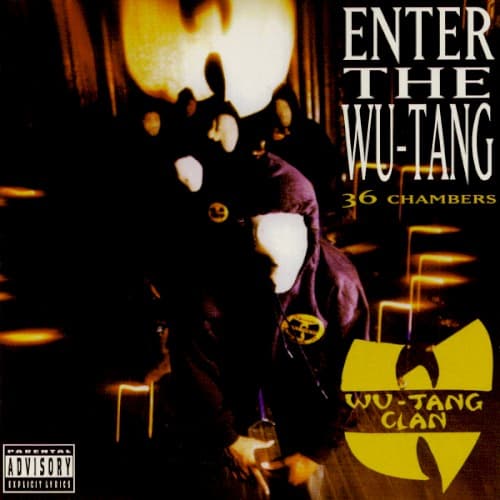
Wu-Tang Clan emerged from the Stapleton Houses and Park Hill projects of Staten Island with a vision that fundamentally altered hip-hop's creative and business architecture. Formed in 1992, the nine-member collective brought together MCs with radically different styles under the production umbrella of RZA, whose five-year plan for the group became one of the genre's most ambitious and successful strategies. Enter the Wu-Tang (36 Chambers) arrived in November 1993 and immediately redefined what a hip-hop group could sound like. The album's grimy, sample-heavy production and raw vocal performances stood in stark contrast to the polished sounds dominating mainstream rap at the time. RZA's innovative contract structure allowed individual members to sign solo deals with different labels while maintaining the collective's identity, creating an empire that generated dozens of albums across multiple imprints. The group's nine core members, RZA, GZA, Ol' Dirty Bastard, Method Man, Raekwon, Ghostface Killah, Inspectah Deck, U-God, and Masta Killa, each developed distinctive solo careers that expanded the Wu-Tang universe while maintaining the collective's gravitational pull. Their cultural influence extends beyond music into fashion, film, and the broader mythology they constructed around martial arts philosophy and Five Percenter teachings.
RZA's Sonic Architecture and Nine Distinct Voices
The Wu-Tang sound begins with RZA's production philosophy. His early work drew from obscure soul, kung fu film soundtracks, and deliberately lo-fi sampling techniques that gave 36 Chambers its signature gritty texture. Drums hit with the impact of a fist through drywall. Samples were chopped and pitched in ways that created an atmosphere of claustrophobic intensity unique in hip-hop production. Each member brought a fundamentally different approach to the microphone. Method Man's smooth baritone and melodic hooks contrasted with ODB's unhinged, stream-of-consciousness delivery. Raekwon and Ghostface Killah developed a storytelling partnership that reached its peak on Only Built 4 Cuban Linx, crafting mafioso narratives with cinematic detail. GZA's precision lyricism on Liquid Swords demonstrated that intellectual density and street credibility could coexist. Inspectah Deck consistently delivered verses that critics regard among the group's finest but which commercial circumstances kept partially in shadow. The collective format meant that any given Wu-Tang track might feature three to five different vocal styles, creating a density of personality that no solo artist could replicate. This approach influenced the formation of hip-hop collectives for decades and demonstrated that creative diversity within a group could be a strength rather than a liability.
The Five-Year Plan and Beyond
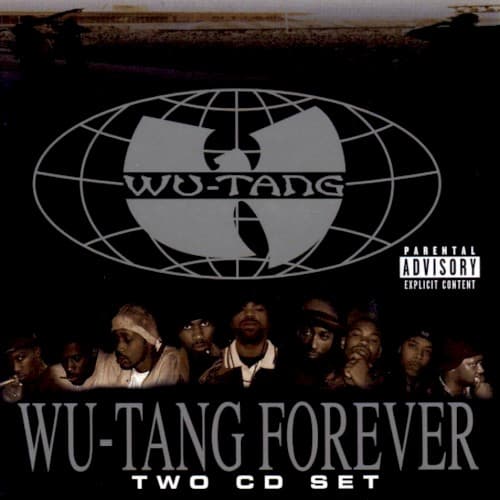
RZA conceived Wu-Tang Clan with a business strategy as innovative as its music. The group signed to Loud Records for a modest advance, but the contract preserved each member's right to pursue solo deals independently. This structure generated an unprecedented run of releases between 1993 and 1997. Following 36 Chambers, the solo album cycle began with Method Man's Tical and continued through Raekwon's Only Built 4 Cuban Linx, GZA's Liquid Swords, Ghostface Killah's Ironman, and Ol' Dirty Bastard's Return to the 36 Chambers. Each album maintained the Wu-Tang sonic identity while showcasing individual artistic visions. Wu-Tang Forever arrived in 1997 as the group's second collective album, debuting at number one and moving over 600,000 copies in its first week. The double album expanded the sonic palette beyond the raw minimalism of the debut but divided fans who preferred the original's unpolished intensity. After the five-year plan concluded, the collective's output became more sporadic. The W in 2000 and Iron Flag in 2001 arrived during a period of increasing internal tensions and shifting musical landscapes. Ol' Dirty Bastard's death in 2004 marked an irreplaceable loss. Later reunions produced A Better Tomorrow in 2014, and the legendary one-copy album Once Upon a Time in Shaolin became a cultural event that transcended music industry norms entirely.
An Empire Built on Shaolin
Wu-Tang Clan's impact on hip-hop cannot be overstated. They proved that artistic uncompromising could be commercially viable, that a group from the least glamorous borough of New York City could build an empire through sheer creative force. The independent solo deal structure they pioneered became a template for artist empowerment that anticipated later developments in how musicians approached label relationships. RZA's production techniques influenced an entire generation of beatmakers who learned that imperfection and rawness could be more powerful than pristine polish. The group's integration of martial arts philosophy, chess imagery, and Five Percenter theology created a mythological framework that gave hip-hop a new vocabulary. Ghostface Killah's storytelling innovation on Supreme Clientele pushed rap narrative in directions that writers are still exploring. The Wu-Tang brand extended into clothing with Wu Wear, acting careers for multiple members, and a cultural presence that remains potent decades after the debut. Their influence on underground and alternative hip-hop is particularly profound, with artists from MF DOOM to Earl Sweatshirt citing the Clan as foundational. In an era where hip-hop groups have largely been replaced by solo artists and loose collectives, Wu-Tang Clan remains the gold standard for what a rap group can achieve when individual talent serves a collective vision.