The Cartoon Violence That Changed Hip-Hop Forever
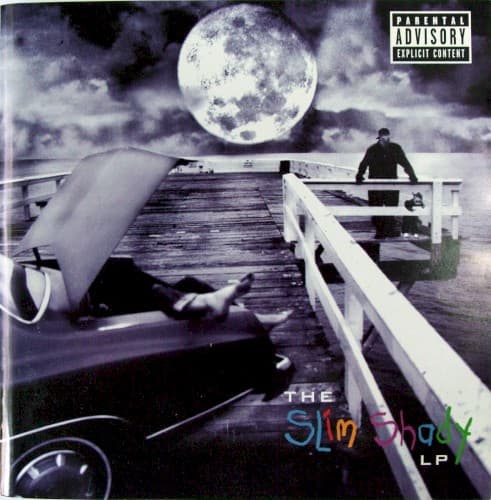
When Eminem unleashed The Slim Shady LP in February 1999, he didn't just introduce a character—he detonated a cultural bomb that forced America to reckon with its own contradictions. Here was a white rapper from Detroit who refused every respectful path to crossover success, instead doubling down on the most offensive, darkly comic, and psychologically disturbed material imaginable. The album arrived at a precise cultural moment: Columbine was months away, congressional hearings on music content were heating up, and hip-hop was navigating its post-Biggie, post-Pac identity crisis. Marshall Mathers chose this moment to create an alter ego who said the unsayable, weaponizing shock value while demonstrating technical skill that couldn't be dismissed.
Dr. Dre's decision to executive produce this project legitimized Eminem's artistry while providing the sonic foundation for Marshall's multiple personalities to collide. The production here strips away the shiny suit era's gloss, returning to stark, menacing soundscapes that complement rather than compete with the verbal acrobatics. What separates this from mere shock-rap predecessors is the layered self-awareness—Eminem simultaneously inhabits Slim Shady's nihilism and critiques it, creating a hall of mirrors where sincerity and satire become indistinguishable. The album functions as psychological horror, dark comedy, and technical showcase all at once, never settling into comfortable categorization.
Horrorcore Meets Technical Precision in Dre's Sonic Laboratory
Dr. Dre's production work establishes an atmosphere of controlled chaos throughout The Slim Shady LP, favoring ominous minor-key melodies and sparse percussion that leaves maximum space for Eminem's voice to dominate. The beats often feel deliberately unsettling—circus music gone wrong, children's melodies twisted into nightmare fuel, basslines that rumble with menace rather than bounce with party energy. This sonic palette perfectly suits the material's psychological horror bent, creating auditory environments where Marshall's darkest impulses can run wild. The Bass Brothers contribute additional production that maintains this aesthetic coherence while allowing variation in texture and intensity.
Eminem's technical approach represents a quantum leap in white rapper credibility, not through imitation of Black vocal styles but through sheer mechanical excellence. His internal rhyme schemes pack four or five rhymes into single bars, his multisyllabic patterns create cascading effects, and his ability to maintain clarity at rapid-fire pace rivals anyone in the game circa 1999. The nasal tonality that became his signature actually functions as strategic differentiation—instantly recognizable, capable of shifting between menacing growls and mocking sing-song delivery. Where previous white rappers often seemed tentative or overly respectful, Eminem attacks beats with absolute confidence, bending syllables and stretching pronunciations to serve the rhyme scheme rather than natural speech patterns.
The album's thematic content operates on multiple levels that reward closer analysis despite surface-level shock tactics. Marshall uses Slim Shady as permission structure to vocalize intrusive thoughts, revenge fantasies, and self-destructive impulses that most people experience but never articulate. The violence described is often cartoonish rather than realistic—more Looney Tunes than gangster rap—which creates emotional distance while still generating controversy. Tracks addressing poverty, addiction, and mental health issues reveal genuine vulnerability beneath the shock armor, suggesting that Slim Shady's nihilism stems from Marshall Mathers' actual pain rather than pure provocation.
The structural choice to include multiple skits and interludes creates narrative cohesion while providing pacing relief from the intensity of full-length tracks. These moments establish context, build the Slim Shady mythology, and demonstrate Eminem's skill at character-based storytelling beyond traditional verse-chorus structures. The album flows like a psychological journey rather than a collection of singles, with tonal shifts that mirror mental instability—from manic energy to depressive introspection to explosive rage.
Controversy itself becomes a creative tool here, weaponized to generate attention while forcing listeners to confront their own boundaries around artistic expression. Eminem doesn't apologize for offensive content but contextualizes it through skill, satire, and the occasional moment of naked honesty. The result is an album that simultaneously offends and impresses, disgusts and entertains, alienates and connects. It's a high-wire act that few artists could pull off without toppling into either toothless comedy or genuinely harmful content.
Career-Defining Moments That Showcase Range and Ambition
My Name Is remains the cultural flashpoint, the song that introduced Slim Shady to mainstream consciousness while demonstrating Eminem's gift for melody and memorable hooks. The production's playful bounce contrasts with lyrics that casually mention violence and drug use, creating cognitive dissonance that made the track simultaneously radio-friendly and subversive. The video's visual gags expanded the character beyond audio, establishing Eminem's multimedia approach to persona-building. What makes the track work beyond novelty is the technical craft—the internal rhymes, the voice modulation, the way each verse builds on the previous one while maintaining the catchy chorus that lodged itself in millions of brains.
Guilty Conscience stands as one of hip-hop's most effective narrative experiments, with Dr. Dre and Eminem playing angel and devil on various characters' shoulders. The concept allows both artists to showcase their skills while creating genuine dramatic tension, and the final verse's twist—where the person rejects both voices and makes their own destructive choice—adds philosophical weight to what could have been simple morality play. The production's shifting dynamics match the dialogue structure, creating a track that works as both entertainment and commentary on moral responsibility.
Rock Bottom and If I Had provide the album's emotional core, stripping away Slim Shady's manic energy to reveal Marshall Mathers' actual struggles with poverty, fatherhood, and self-worth. The former's bleak honesty about financial desperation and suicidal ideation hits harder because it lacks the protective irony present elsewhere on the album. The latter's fantasy of having resources to improve his and his daughter's life adds poignant context to the rage and nihilism that dominate other tracks—this isn't rebellion for rebellion's sake but desperation seeking any outlet. These moments of vulnerability make the shock content elsewhere feel like coping mechanism rather than empty provocation.
A Landmark That Redefined Controversy and Technical Excellence
The Slim Shady LP succeeds as both artistic statement and cultural provocation, introducing a character and voice that would dominate early 2000s hip-hop while raising questions about artistic freedom that remain unresolved. Eminem's technical excellence elevates material that could have been dismissed as shock-rap gimmickry, forcing critics to acknowledge skill even when rejecting content. Dr. Dre's production provides the perfect sonic environment for Marshall's multiple personalities to clash and coexist. The album's willingness to offend everyone equally—no protected groups, no sacred cows—creates a strange kind of egalitarian transgression that feels more honest than the selective edge of many controversial artists.
Weaknesses exist primarily in the album's uneven tone and occasional moments where shock seems to overtake craft. Some skits add little value beyond juvenile humor, and a few tracks rely too heavily on offense without the technical or thematic depth present in the album's strongest moments. The misogyny, while often cartoonish, still crosses lines that make genuine engagement difficult for many potential listeners, and the question of whether artistic skill excuses harmful content remains legitimately debatable.
The Slim Shady LP's legacy extends beyond sales and controversy to actual influence on hip-hop's technical standards and thematic possibilities. Eminem proved that complex rhyme schemes and rapid-fire delivery could coexist with commercial success, raising the bar for technical proficiency across the genre. He demonstrated that white rappers could achieve credibility through excellence rather than imitation. Most significantly, he exploded the boundaries of acceptable content in mainstream hip-hop, for better and worse, creating space for psychological exploration and dark comedy that subsequent artists would exploit. This is essential listening for understanding late 90s hip-hop's evolution and the moment when shock value and technical mastery collided to create something genuinely new.
Track Listing
Public Service Announcement
This brief intro skit establishes the album's confrontational stance and dark humor from the opening seconds. A mock public service announcement warns listeners about offensive content while essentially daring them to keep listening, setting expectations for the transgressive material ahead. The skit functions as both legal disclaimer and artistic statement, acknowledging the album's controversial nature while refusing to apologize for it. It's an effective tone-setter that prepares listeners for the psychological journey ahead.
My Name Is
The breakthrough single that introduced Eminem to mainstream audiences pairs playful production with deceptively complex rhyme schemes and shocking content delivered with a grin. The track balances commercial appeal with underground credibility, creating a radio-friendly entry point into Slim Shady's warped worldview. Eminem's ability to make offensive content catchy rather than merely confrontational demonstrates his understanding of pop music mechanics. The song's success proved that technical excellence and melody could make even transgressive content palatable to mass audiences, establishing the template for Eminem's commercial dominance.
Guilty Conscience
This narrative masterpiece features Dr. Dre and Eminem as competing moral voices, showcasing both artists' skills while exploring questions of personal responsibility and moral choice. The three-part structure allows for character development and dramatic progression, with each scenario escalating in severity. The production shifts dynamically to match the dialogue exchanges, creating genuine tension and momentum. The final verse's twist ending adds philosophical depth, suggesting that people ultimately make their own choices regardless of external influences. This remains one of hip-hop's most effective concept tracks.
Brain Damage
Eminem transforms childhood bullying trauma into darkly comic revenge fantasy, detailing exaggerated violence with cartoonish glee that masks genuine pain. The storytelling here demonstrates his gift for narrative construction, building from realistic school humiliation to absurdist revenge that clearly signals fantasy rather than literal threat. The production's menacing undertone contrasts with the mocking vocal delivery, creating the unsettling tonal blend that defines much of the album. The track reveals how Slim Shady functions as therapeutic outlet for Marshall's actual psychological wounds.
Paul
This brief voicemail skit from Eminem's manager Paul Rosenberg provides pacing relief while building the album's narrative framework. Paul's exasperated tone as he criticizes various controversial lyrics adds meta-commentary and suggests awareness of the album's provocative nature. The skit humanizes the album by including voices of concern and consequence, creating the impression of real-world pushback against Slim Shady's excesses. It's a small moment that adds texture to the overall listening experience without overstaying its welcome.
If I Had
This introspective track strips away Slim Shady's manic energy to reveal Marshall Mathers' genuine struggles with poverty and fatherhood. The fantasy scenarios of having financial resources to improve his life carry genuine emotional weight, providing crucial context for the rage expressed elsewhere on the album. The production's melancholic tone matches the vulnerable lyrics, creating one of the album's most emotionally resonant moments. Eminem's willingness to expose real pain and insecurity makes this track essential for understanding the psychological foundation beneath the shock tactics.
97' Bonnie & Clyde
Perhaps the album's most disturbing track reimagines disposing of his ex-wife's body as a father-daughter bonding trip, told from the perspective of explaining the situation to his infant daughter. The sing-song delivery and almost gentle tone create horrifying contrast with the violent content, demonstrating Eminem's skill at generating discomfort through tonal dissonance. The track sparked enormous controversy while showcasing his ability to inhabit disturbing perspectives without breaking character. It remains genuinely unsettling rather than cartoonish, crossing lines that make it difficult to dismiss as mere provocation.
Bitch
This aggressive track attacks an unnamed target with relentless hostility, showcasing Eminem's capacity for sustained verbal assault. The production's harsh edge matches the lyrical venom, creating an atmosphere of barely controlled rage. While the misogynistic content lacks the psychological depth or satirical distance of the album's strongest moments, the technical execution remains impressive. The track represents the album's most straightforward expression of anger without the complexity or dark humor that characterizes Eminem's best work here.
Role Model
Eminem satirizes moral panic around hip-hop by exaggerating his own negative influence, creating a darkly comic catalog of terrible advice delivered with obvious irony. The track functions as both middle finger to critics and self-aware commentary on the absurdity of blaming entertainment for societal problems. The chorus's mock-inspirational tone makes the satirical intent clear while allowing Eminem to revel in offensive content under the protection of obvious exaggeration. It's a smart defensive move disguised as attack, preemptively mocking the criticism he knew would come.
Lounge
This atmospheric skit creates an eerie interlude featuring jazzy music and unsettling ambiance that suggests something sinister beneath the surface calm. The brief moment provides textural variety while maintaining the album's overall dark tone. It functions as palette cleanser between more intense tracks, demonstrating attention to pacing and album flow. The skit's mood-setting contribution outweighs its minimal content, adding to the overall listening experience without demanding close analysis.
My Fault
This narrative track details a disastrous sexual encounter involving mushrooms and a fatal overdose, told with gallows humor that masks genuine horror. Eminem's storytelling ability shines as he builds tension and details the catastrophe with dark comedy that eventually gives way to actual regret. The production's druggy atmosphere enhances the narrative's hallucinogenic quality. The track demonstrates his capacity to explore genuinely dark subject matter while maintaining technical excellence and narrative coherence. It's disturbing and skillfully executed in equal measure.
Ken Kaniff
This crude prank call skit featuring a gay character serves as brief comedic interlude, though the homophobic humor feels more juvenile than clever. The skit's shock value lacks the psychological depth or satirical sophistication of the album's stronger moments. It functions mainly as pacing device between more substantial tracks, providing brief levity without adding meaningful content. The character would reappear in Eminem's work, but this introduction adds little beyond offensive humor and mild amusement.
Cum on Everybody
This energetic track showcases Eminem's technical skills and manic delivery while wallowing in deliberately offensive content about sex and violence. The production's driving rhythm creates infectious energy that makes the track work as pure rap exercise despite thin thematic content. Eminem's rapid-fire flow and internal rhyme schemes demonstrate why underground heads respected his skills even when mainstream critics dismissed him as shock-rap gimmick. The track prioritizes technical showcase over depth, succeeding on those limited terms.
Rock Bottom
The album's emotional nadir strips away all protective irony to detail genuine suicidal ideation and financial desperation with devastating honesty. Eminem's delivery conveys authentic pain rather than performed angst, making this one of the rawest moments in his catalog. The production's bleak atmosphere perfectly matches the lyrical content's hopelessness. This track provides essential context for understanding why Marshall created Slim Shady as outlet—the pain driving the rage becomes undeniable. It's brave, uncomfortable, and absolutely crucial for understanding the album's psychological architecture.
Just Don't Give a Fuck
This underground anthem established Eminem's credibility before mainstream success, showcasing raw aggression and technical skill without commercial compromise. The track's nihilistic energy and unfiltered hostility represent pure id expression, Slim Shady at his most unhinged and unconcerned with consequences. The production's minimal approach keeps focus on the verbal assault, allowing Eminem's flow and wordplay to dominate completely. This remains a fan favorite for its uncompromising energy and the sense of an artist with nothing to lose.
Soap
This brief interlude skit adds dark humor through a mock advertisement that plays on the album's controversial content about violence and cleanliness. The comedic timing and absurdist approach provide momentary levity while maintaining the album's overall tone. It functions as palate cleanser without disrupting momentum, demonstrating smart sequencing choices. The skit's brevity prevents it from wearing out its welcome while adding textural variety to the listening experience.
As the World Turns
This storytelling track details increasingly absurd violent scenarios with cartoonish glee, pushing shock value to extremes that clearly signal satire rather than literal intent. Eminem's gift for narrative and character voices creates a mini-movie effect, with vivid imagery and dark comedy throughout. The production's quirky elements match the lyrical content's twisted humor. The track demonstrates how Eminem uses exaggeration and absurdity to create emotional distance from violence while still generating controversy and showcasing technical skills.
I'm Shady
This track fully embodies the Slim Shady character's anarchic energy and gleeful transgression, cataloging offensive behavior with manic enthusiasm. The production's bouncy energy contrasts with dark lyrical content, creating the tonal dissonance that defines much of the album. Eminem's rapid delivery and playful flow make even disturbing content entertaining on pure technical level. The track functions as character study and showcase for the persona that would dominate pop culture, capturing Slim Shady at his most unfiltered.
Bad Meets Evil
This collaboration with Royce da 5'9" showcases two Detroit technical masters trading verses over menacing production, creating one of the album's purest rap exercises. The chemistry between the two artists elevates both performances, with competitive energy pushing each to sharper wordplay and more complex rhyme schemes. The track demonstrates Eminem's ability to hold his own alongside respected underground talent, solidifying his technical credibility. The dark content and aggressive delivery make this a standout for fans who prioritize skills over commercial appeal.
Still Don't Give a Fuck
The closing track brings the album full circle with unrepentant nihilism and technical fireworks that leave no doubt about Eminem's skills or intentions. The extended runtime allows for multiple flows and approaches, showcasing range while maintaining aggressive energy throughout. The production's ominous atmosphere supports the lyrical content's darkness without overwhelming the vocals. This track functions as thesis statement and final middle finger to critics, ending the album on defiant note that promised Eminem wouldn't compromise or apologize for his artistic choices.