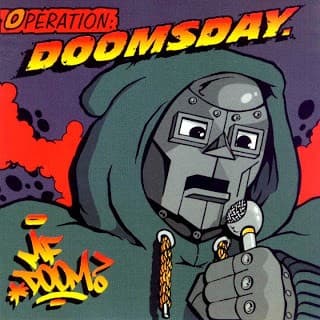
MF DOOM Operation: Doomsday — The Comeback Nobody Expected
No other debut has ever sounded this unbothered by its own rejection.
Most rappers returning from exile spend their comeback trying to prove something. DOOM came back wearing a mask and rapping over beats he made himself in a basement, like the entire industry could go ahead and keep ignoring him. The confidence was not manufactured. It was the sound of someone who had already lost everything once and discovered that failure is just another place to build from.
This was New York underground rap at the tail end of the nineties, when the Rawkus wave was peaking and backpack rap meant something specific. DOOM was operating outside that system entirely. No co-signs, no guest verses from movement leaders, no Lyricist Lounge reveal. Just him, a stack of old records, and a sampler in a room somewhere flipping cartoon dialogue into skits.
What makes this album incomprehensible to casual listeners makes it bulletproof for everyone else. The pacing is wrong on purpose. The structure refuses to accommodate radio. The persona is a comic book villain who talks about his own hands like they belong to someone else.
It should not have worked. It worked because DOOM understood that the margins are not a consolation prize. They are the only place you can say exactly what you want without asking permission. But could anyone have predicted that rejection would forge something this durable?
The man born Daniel Dumile had been Zev Love X in KMD, watched his brother die, watched the label drop him, watched hip-hop move on without a second thought. By the time he reemerged as DOOM, the bitterness had curdled into something sharper. Not anger. Detachment. The rapping sounds like he is teaching a class on syllable placement while barely paying attention to his own genius.
Lo-Fi Philosophy and Dusty Drum Breaks
The production here is intentionally primitive, and that primitivism is the entire point. DOOM made almost every beat on this album himself, chopping jazz loops and soul breaks with the aesthetic of early Pete Rock but none of the polish. The drums sound like they were recorded onto cassette and then bounced back through a four-track. The samples are left raw, no cleaning up the crackle, no EQing out the hiss.
It is basement production that refuses to apologize for the basement.
He flips Sade, Steely Dan, obscure French library music, and makes all of it sound like it came from the same dusty crate. The low end is thick but never overpowering. The kicks thump without dominating the mix. There is space in these beats, room for his voice to wander around inside the frequency range without fighting for air.
When he does bring in live instrumentation it integrates so smoothly you barely notice the shift.
Lyrically this is DOOM establishing the entire framework he would refine for the next two decades. Internal rhyme schemes so dense they create their own gravity. Pop culture references that sound profound until you realize he is just describing breakfast cereal. Wordplay that rewrites itself on the third listen when you finally catch the double meaning buried in the consonant cluster.
He raps about being a villain without ever sounding performative about it. The persona is complete on arrival. How many debuts arrive this fully formed?
The vocal delivery is conversational, almost drowsy in spots, but the technique underneath is surgical. He bends syllables around the beat instead of sitting on top of it, stretching words across bar lines, making rhymes land in pockets most rappers would not even notice. When he wants to snap into a pocket he does it for exactly four bars and then drifts again. It is not laziness.
It is control.
The album does sag in the middle. A few beats feel like sketches rather than finished ideas, and DOOM's willingness to let certain tracks run long without additional layers or switches tests patience. Some of the skits, while thematically coherent, interrupt momentum when the album needs to build it.
But even the weaker moments serve the larger aesthetic. This is not a commercial product. It is a manifesto in album form.
The Descent Into the DOOM Universe
The opening run from the first skit through the title track establishes the entire sonic world in under eight minutes. You know exactly what kind of album this will be before the third song starts. DOOM does not ease you in. He drops you into the deep end and assumes you can swim.
The middle section slows down on purpose, giving the listener space to absorb the density of what came before. These are not filler tracks. They are breathing room. DOOM understands that relentless bangers create fatigue, that an album needs valleys to make the peaks feel higher.
The pacing here is novelistic. Chapters instead of singles.
What this album does better than almost any debut is maintain a consistent texture across nineteen tracks without repeating itself. Every beat sounds like it belongs in the same universe, but no two beats use the same formula. DOOM is world-building, not just sequencing songs.
The skits reinforce that. They are not throwaways. They are load-bearing narrative devices that make the album feel like a concept even when the songs themselves are not directly connected.
The back half tightens up again, hitting harder than the front, which is the opposite of how most albums are structured. By the time you reach the final stretch DOOM has trained your ear to hear what he is doing. The tricks that sounded weird on first listen now sound inevitable. The closing run does not need to explain itself.
The Blueprint for Two Decades of Underground Domination
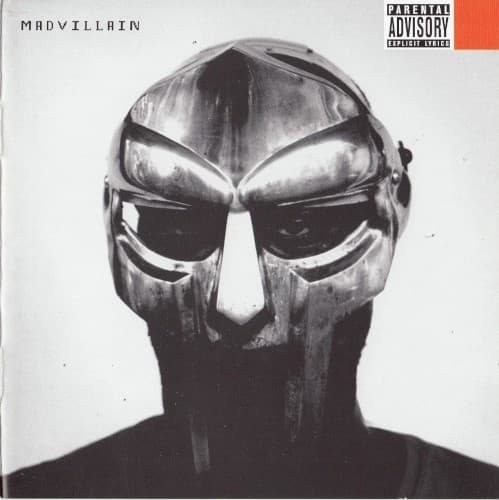
This is the second-best album DOOM ever made, which tells you how high the ceiling got. It sits just below Madvillainy in his catalog, but the gap is smaller than most fans admit. What this album has that Madvillainy does not is the hunger. DOOM is still proving something here, still working through the trauma of being erased, still figuring out what the mask means.
That edge gives the album a rawness his later work traded for refinement.
Who should listen: anyone who wants to understand why DOOM became a cult figure, why his influence spread across two decades of underground rap, why Earl Sweatshirt and Billy Woods and MIKE sound the way they sound. This is the origin text. If you only know DOOM from features or from Madvillainy, start here. This is where the language was invented.
Who might struggle: listeners who need clean mixes and radio-ready hooks. If you require immediate accessibility or cannot tolerate skits, this album will feel like homework. It rewards obsessive relistens and punishes casual engagement.
How it aged: better than it should have. The lo-fi production that sounded cheap in 1999 now sounds timeless. The refusal to chase trends means the album has no expiration date. Play this next to any 2025 underground release and it fits seamlessly.
The only thing that has changed is that the rest of rap finally caught up to what DOOM was doing in a basement twenty-five years ago.
Essential tracks: the title track, Rhymes Like Dimes, Gas Drawls, Dead Bent. Start there and work outward.
Similar albums: Madlib Shades of Blue, Cannibal Ox The Cold Vein, Jaylib Champion Sound. If you connected with this, those albums speak the same language.
Long-term influence: incalculable. Every rapper who has built a career on dense wordplay and minimal self-promotion owes something to this album. DOOM proved you could ignore the industry entirely and still become legendary. That lesson is still being taught.
Track Listing
The Time We Faced Doom (skit)
▲Fantastic Four radio drama samples set the tone. DOOM is positioning himself as a villain from the jump, using the skit format to establish mythology instead of wasting time with intros. Twenty seconds of pure world-building.
Doomsday
▲The Sade flip is genius, chopping "Kiss of Life" into a hypnotic two-bar loop that sounds like it is dissolving in real time. The drums are off-kilter just enough to keep you leaning forward. DOOM's flow here is the blueprint for everything that follows: conversational but technically flawless, packed with internal rhymes that reward the third and fourth listen. He introduces the persona fully formed, talking about metal faces and herb in the cups like it is the most natural thing in the world. The hook is barely a hook, just a repeated phrase that drills into your skull. This is one of the five best album-opening tracks in underground hip-hop history, and I will argue that with anyone.
Rhymes Like Dimes
▲Cucumber Slice on the boards, and the chemistry is immediate. The beat is jazzier, more live-sounding than DOOM's self-produced work, with a flute loop that should sound corny but instead sounds menacing. DOOM's wordplay peaks here: "Livin off borrowed time, the clock tick faster" remains one of his most-quoted bars for a reason. The way he bends the last syllable of every line to connect into the next bar is postgraduate-level technique. I played this in a basement in Philly in 2001 and watched three heads simultaneously stop mid-conversation to ask who this was. That kind of moment does not happen with mid songs.
The Finest
▲Tommy Gunn production. The Isley Brothers flip is smooth but the drums hit harder than anything else in the first half. DOOM goes into storytelling mode here, rapping from multiple perspectives, code-switching his flow to match each character. The vocal layering in the hook adds texture without overproduction. A lot of rappers would have made this the single. DOOM buried it at track four and kept moving.
Back in the Days (skit)
●KMD retrospective skit. DOOM reflecting on his past as Zev Love X, using the skit to acknowledge the previous life without dwelling on it. Thirty seconds that give context without breaking the album's momentum.
Go With the Flow
●Self-produced, and you can hear the seams. The loop is great but the drums feel undercooked, not enough punch in the kick, too much space in the snare pattern. DOOM's flow is sharp but the energy dips. This is the first track that feels like a sketch instead of a finished idea. Still better than half the backpack rap coming out in 1999, but it does not reach the standard DOOM set three tracks earlier.
Tick, Tick…
▲The cleanest beat on the album. DOOM using a smoother loop, letting the sample breathe, and the drums are mixed higher here than anywhere else on the record. His rapping is more direct, less abstract, like he is actually trying to communicate instead of just building syllable puzzles. The hook is actual melody. If he had chased radio play this would have been the single. He did not chase radio play.
Red and Gold
●Self-produced and intentionally grimy. The bass is almost nonexistent, the loop is repetitive, and DOOM sounds like he is rapping through a sock. It works because the lyrics are so dense you need the stripped-down production to focus on what he is saying. This is DOOM at his most technically impressive and his least accessible. The contradiction is the appeal.
The Hands of Doom (skit)
●Black Sabbath sample flipped into narrative framing. DOOM using classic metal to reinforce the villain persona. The skit is longer than it needs to be but thematically consistent. Forty seconds of dread.
Who You Think I Am?
▲The guitar loop here is almost pretty, which makes the bars hit harder when DOOM starts dissecting fake personas and industry politics. His flow gets more aggressive, more clipped, like he is actually annoyed instead of detached. The production stays minimal but the low end finally shows up. One of the most underrated tracks on the album because it sits in the middle where most people lose focus.
Doom, Are You Awake? (skit)
●Dialogue sample about waking up from a coma. DOOM using it as a metaphor for his return to rap. Fifteen seconds that recontextualize everything before it.
Hey!
▲The Syl Johnson flip is perfect, the kind of soul chop that should have been done to death by 1999 but somehow still sounds fresh here. DOOM is coasting on this one, not lazy but comfortable, letting the beat do half the work. The hook is just him saying "hey" over and over and it should be annoying but it is hypnotic instead. I have listened to this song a thousand times and I still cannot tell you what half the verses are about, but the vibe is undeniable.
Operation: Greenbacks
▲The hardest beat on the album. Self-produced, drums punching through the mix, the sample chopped into a relentless two-bar loop that never lets up. DOOM rapping about money and survival without any of the flash that usually comes with that subject matter. This is hunger music. The flow is locked into the pocket, no wandering, no abstractions. Just bars. If you need one track to show someone what DOOM could do when he decided to actually rap-rap instead of doing syllable gymnastics, play this.
The Mic
▲X-Ray production. The beat is jazz-heavy, live drums, upright bass, the whole Tribe Called Quest aesthetic but dirtier. DOOM treating the mic as a literal character, personifying it, building the entire concept around the central metaphor. Technically flawless but not as emotionally resonant as the best tracks. This is DOOM showing off because he can.
The Mystery of Doom (skit)
●Another Fantastic Four sample, this time building narrative tension before the final stretch. Twenty seconds of comic book dialogue that works better than it should because DOOM committed fully to the bit.
Dead Bent
▲Self-produced and the sample choice is deranged in the best way. DOOM flipping what sounds like a children's song into something menacing, the way he pitched it down and slowed it just enough to make it unsettling. His flow here is looser, more playful, but the content is darker than almost anything else on the album. The juxtaposition between the almost-cheerful production and the bleak lyrics creates a tension that most producers would smooth out. DOOM leaned into it. This is top three on the album and I will defend that ranking.
Gas Drawls
▲The crown jewel. Self-produced, the Sade flip again but different, darker, slower than the title track. The drums sound like they are being played in a stairwell. DOOM's flow is hypnotic, the internal rhymes so dense you need a transcript to catch them all. The hook is just him repeating "gas drawls" and somehow it becomes the most memorable moment on the entire album. I heard this for the first time in a dorm room in 2000 and immediately rewound it four times trying to figure out how he was bending syllables that way. Fifteen years later I am still catching new layers in the wordplay. Essential.
?
▲Kurious on the guest verse, and the dynamic shift is jarring in a good way. Suddenly there is another voice in the DOOM universe and it forces you to reevaluate everything you have been hearing. The beat is one of the simplest on the album but it works because the two rappers are doing enough heavy lifting. DOOM's verse here is one of his most quotable. Kurious holds his own. The question mark in the title is appropriate because this track feels like an anomaly even within an album full of them.
Hero vs. Villain (epilogue)
▲The ending. DOOM using another Fantastic Four sample to close the narrative loop, positioning himself as the villain who won by refusing to play the hero's game. No rapping, just dialogue and atmosphere. It is the only way this album could have ended. Anything else would have felt like compromise.