The Brooklyn Drill Ambassador Who Made Global Noise
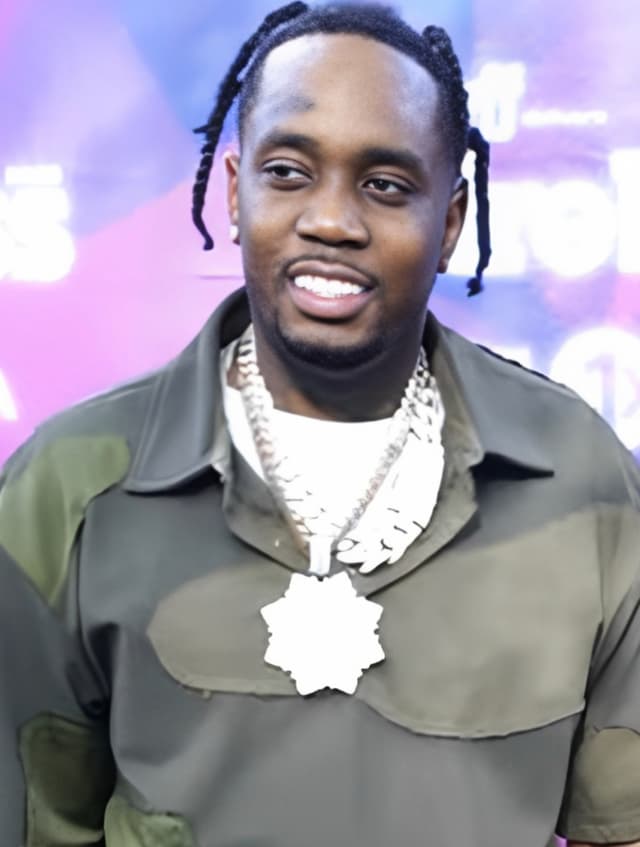
Fivio Foreign emerged from East Flatbush in the late 2010s carrying the raw energy of Brooklyn drill to audiences far beyond New York City's five boroughs. Born Maxie Lee Ryles III in 1990, he spent years navigating the streets and local rap circuits before his breakout moment arrived with 2019's "Big Drip," a track that distilled drill's menacing minimalism into an undeniable earworm. The song's infectious hook and Axl Beats' skeletal production became a cultural flashpoint, turning Fivio from regional favorite into a name whispered in industry circles and blasted from car speakers nationwide.
What separated Fivio from the crowded drill landscape was his ability to balance street authenticity with commercial instinct. While UK drill had already crossed the Atlantic and Chicago drill had defined the sound's early template, Brooklyn's iteration carried its own distinct flavor—darker, more claustrophobic, rooted in the borough's post-gentrification tensions. Fivio Foreign became the face of this movement not through technical virtuosity but through sheer charisma and an ear for hooks that lodged themselves in listeners' heads. His ad-libs became signatures, his delivery instantly recognizable even when sharing tracks with established superstars.
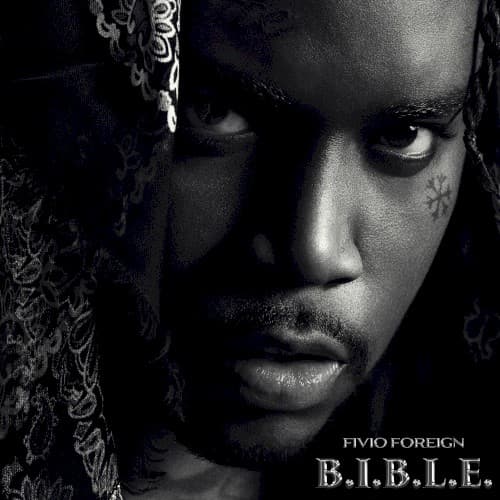
By the time he released his debut studio album B.I.B.L.E. in 2022, Fivio had already appeared on records with Kanye West, Drake, and Nicki Minaj—collaborations that validated his crossover potential while raising questions about whether he could sustain a full-length project. His trajectory reflects modern hip-hop's streaming-era dynamics, where a single viral moment can launch a career, but maintaining momentum requires navigating industry machinery without losing the edge that made you vital in the first place.
Repetition as Weapon: The Sonic Architecture of Fivio's Drill
Fivio Foreign's musical approach centers on hypnotic repetition and rhythmic intensity over lyrical complexity. His flow operates in tight loops, circling back to signature phrases and vocal inflections that create an almost trance-like effect over drill's sparse, menacing production. Where earlier New York rappers built their reputations on dense wordplay and intricate rhyme schemes, Fivio strips the formula down to its percussive core. His delivery punches through beats with staccato bursts, each syllable landing with deliberate force. The result feels less like traditional rap and more like a rhythmic assault—immediate, visceral, designed for maximum impact in clubs and car systems.
The production landscape Fivio navigates is equally austere. Working primarily with drill architects like Axl Beats, Rico Beats, and London On Da Track during his commercial ascent, he thrives on beats built from sliding 808s, eerie melodic fragments, and space—lots of space. These productions don't fill every frequency; they create tension through absence, letting the low-end rumble and hi-hats skitter across empty sonic terrain. Fivio's voice becomes the primary melodic element in this architecture, his ad-libs and hook repetitions providing the memorable elements that distinguish one track from another.
This minimalist aesthetic carries both strengths and limitations. On singles like "Big Drip" and his feature on Kanye West's "Off the Grid," the approach feels perfectly calibrated—every element serves the track's relentless forward momentum. Stretched across a full album, however, the formula can reveal its constraints. Fivio's style doesn't lend itself to dynamic range or emotional depth in the way traditional album-oriented hip-hop demands. His music is built for moments, for turning up, for establishing presence—qualities that made him an ideal feature artist and playlist addition, even as they complicated his path toward being perceived as a complete artistic statement.
From East Flatbush Streets to Kanye's Sunday Service: Fivio's Unlikely Ascent
Fivio Foreign spent most of his twenties in relative obscurity, recording music that circulated locally but never breaking through to wider recognition. The Brooklyn drill scene was bubbling throughout the mid-2010s, with artists like 22Gz, Sheff G, and Pop Smoke beginning to carve out space for the UK-influenced sound in New York's competitive rap ecosystem. Fivio was part of this movement's early phase, but it wasn't until 2019 that he found the formula that would change his trajectory. "Big Drip" arrived that March with little fanfare, but its hook—simple, repetitive, instantly memorable—began spreading through social media and streaming platforms with viral velocity.
The track's success attracted Columbia Records, who signed Fivio and positioned him as a key player in drill's mainstream expansion. His 800 BC mixtape, released later in 2019, capitalized on "Big Drip"'s momentum while showcasing his ability to maintain the sound's intensity across multiple tracks. But Fivio's real breakthrough came through strategic collaborations that placed him alongside hip-hop's elite. His appearance on Drake's "Demons" remix and Lil Tjay's "Zoo York" demonstrated his versatility as a feature artist, while his chemistry with late Brooklyn drill pioneer Pop Smoke on tracks like "Mr. Jones" hinted at what could have been a defining local rivalry-turned-alliance.
Pop Smoke's tragic death in February 2020 altered Brooklyn drill's trajectory and inadvertently positioned Fivio as one of the subgenre's most visible ambassadors. The weight of that representation grew heavier when Kanye West recruited him for Donda sessions, eventually placing Fivio on "Off the Grid" alongside Playboi Carti—a jarring, chaotic posse cut that became one of the album's most discussed moments. Suddenly Fivio was performing at Kanye's Sunday Service events and appearing in high-profile listening parties, his street credibility intact but his audience exponentially expanded.
This industry elevation set high expectations for B.I.B.L.E., his debut album that arrived in April 2022 after multiple delays. The project featured an all-star cast—Kanye West, Alicia Keys, A$AP Rocky, Quavo, Coi Leray—and boasted production from heavyweights who had worked with everyone from Jay-Z to Drake. On paper, it represented everything an emerging artist could want: major label support, A-list collaborators, and the momentum of viral hits behind him. The execution, however, revealed the challenge of translating drill's raw immediacy into album format. While tracks like "City of Gods" (with Kanye and Alicia Keys) generated radio play and "What's My Name" showcased Fivio's hook-writing abilities, the album struggled to cohere as a singular artistic vision.
Critics noted the uneven quality across B.I.B.L.E.'s runtime, with moments of undeniable energy undermined by generic trap filler and features that overshadowed Fivio's own presence. The album debuted at number seven on the Billboard 200, a commercial validation that nonetheless felt like a missed opportunity to establish him as more than a singles artist. In the years since, Fivio has continued releasing music and maintaining visibility through features and social media presence, but the post-album trajectory has lacked the explosive momentum that characterized his 2019-2021 rise. He remains a relevant figure in New York drill's ongoing evolution, yet questions persist about whether he can recapture the zeitgeist-capturing energy of his breakthrough moment.
Brooklyn Drill's Mainstream Bridge and the Question of Longevity
Fivio Foreign's most significant contribution lies in his role as drill music's commercial translator—the artist who proved the sound could generate radio hits and chart placements without completely sanding down its abrasive edges. While Pop Smoke is rightfully remembered as Brooklyn drill's most important figure, his death came before he could fully realize his crossover potential. Fivio inherited some of that responsibility, demonstrating through collaborations and his own singles that drill's aesthetic could coexist with mainstream hip-hop's demands. His presence on a Kanye West album, his ability to share tracks with Drake, and his navigation of major label machinery all expanded the genre's reach beyond its New York origins.
The impact of "Big Drip" specifically shouldn't be understated. The track became a template for how drill could achieve viral success in the streaming era—not through lyrical complexity or innovative production, but through infectious simplicity and repetition that translated perfectly to short-form video content and playlist culture. Countless artists have since attempted to replicate that formula, with varying degrees of success. Fivio proved that drill didn't need to evolve dramatically to find mainstream acceptance; it just needed the right artist with the right song at the right moment.
Yet Fivio's legacy remains incomplete, his story still being written in real-time. He exists in that uncertain space occupied by artists who achieve significant visibility without fully cementing their place in hip-hop's hierarchy. Compared to the comprehensive artistic statements delivered by artists like Kendrick Lamar or the consistent commercial dominance of Drake, Fivio's catalog feels like a collection of moments rather than a cohesive body of work. Whether he's remembered as a crucial bridge figure who helped drill reach new audiences or as a cautionary tale about viral success outpacing artistic development will depend on what comes next—whether he can build on his foundation or remains defined by a single breakthrough moment and a handful of high-profile collaborations that captured drill's raw energy before it fully crossed over.