When Kanye Put the Crown on His Head
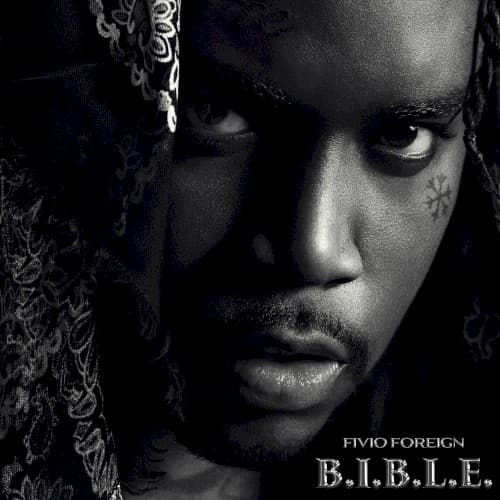
April 2022. Fivio Foreign finally drops his major-label debut after two years of hype, guest verses on every New York drill compilation, and Kanye West publicly calling him the future. The pressure was suffocating. B.I.B.L.E. arrives with the weight of expectation that sinks most rappers before they even press record.
Here's the situation. Fivio spent 2019 to 2021 perfecting one thing: the menacing, repetitive, hypnotic drill flow that made "Big Drip" a sleeper anthem. He wasn't versatile. He wasn't a storyteller. He was a voice, a presence, an energy that worked in two-minute bursts. Then Kanye got involved, executive produced the whole project, and suddenly Fivio's supposed to be an album artist. That's like asking a sprinter to run a marathon.
The result? An album that works in flashes but stumbles under its own ambition. When Fivio stays in his zone, locked into sparse drill production with minimal melodies and maximum menace, B.I.B.L.E. hits hard. When he reaches for radio crossover moments or tries to carry emotional weight he's not built for, the whole thing wobbles. The tracklist is bloated. The sequencing is confused. But the peaks are undeniable, and Fivio Foreign's evolution as an artist proves he's more than a one-flow wonder.
This album doesn't reinvent drill. It doesn't need to. What it does is show you exactly who Fivio Foreign is when given a full canvas: a Brooklyn street rapper with legitimate star power, charisma that translates through speakers, and just enough self-awareness to know when to bring in help. He's not Pop Smoke. He's not Sheff G. He's Fivio, and that's enough when he stays in his lane. The problem is the album keeps swerving out of it.
Executive Production as Double-Edged Sword
Kanye West's production influence is all over this thing, for better and worse. The production palette is deliberately split: half the album sits in classic New York drill territory with producers like Desiigner, AXL Beats, and B Love delivering cold, sliding 808s and eerie piano loops. The other half chases pop-rap accessibility with gospel choirs, stadium-sized drums, and melodic hooks that feel imported from a completely different project. The split never fully reconciles.
When B.I.B.L.E. commits to drill orthodoxy, it's locked in. The low end rumbles. The hi-hats skip and stutter. Fivio rides the pocket with that signature bark-and-pause flow, letting syllables hang in the air before snapping back into rhythm. He's not technically complex, but he understands tension. He knows when to pull back and when to attack. His voice has weight. It fills space. On the drill-heavy cuts, that's all you need.
The problems start when the album reaches for something bigger. Kanye's influence pushes Fivio toward inspirational anthems and vulnerability he's not equipped to deliver. Tracks with gospel samples and uplifting messages land flat because Fivio's strength is aggression, not introspection. He's a performer, not a philosopher. When he tries to carry emotional weight solo, his limitations show. His bars don't have the depth to support the grand production.
Lyrically, Fivio operates in a narrow lane. Street tales. Flexing. Threats delivered with casual menace. He's not quotable in the traditional sense, but he has an ear for rhythm and repetition that sticks. His ad-libs do as much work as his verses. The problem is over seventeen tracks, that formula wears thin. By the back half, you've heard every trick in his arsenal twice.
The features are strategic but overused. Kanye, A$AP Rocky, Quavo, Polo G, Chloe Bailey, Alicia Keys, The Kid LAROI, Yung Bleu, DJ Khaled, Ne-Yo, Vory, Queen Naija — the list reads like a label throwing everything at the wall to see what charts. Some features elevate. Others feel like desperate grabs at different audiences. The album would've been stronger at twelve tracks with half the guests.
Production highlights: the skeletal drill beats hit harder than the overproduced crossover attempts. When the album strips down to just bass, drums, and Fivio's voice, it finds its identity. When it piles on choirs and melodies, it loses the edge that made Fivio interesting in the first place.
The biggest flaw? The album doesn't know who it's for. Drill purists will skip the pop tracks. Radio listeners won't sit through the street cuts. Fivio needed to pick a lane and dominate it. Instead, he split the difference and ended up with an album that's half great, half forgettable.
Where the Album Actually Delivers
The opening stretch is the strongest run. The first five tracks establish Fivio's identity before the album loses focus. The energy is raw. The production is cohesive. It feels like a statement. Then the middle bloats, and the back half tries to recover.
The real standouts are the tracks that let Fivio be Fivio without overthinking it. The street-focused drill cuts where he's not trying to be inspirational or melodic, just threatening and hypnotic. Those moments remind you why Kanye saw potential in the first place.
The weakest stretch? The middle third drags. Too many features doing too much. Too many songs that sound like they were built for playlists, not albums. By track ten, the momentum is gone, and the album never fully gets it back.
The closing run tries to bring it home, but it's too late. The damage is done. You're checking the time, waiting for it to end. That's a pacing problem. A sequencing problem. An editing problem. Someone should've cut four tracks and tightened the focus.
One underrated moment: the stretches where Fivio flows without stopping for hooks or features. Just bars over a cold beat. That's when his presence is most effective. But those moments are too rare. The album keeps interrupting itself with commercial pivots that kill the vibe.
The Debut That Almost Was
In Fivio Foreign's catalog, this sits as his most ambitious project and also his most uneven. It's a debut that proves he can hold attention beyond two-minute singles, but it also exposes the limits of his range. When he stays locked into his signature drill sound, B.I.B.L.E. works. When it chases crossover appeal, it stumbles.
This album is for drill fans who can tolerate pop detours and casual listeners who want a taste of Brooklyn's sound without full immersion. It's not for purists. It's not for anyone looking for lyrical depth. It's a showcase album, a proof of concept, a stepping stone. Fivio proved he's more than a feature rapper. He didn't prove he's a complete artist yet.
How has it aged? Two years later, the drill tracks still hit. The pop crossovers feel dated already. That's the problem with chasing trends instead of defining them. Fivio had a chance to cement himself as drill's next torchbearer. Instead, he made an album that's half classic New York energy, half major-label compromise.
The rating reflects potential met halfway. At its best, B.I.B.L.E. is an 8.5. At its worst, it's a 6. Average it out and you get a solid 7.3: good enough to justify the hype, flawed enough to leave you wanting more. Fivio Foreign can rap. He can carry a track. He can't carry seventeen of them. Not yet.
Track Listing
On God
▲Drill tension with a hymnal edge. The opening salvo sets the tone: Fivio over a sinister piano loop and thundering 808s, barking threats with that signature stop-start cadence. It's an announcement, a warning, a flex. The production keeps it minimal — just enough space for his voice to dominate. No wasted words. No unnecessary melodies. Just presence. This is Fivio at his most locked in, and it's exactly how you open a debut. The track doesn't overstay its welcome. In and out. Statement made.
Through the Fire
●The Kanye influence is obvious here — stadium drums, triumphant horns, a hook that screams "motivational playlist." Fivio tries to carry the inspirational weight, but his bars don't have the depth to match the production's ambition. It's a decent anthem, sure. Radio-ready. But it feels imported from someone else's album. The energy is there, but the substance isn't. This is the first sign of the album's identity crisis: is Fivio a drill demon or an inspirational figure? He's better at the former, but the label wants both.
Magic City
▲3 AM in Atlanta. Money everywhere. Bottles on every table. Fivio's not even trying to be deep here, and that's what makes it work. He's just flexing over a hypnotic loop, riding the beat with minimal effort because he doesn't need to do more. The hook is repetitive to the point of trance. The verses are paint-by-numbers strip club rap. And somehow it all works because Fivio sells it with pure charisma. This is the kind of track that sounds better in a car at night than it does on headphones in the morning.
City of Gods
▲Kanye. Fivio. Alicia Keys. On paper, this shouldn't work. In practice, it's the album's undeniable centerpiece. Ye's verse is unhinged and brilliant, classic post-2020 Kanye where he's half-rapping, half-ranting, and somehow still stealing the show. Fivio holds his own, but barely. Alicia's hook is massive, arena-sized, the kind of chorus that demands to be sung back at festivals. The beat is cold and triumphant at once — drill percussion under gospel-sized synths. This is what happens when Fivio gets out of his own way and lets the song be bigger than him. It's the album's peak, and everything after chases this high.
What's My Name
●Queens Naija on the hook trying to add R&B smoothness to a drill track, and it's awkward. Fivio's verses are solid but predictable. The production tries to split the difference between street and commercial and ends up in no man's land. This is the kind of track that gets skipped after two listens. It's not bad. It's just unnecessary. Every album has one of these — the song that was obviously recorded to chase a lane that doesn't fit. This is that song.
For Nothin
▲Back to basics. Sparse drill production, no frills, just Fivio doing what he does best: menacing repetition over sliding 808s. The hook is simple. The verses are threats delivered casually. This is comfort zone territory, and it sounds effortless because it is. No reaching. No guest trying to steal shine. Just a solid drill track that reminds you why Fivio got signed in the first place. It's not flashy, but it doesn't need to be.
Hello
▼The Kid LAROI shows up and immediately makes this feel like a TikTok pivot. The melodic hook is catchy in a synthetic, focus-grouped way. Fivio sounds uncomfortable trying to match the pop-rap energy. This is label interference disguised as experimentation. It's the sound of Columbia Records saying "we need something for the streaming playlists." And sure, it probably worked for that purpose. But it doesn't belong on a drill album. Skip material for anyone who came here for New York street energy.
Confidence
▲I played this track at a cookout last summer and three people asked me to replay it. That's what a good album cut does — it doesn't try to be a single, it just vibes. Fivio isn't saying anything revolutionary here. The production is clean drill with a slightly brighter tone. But something about the rhythm, the way he lets the hook breathe, the confidence in his delivery — it all clicks. This is the kind of track that grows on you. Not flashy. Just effective. Underrated.
Slime Them
▲A$AP Rocky glides over this beat like he's done this a thousand times, which he has. His verse is smooth, unbothered, technically superior to anything Fivio delivers on the entire album. Fivio holds his own, but Rocky makes it clear who's the more complete rapper. The production is menacing in that slow-burn way — minor keys, heavy bass, no rush. It's one of the album's strongest moments because both rappers understand the assignment: don't overdo it, just ride. Rocky's presence elevates the entire track. Fivio needed more features like this and fewer pop crossovers.
Feel My Struggle
●Fivio tries to get personal and vulnerable, talking about the pain, the losses, the struggle to make it out. The intent is there. The execution isn't. He doesn't have the lyrical toolkit to carry emotional weight for four minutes straight. The production is somber, almost too pretty for his voice. It's a well-meaning track that doesn't land because Fivio's strength is menace, not reflection. Not every rapper needs to bare their soul. Sometimes it's okay to just be the threat.
World Watching
●Quavo and Yung Bleu show up, and suddenly this feels like a posse cut recorded in three different studios. The chemistry is nonexistent. Everyone says their piece and leaves. The hook is generic. The verses are solid individually but don't connect. This is filler disguised as a marquee feature track. It's the kind of song that makes you wonder if anyone actually listened to the album as a whole or just assembled seventeen loosely related tracks and called it done.
B.I.B.L.E. Talk
●The title track should be a statement. Instead, it's a mid-tempo reflection that meanders without purpose. Fivio tries to explain what B.I.B.L.E. means (Basic Instructions Before Leaving Earth, a concept borrowed from GZA and reframed). The intent is noble. The execution is clunky. The production is too polished, too clean for the message. It's a track that sounds like it was supposed to be the album's emotional anchor but got lost in the mixing process. Decent. Forgettable.
Changed on Me
▲This hits harder than it should. Fivio talking about people switching up, friends turning into strangers, loyalty evaporating the second money enters the picture. It's a familiar story, but he tells it with genuine frustration. The production is cold and reflective — stripped-back drums, a haunting loop, space for the words to land. This is one of the few moments where Fivio's attempt at introspection actually works because he's not trying to be deep, he's just being honest. One of the album's better back-half tracks.
Left Side
●Chloe Bailey's vocals are gorgeous, effortless, and completely wasted on this track. Her presence feels like a label suggestion, not an organic collaboration. Fivio's verses are competent but don't match her energy. The production tries to bridge R&B and drill and ends up pleasing neither camp. This is the kind of crossover attempt that looks good on paper but falls flat in execution. Chloe deserved a better track. Fivio didn't need her here.
Love Songs
▼Ne-Yo on a Fivio Foreign album in 2022. Stop and think about that. This is a desperate reach for radio play disguised as artistic range. The production is glossy R&B-lite. Fivio sounds out of place trying to talk about relationships with any depth. Ne-Yo does what he always does — professional, polished, completely detached from the rest of the album's energy. This track should've been cut. It adds nothing. It's the bathroom break moment 73 minutes into a bloated tracklist.
Whoever
●DJ Khaled yelling ad-libs. Polo G delivering a solid but unremarkable verse. Vory on the hook sounding like he's half-asleep. This is the sound of too many cooks in the kitchen. The beat is decent — standard drill framework with slight melodic touches — but the song has no center. Everyone shows up, does their job, and leaves. No chemistry. No memorable moments. Just another track on an album that needed four fewer tracks.
Can't Be Us
●The album ends with Fivio solo, no features, just him over a cold drill beat trying to close strong. And he almost does. The energy is back. The flow is locked in. The production is minimal and menacing, exactly what the album needed more of. But it's too late. By track seventeen, you're exhausted. The closer works in isolation, but in context, it feels like an afterthought. If the album had been twelve tracks and ended here, it would've been a statement. Instead, it's just the relief of reaching the finish line.