How OutKast Transformed Southern Hip-Hop Into High Art
When OutKast emerged from Atlanta in 1994, the South was still fighting for respect in hip-hop. The coasts held cultural dominance, and Southern artists faced skepticism about their lyrical depth and production sophistication. Andre 3000 and Big Boi didn't just challenge that perception—they obliterated it. Across six studio albums and a decade of creative ascent, they proved the South had something the coasts lacked: fearless innovation, genre-blurring ambition, and a willingness to risk everything on artistic vision.
The duo met as teenagers at Tri-Cities High School in East Point, Georgia, bonding over a shared love of hip-hop that extended beyond regional boundaries. Signed to LaFace Records through the Organized Noize production collective, they became the flagship act for what would become the Dungeon Family—a loose network of Atlanta artists including Goodie Mob, Sleepy Brown, and Killer Mike. Their early work carried the smoky funk of the South but hinted at something stranger, more experimental, lurking beneath the surface.
OutKast didn't follow trends. They set them, then abandoned them before anyone could catch up. From the bass-heavy storytelling of their debut to the psychedelic sprawl of their later work, they refused to repeat themselves. Each album represented a complete creative reinvention, forcing listeners and critics alike to expand their definition of what hip-hop could be. They turned the perceived limitations of Southern rap into strengths, proving that regional identity could fuel universal artistic ambition.
The Sonic Alchemy Behind OutKast's Genre-Defying Sound
OutKast's production drew from a deep well of Southern musical heritage—funk, soul, gospel, blues—but filtered through a futuristic lens that kept their sound perpetually ahead of the curve. Organized Noize provided the foundation for their early work, crafting beats that breathed with live instrumentation: warm basslines, crisp snares, and melodies that felt analog even when built from samples. The production never sounded rushed or machine-made. It had texture, space, air moving through it.
Andre 3000 and Big Boi operated as complementary opposites. Big Boi brought technical precision and rhythmic pocket, his flow locked into the beat with mechanical accuracy while maintaining Southern cadence and swagger. He handled the ground-level perspective—street narratives, relationship dynamics, and the reality of life in the ATL. Andre 3000 represented the abstract extreme: his delivery grew increasingly experimental over time, bending syllables and warping melodies until he occupied a space somewhere between rapper, singer, and spoken-word poet. His verses took left turns into philosophy, surrealism, and self-interrogation.
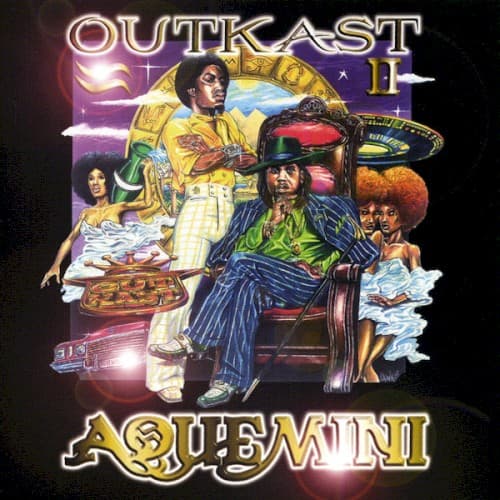
By the time they recorded Aquemini in 1998, OutKast had matured into complete auteurs. That album showcased their range: the twitchy paranoia of "Rosa Parks," the lush introspection of "SpottieOttieDopaliscious," the cosmic storytelling of the title track. The production incorporated live horns, strings, and harmonicas alongside synthesizers and drum machines. They made music that demanded repeated listens, revealing new layers with each pass. The album earned a 9.5 rating in retrospective critical assessment, recognized as a towering achievement that balanced accessibility with artistic depth.
From Regional Underdogs to Global Game-Changers: OutKast's Rise
Southernplayalisticadillacmuzik arrived in 1994 and immediately announced a new voice in hip-hop. The album went platinum, driven by the single "Player's Ball," but more importantly, it established OutKast as something different—Southern artists who could hold their own lyrically while bringing distinct sonic flavor. They won Best New Rap Group at the Source Awards in 1995, where Andre 3000 delivered his famous declaration: "The South got something to say." That moment became a rallying cry for an entire generation of Southern artists.
ATLiens followed in 1996, deepening their cosmic-funk aesthetic and expanding their conceptual ambition. The album felt like a transmission from another dimension—slower tempos, stranger textures, lyrics that grappled with alienation and identity. Commercially successful and critically lauded, it proved their debut wasn't a fluke. Then came Aquemini, which many fans and critics consider their masterpiece. The album represented perfect synthesis: Big Boi's earthbound grit meeting Andre's celestial flights, Organized Noize's organic production fusing with new sonic experiments. It moved seamlessly between introspective soul-searching and hard-hitting club records, between social commentary and personal confession.
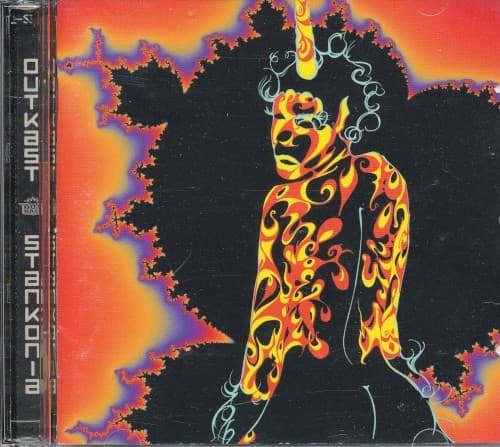
Stankonia in 2000 pushed even further into experimental territory. The production grew denser, weirder, more aggressive. Songs like "B.O.B. (Bombs Over Baghdad)" exploded with drum-and-bass energy that felt alien to mainstream hip-hop at the time. "Ms. Jackson" became their biggest hit to date, an emotionally vulnerable apology letter that dominated radio while losing none of its artistic integrity. The album sold millions and swept awards ceremonies, proving experimental music could achieve massive commercial success.
Speakerboxxx/The Love Below in 2003 functioned as a double album showcasing each member's individual vision. Big Boi's Speakerboxxx delivered classic OutKast hip-hop with modern polish. Andre's The Love Below veered into full-on genre experimentation—Prince-inspired funk, acoustic ballads, jazz interludes—barely resembling a rap album at all. "Hey Ya!" became a global phenomenon, one of the biggest singles of the decade, while "The Way You Move" proved Big Boi could match his partner in crossover appeal. The album won Album of the Year at the Grammys, making OutKast the first hip-hop act to earn that honor.
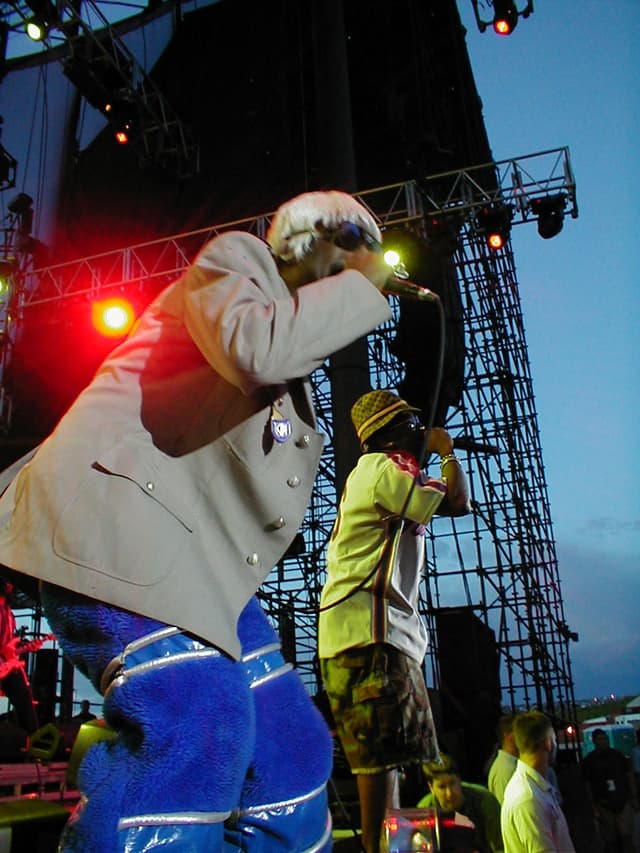
Idlewild in 2006 served as soundtrack to their film of the same name, a prohibition-era musical that failed to connect with audiences. The album felt more like a side project than a proper OutKast statement, and while it contained strong moments, it lacked the cohesion and ambition of their previous work. After Idlewild, the duo went on indefinite hiatus. Both members pursued solo projects—Big Boi released well-received albums that maintained traditional hip-hop form, while Andre 3000 mostly retreated from music, appearing as a guest on other artists' tracks but releasing no solo album. They reunited for festival performances in 2014 but have not recorded new material together since.
OutKast's Enduring Influence on Hip-Hop's Creative Boundaries
OutKast permanently altered what was possible in hip-hop. They proved Southern artists could be avant-garde without sacrificing regional authenticity, that experimentation and commercial success weren't mutually exclusive, and that hip-hop albums could be judged by the same artistic standards as any other form of music. Their influence echoes through every Atlanta artist who followed—from the melodic flows of Future and Young Thug to the genre-blurring work of Janelle Monáe and Anderson .Paak.
They opened doors for artists who refused to fit into neat categories. Kendrick Lamar's conceptual ambition and willingness to push sonic boundaries descends directly from OutKast's blueprint. Tyler, The Creator's genre-fluid approach and uncompromising artistic vision follows their example. Kid Cudi's introspective vulnerability and sonic experimentation builds on ground they cleared. Even artists outside hip-hop—from The Roots to Flying Lotus—cite OutKast as proof that genre limitations exist only in the minds of those afraid to challenge them.
More than specific musical innovations, OutKast changed the culture's understanding of what a hip-hop artist could be. They demonstrated that intelligence, eccentricity, and vulnerability were strengths, not weaknesses. They showed that you could honor your roots while reaching for something completely new. Their catalog remains a masterclass in artistic evolution—six albums that document a creative journey without compromise, without repetition, and without apology. Decades after their peak, OutKast's music still sounds like the future.