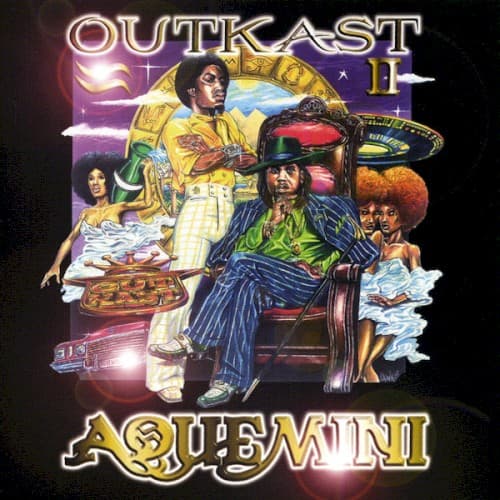
OutKast Aquemini — The Night Atlanta Stopped Apologizing
No other Southern rap album demanded this much from its audience and got it anyway. Where ATLiens floated, Aquemini digs in. Where Southernplayalistic leaned on bounce, this album builds monuments. Big Boi and André 3000 spent 1998 proving the South could outthink, outwrite, and outproduce anyone doubting the region's intelligence, and they did it without compromising a single bar of their weirdness.
The East Coast still owned prestige in 1998. West Coast G-funk had faded. And here came OutKast with live bass, gospel organs, and song structures that refused to behave. They were not chasing New York's approval anymore. They were rewriting what ambition sounded like below the Mason-Dixon.
This is the album where OutKast stopped being a great Southern group and became one of the greatest groups, period. The divide between Big Boi's street journalism and André's cosmic searching — the tension that would eventually split them — creates the friction that makes Aquemini burn. Seventy-three minutes, sixteen tracks, zero filler. They were twenty-three years old and already operating at a level most artists never reach.
When the Bassline Became a Philosophy
Organized Noize built the foundation, but OutKast and co-producers Earthtone III pushed the sound into uncharted territory. The production borrows from Parliament's spacefunk, Sly Stone's psychedelic soul, and the spare menace of Memphis bass music, then filters it all through Atlanta's humid, late-night tension. Listen to the way the bass moves — it does not thump, it breathes. It expands and contracts like something living.
The album's palette is brown and gold. Dusty drums, warm Rhodes electric piano, analog synthesizers that hum instead of shine. Mr. DJ's scratches feel like punctuation marks. The live instrumentation gives every song texture — you can hear fingers on fretboards, sticks hitting drumheads. Nothing here sounds programmed, even when it is.
Big Boi raps like he is settling debts. His cadence is all momentum, never wasting a syllable, riding pockets most MCs would not even notice. He reports from Savannah's West Side with the specificity of someone who lived every corner he names. André floats between sung melodies and jagged flows, switching registers mid-verse, his voice cracking with urgency on certain lines. Their chemistry is not about similarity — it is about counterbalance.
Lyrically, the album wrestles with survival, spirituality, and the weight of success. Big Boi talks money and moves. André questions existence and identity. The two perspectives orbit each other without ever fully aligning, and that refusal to merge is what makes the album feel alive. There is no unified thesis here, just two brilliant minds working in parallel.
The album's one weakness is its length. At seventy-three minutes, a few moments stretch thin when the ideas could have been tightened. But even the slower passages serve a purpose — Aquemini is not background music. It demands your full attention and rewards patience.
The Journey From Dusk to Revelation
The first stretch establishes duality immediately. The album opens with a brief invocation, then launches into hard street talk and social commentary before the fifth track arrives and redefines what the rest of the album will be. The sequencing is not linear — it spirals. Moments of aggression crash into introspection. Club energy collapses into late-night confession.
The middle section is where Aquemini separates itself from every other rap album released in 1998. These songs do not follow verse-chorus-verse structures. They build and rebuild themselves, moving through multiple emotional zones within a single track. The storytelling here is novelistic, concerned with character and consequence, not punchlines. You cannot skip around this album. Each song sets up the next.
The back half refuses to let you relax. Just when you think you understand the album's rhythm, it shifts again. The penultimate stretch includes some of the most vulnerable and aggressive moments on the record, sometimes within the same three minutes. The closing run does not offer resolution — it offers more questions. Aquemini ends the way it began, restless and searching, never settling on easy answers.
The Album That Changed Everything and Got No Credit
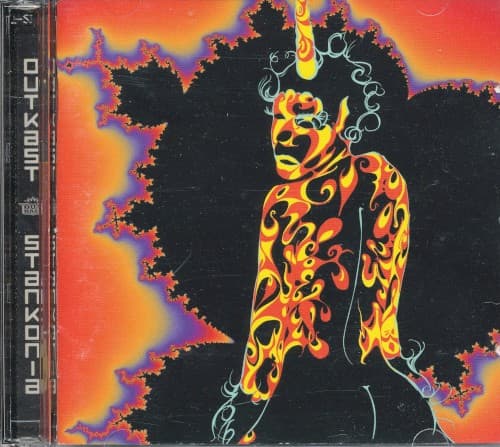
Aquemini sits at number one in the OutKast catalog, and the gap between this and Stankonia is smaller than people admit. This is the last time Big Boi and André sounded like they were chasing the same vision, even if they were approaching it from opposite directions. Everything they did after this album was either an expansion of ideas introduced here or a reaction against the intensity required to make it.
Listeners who want rap music that challenges them will find endless rewards in Aquemini. Fans who prefer hooks and instant gratification might struggle with the album's density. This is not a record that reveals itself in one sitting. It is a grower, the kind of album that sounds different depending on your age, your mood, your life circumstances. In 1998, it felt ahead of its time. In 2026, it still does.
The album aged like a first pressing of a jazz record — it only gets more valuable as the context around it fades. Younger listeners discovering OutKast for the first time often skip straight to Stankonia or Speakerboxxx/The Love Below, but Aquemini is the album that explains how those records became possible. This is where they proved Southern rap could be as complex, layered, and uncompromising as anything happening in New York or Los Angeles.
If you only know OutKast from their radio hits, start here. If you think Southern rap peaked with trap, go back and hear what ambition sounded like before the formula calcified. If you have been sleeping on this album for two decades because you thought ATLiens was the peak, you owe yourself a correction. Aquemini is the sound of two artists at the absolute height of their powers, still hungry, still angry, still unafraid to fail in pursuit of something greater.
Track Listing
Hold On, Be Strong
▲A fifty-second invocation that sets the spiritual tone. Spanky's voice cracks with emotion over sparse keys, offering a prayer before the storm. Not a full song, but a necessary breath before OutKast plunges into the deep end. It is the kind of intro that only makes sense once you have heard the whole album.
Return of the "G"
▲Big Boi arrives with a vicious flex, his flow locked into the beat's pockets like he engineered them himself. The production rattles and hums, all low-end threat and sharp hi-hats. This is street rap with no apologies, every line a reminder that OutKast can still operate in the mode they established on their debut. André's verse is looser, more melodic, but just as deadly. The hook is minimal, functional, and the song ends abruptly, as if they recorded it, listened back once, and said that's enough. It is a warning shot, proof that the experimentation to come is not softness.
Rosa Parks
▲The song that became the unlikely radio single, built on a guitar lick that sounds like it was stolen from a Blaxploitation film. Big Boi's verses are pure momentum, syllables tumbling over each other without ever losing clarity. André's delivery is looser, more conversational, but his wordplay cuts just as deep. The hook is a chant, simple and unforgettable, the kind of refrain that lodges in your brain for weeks. Organized Noize's production is deceptively simple — a few elements repeated, but arranged with so much space that every sound lands with full impact. The song sparked a lawsuit from Rosa Parks' estate, which tells you how far the track traveled beyond the hip-hop bubble. It is the closest Aquemini gets to a traditional single, but even here, OutKast refuses to play it safe.
Skew It on the Bar‐B
▲Raekwon shows up and reminds everyone that Wu-Tang's grimy New York aesthetic and OutKast's Southern cosmic funk can coexist in the same three minutes. His verse is all concrete and winter coats, a sharp contrast to Big Boi's humid streetscapes. The production is skeletal, drums and bass with just enough synth shimmer to keep it from sounding too raw. André's sung hook is strange and sticky, his voice pushed high in the mix, almost angelic against the dirt of the verses. This is one of the album's most aggressive moments, proof that OutKast had not abandoned the edge that made Southernplayalistic hit so hard. The collaboration works because nobody adjusts their style to meet in the middle — they just collide.
Aquemini
▲The title track is a mission statement disguised as a seven-minute odyssey. The beat shifts twice, moving from meditative Rhodes and bass to a more urgent, almost frantic section, then settling into a hypnotic groove. Big Boi's opening verse is some of the best writing of his career, every line packed with internal rhymes and vivid imagery. André matches him with a verse that veers between rapping and singing, his voice cracking with emotion, the delivery raw and unpolished in the best way. The song is about balance, about the push and pull between two opposite forces that need each other to function. It is Gemini and Aquarius, fire and water, street and cosmos. The production breathes, giving each verse space to land before the beat evolves again. There is no traditional hook, just a repeated phrase that anchors the song without dominating it. This is the moment where Aquemini reveals its full ambition. It is not a collection of singles. It is a statement.
Synthesizer
●George Clinton shows up and turns the album into a full-blown P-Funk séance. His voice warbles over bubbling synths and a bassline that moves like liquid. Big Boi and André trade verses that feel more like freestyles, loose and exploratory, riding the groove without trying to dominate it. The production is all texture, layered keyboards and effects that swirl around the vocals. This is OutKast at their most experimental, willing to let a track breathe and groove without worrying about radio or structure. It is a bridge between the album's harder moments and the introspective second half, a reminder that OutKast's influences run deeper than most rap fans realize. Some listeners skip this one, but it is essential to understanding the album's full palette.
Slump
●The darkest moment on the album, a song about dead-end nights and bad decisions. The production is murky, bass-heavy, with just enough melody to keep it from sinking into pure depression. Big Boi's verse is matter-of-fact, reporting from the trap without judgment. André's contribution is more abstract, his voice layered and distant, almost haunted. The hook is minimal, more of a chant than a sung melody, and the whole song feels like it is dragging you underwater. It is not a fun listen, but it is an honest one. Aquemini does not shy away from the consequences of the lifestyle it sometimes celebrates, and this track is where that tension becomes explicit.
West Savannah
▲Big Boi's most personal moment on the album, a letter to his younger brother serving time. The production is warm and melancholic, built around a soulful sample and live drums that shuffle instead of knock. His verse is pure storytelling, no punchlines, no flexing, just vivid details about growing up in Savannah and the choices that led to his brother's incarceration. André stays out of the way, letting Big Boi own the narrative. The song is heartbreaking without being sentimental, and it is one of the clearest examples of Big Boi's ability to balance street reporting with genuine emotion. It is the kind of song that proves Southern rap could be just as introspective and literary as anything coming out of New York in the so-called golden era.
Da Art of Storytellin', Part 1
▲The first half of OutKast's storytelling masterpiece, and it might be the best pure writing on the entire album. Big Boi's verse is a short film, a love story that ends in tragedy, every detail chosen with precision. André's verse is dreamier, more surreal, but just as devastating. The production is lush, built around a flipped soul sample and live bass that moves with the narrative. The hook is simple and effective, more scene-setting than chorus. This is OutKast showing off their range, proving they can write character-driven narratives that rival anything in contemporary literature. The song ends on a cliffhanger, setting up the second part without resolving the emotional weight of what just happened.
Da Art of Storytellin', Part 2
▲The sequel takes the narrative framework and explodes it into abstraction. The beat is sparse, built on little more than drums and a haunting vocal sample. Big Boi's verse is grounded, still rooted in street reality, but André's contribution is pure cosmic searching, a meditation on mortality and meaning that feels more like spoken-word poetry than traditional rap. The song shifts halfway through, the beat dropping out entirely for a moment before rebuilding into something slower and heavier. It is the album's emotional climax, the point where all the tension between Big Boi's realism and André's existentialism finally collides. Some fans find this one too dense, too strange, but it is essential to the album's thesis. Aquemini is not interested in easy resolutions.
Mamacita
▲A tribute to women that avoids the usual misogyny and objectification plaguing so much 90s rap. The production is smooth, almost jazzy, built around Rhodes piano and a shuffling drum pattern. Big Boi and André trade verses celebrating Black women without reducing them to bodies or conquests. It is a refreshing break from the album's heavier themes, a moment of joy and appreciation. The hook is sung, melodic, and the whole song feels like a deep breath after the intensity of the storytelling tracks. It is not the most ambitious moment on Aquemini, but it is a necessary one, proof that OutKast could write love songs without losing their edge.
SpottieOttieDopaliscious
▲The album's secret weapon, a seven-minute epic built on a horn section that sounds like it was lifted from a 1970s soul revue. The production is live, organic, every instrument recorded with space and warmth. Big Boi's verse is a coming-of-age story, a night at a club that becomes a meditation on growing up and leaving certain things behind. Sleepy Brown's sung hook is one of the most beautiful moments in OutKast's entire catalog, his voice floating over the horns with effortless grace. André's verse arrives late, and when it does, it is devastating. He raps about becoming a father, about the fear and responsibility that come with bringing a life into a violent world. His voice cracks, the delivery almost breaking under the weight of what he is saying. The song is not structured like a traditional rap track — it builds slowly, lets the horns breathe, gives every moment room to land. It is the most musically ambitious song on Aquemini, and it is the one track that even casual fans know by heart. If someone asks you why OutKast matters, play them this.
Y'all Scared
▲A middle finger to everyone doubting the South, delivered with venom and precision. The production is hard, all drums and bass, no melody to soften the blow. Big Boi and André trade aggressive verses, their flows locked in, every line a challenge. The hook is a taunt, simple and effective. It is OutKast reminding the industry that they can still operate in pure battle-rap mode when necessary. Coming after the beauty of the previous track, this one hits even harder, a reminder that Aquemini contains multitudes. Some fans find it too confrontational, but that is the point.
Nathaniel
●A brief, strange interlude that feels like a fever dream. Distorted vocals, minimal production, more atmosphere than song. It lasts less than two minutes and serves as a palate cleanser before the final stretch.
Liberation
▲Cee-Lo, Erykah Badu, and Big Rube join OutKast for a sprawling meditation on freedom, spirituality, and the search for meaning. The production is jazzy, live, built on upright bass and brushed drums. Cee-Lo's sung hook is gospel-tinged, his voice soaring over the track. Big Boi's verse is grounded, still concerned with material reality, while André drifts into more abstract territory. Badu's contribution is brief but powerful, her voice adding a layer of soul that ties the whole song together. The track is long, over nine minutes, and it demands patience. It is not a song you throw on at a party. It is the kind of track you listen to alone, late at night, when you are wrestling with big questions. Some fans skip it. They are wrong to.
Chonkyfire
▲The album closer is pure chaos, a distorted, aggressive, almost punk-rock attack on the senses. The production is blown out, drums clipping, bass distorted beyond recognition. Big Boi and André spit rapid-fire verses, their flows barely contained by the beat. It is the most sonically abrasive moment on Aquemini, a refusal to let the album end on anything safe or predictable. The song is short, barely three minutes, and it ends abruptly, leaving the listener disoriented. It is a perfect closer for an album that never lets you get comfortable. Aquemini does not fade out. It explodes.