The Long Beach Legend Who Never Left
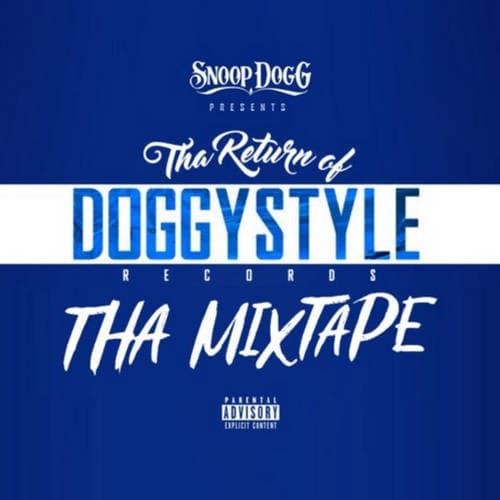
Calvin Cordozar Broadus Jr. stepped onto Dr. Dre's The Chronic in 1992 and immediately announced himself as the most distinctive new voice in West Coast hip-hop. His drawling, melodic delivery over Dre's G-funk production created a template that defined mainstream rap for the rest of the decade. Doggystyle, released in November 1993 through Death Row Records, debuted at number one on the Billboard 200, selling over 800,000 copies in its first week. The album cemented Snoop as the laid-back counterpoint to the intensity that dominated East Coast rap. His Long Beach upbringing in the Rollin' 20s Crips provided street credentials, but his charisma and humor made him accessible to audiences far beyond hip-hop's traditional demographic. Over three decades, Snoop has released nineteen studio albums across multiple labels, reinventing himself with each era while maintaining the effortless cool that made him famous. He has navigated label disputes, legal troubles, and shifting musical landscapes with a consistency that few artists in any genre can match. His cultural presence now extends far beyond music into film, television, sports commentary, and entrepreneurship, making him arguably the most recognizable figure hip-hop has ever produced.
The Art of Effortless Flow
Snoop Dogg's vocal delivery is one of the most imitated and least replicable in rap history. His approach to the microphone prioritizes smoothness and rhythmic precision over technical density. Where many West Coast rappers of his era adopted aggressive deliveries, Snoop floated above beats with a conversational ease that made complex rhyme patterns sound like casual conversation. This deceptive simplicity is the hallmark of his style. The melodic quality of his rapping often blurs the line between MCing and singing, a tendency he would explore more explicitly on later albums. His partnership with Dr. Dre on The Chronic and Doggystyle established the definitive G-funk vocal approach: languid, melodic phrases draped over synthesizer-heavy production with deep bass and whining leads. Lyrically, Snoop operates in a specific register of West Coast storytelling that balances street narrative with party-oriented hedonism. His writing rarely reaches for profundity, but the specificity of his Long Beach imagery and the personality in his phrasing give even lightweight material a distinctive flavor. Later career experiments with reggae on Reincarnated, gospel on Bible of Love, and funk collaborations with Dam-Funk demonstrated a musical curiosity that his laid-back persona sometimes obscures. The consistency of his vocal identity across these genre experiments speaks to how thoroughly he has internalized his own style.
From Death Row to Cultural Institution
Snoop's career arc follows one of the most unusual trajectories in popular music. His early association with Death Row Records placed him at the center of hip-hop's most volatile era. Doggystyle and the murder trial that coincided with its commercial peak made him simultaneously one of the most famous and controversial figures in America. Tha Doggfather in 1996 continued the Death Row partnership but arrived as the label began its turbulent decline following 2Pac's death and Suge Knight's legal troubles. His departure from Death Row to No Limit Records in 1998 surprised the industry. Albums like Da Game Is to Be Sold, Not to Be Told and No Limit Top Dogg traded G-funk polish for Master P's bounce-influenced production, a commercial calculation that maintained his sales numbers while dividing long-time fans. The mid-2000s brought a creative resurgence with R&G (Rhythm & Gangsta): The Masterpiece, which produced the global hit Drop It Like It's Hot with Pharrell Williams. This period demonstrated Snoop's ability to adapt to contemporary production trends without losing his identity. His pivot to media personality accelerated through the 2010s, with cooking shows alongside Martha Stewart, football league commentary, and brand partnerships that transformed him from rapper to cultural institution. His 2022 acquisition of Death Row Records brought his career full circle, giving him ownership of the label and catalog that launched his career.
Beyond the Music: A Cultural Phenomenon
Snoop Dogg's legacy operates on two parallel tracks. Musically, he helped define G-funk as a subgenre and demonstrated that a laid-back delivery could dominate charts in an era that increasingly valued intensity. His influence on West Coast rap is foundational, with artists from Warren G to Nate Dogg to the entire Long Beach scene benefiting from the attention his success brought to the region. The commercial model he established, maintaining relevance through personality and cultural presence rather than purely musical innovation, anticipated how many modern artists approach career longevity. His cultural impact transcends hip-hop in ways that are difficult to quantify. He became a meme before memes were a recognized cultural form, with his image and catchphrases permeating corners of the internet that have little connection to rap music. The Martha and Snoop partnership shattered demographic assumptions about who hip-hop figures could collaborate with. His coaching youth football and his genuine community involvement in Long Beach complicated the gangsta rap narrative in productive ways. Perhaps most significantly, Snoop proved that a rapper could age gracefully in a genre obsessed with youth. By refusing to chase trends while remaining visible and relevant, he created a template for hip-hop longevity that artists like Jay-Z and Dr. Dre have followed in their own ways.