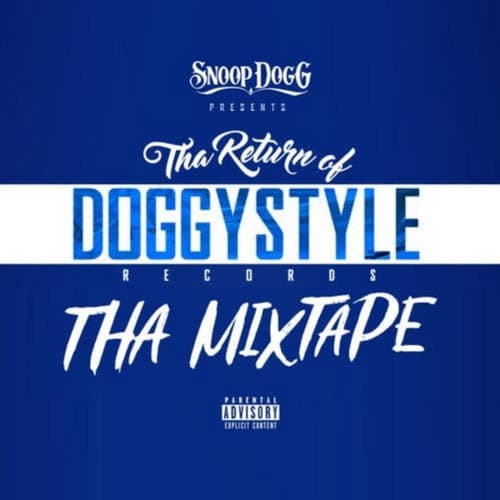
Snoop Dogg Tha Return of Doggystyle Records: Tha Mixtape — When the Legend Forgot Why We Stayed
Play the first thirty seconds of any track here and you will hear exactly what Snoop Dogg sounded like in 2018: comfortable, unbothered, and utterly unwilling to challenge himself. This is not a reinvention. This is not a statement. This is ten tracks of a West Coast legend coasting on muscle memory, dropping a project that barely registers as an event even by mixtape standards.
The title promises a return to the Doggystyle era, but what arrives feels more like a half-hearted lap around the neighborhood than a homecoming.
Snoop released this through his own Doggy Style Records imprint, a label he relaunched multiple times over two decades with varying degrees of commitment. By 2018 he had become more brand than rapper, more personality than MC, splitting time between cooking shows, youth football leagues, and weed empire expansions. The music had become secondary. And you can hear it.
This mixtape landed without fanfare in March 2018, dropped with no rollout, no singles, no press run. Streaming made that possible. An artist of Snoop's stature could release music the way most people post Instagram stories: casually, impulsively, without consequence. The problem is not that he released it.
The problem is that nothing here justifies its existence. What angle was he chasing? What itch was this supposed to scratch? The project never answers.
The Sound That Forgot to Evolve
The production across these ten tracks pulls from the same G-funk palette Snoop has relied on since 1993, but stripped of the imagination that made those records essential. Synth lines wobble. Bass lines thump. Snoop glides over everything with the same laid-back cadence he has used for twenty-five years.
It works because his voice remains one of the most distinctive instruments in rap history. It fails because distinctive is not the same as interesting.
The beats feel like they were assembled from a G-funk construction kit sold on a producer forum in 2009. There is no grit here, no danger, no tension. Everything sits in the same mid-tempo pocket, engineered for background listening rather than active engagement.
Snoop is not digging into complex rhyme schemes or experimenting with flow variations. He is doing what he has always done, which would be fine if the material surrounding him rose to meet his legacy. It does not.
Lyrically the project cycles through the same topics Snoop has covered for decades: smoking, women, money, Long Beach pride, dismissing competition that does not exist. He is not saying anything new because he stopped needing to say anything new around 2004. The hooks are either nonexistent or so repetitive they become grating. There is no storytelling, no emotional range, no vulnerability.
Just vibes. And not particularly strong ones.
The biggest flaw is the lack of ambition. Snoop has proven he can still deliver when motivated, but motivation requires a reason to care. This mixtape offers none. It is not bad enough to be offensive and not good enough to be memorable.
It simply exists, filling space on a streaming service, another data point in a discography that stopped mattering years before this dropped. Who was this for? Long-time fans did not need it. New listeners would not find it. And Snoop himself sounds like he recorded it during commercial breaks.
The Journey That Never Leaves the Driveway
The sequencing does nothing to build momentum or create an arc because there is no arc to construct. The project opens with the same energy it maintains for all ten tracks: relaxed to the point of disengagement. There is no build, no peak, no climax. The first stretch sounds identical to the middle section, which sounds identical to the closing run.
It is muzak masquerading as a mixtape.
The pacing suggests Snoop and whoever assembled this project were not thinking about the listening experience. Songs do not transition into each other so much as bump into one another accidentally. There are no interludes, no skits, no moments of reflection or tonal shift. Just ten songs that could be shuffled into any order without changing the experience.
That is not sequencing. That is a playlist.
The back half does not even attempt to close strong. The project just stops, as if Snoop looked at the clock and decided ten tracks was enough. There is no statement closer, no victory lap, no wink at the audience.
The emotional register never shifts from neutral. You could remove any three songs from this tracklist and the album would function identically. That is not a compliment.
Listening front to back feels less like experiencing an album and more like overhearing someone's afternoon smoke session. It is pleasant enough in the moment but completely forgettable the second it ends. Snoop has made entire careers out of vibe-based music, but vibes require texture, and texture requires effort. This project coasts on name recognition and nothing else.
The Legend Who Stopped Trying
In Snoop Dogg's discography this ranks somewhere in the bottom third, a forgettable entry released during a period when he was treating music as a side hustle rather than a craft. It sits below Doggumentary, below Neva Left, and miles below anything he released in the nineties. This is not an album fans revisit. It is a project fans forget existed until they stumble across it while scrolling through his Spotify page.
Who should listen to this? Completists. People who need every Snoop release for archival purposes. Fans who want background music for a barbecue and do not care about quality.
Who should skip it? Anyone expecting the creativity of Doggystyle, the focus of Tha Blue Carpet Treatment, or even the casual fun of Coolaid. This is not essential listening by any measure. It is a document of an artist who stopped caring whether the music mattered.
The album has not aged well because it was already dated when it dropped. Nothing here influenced the next generation of West Coast rap. No tracks became fan favorites. No moments entered the cultural conversation.
It arrived and disappeared in the same week, which is exactly what happens when a legend releases music out of habit rather than necessity. Snoop has earned the right to do whatever he wants, but that does not mean we have to pretend the output is worth our time.
If you are curious, try Tha Return of Doggy Style and Stop Playn for the most coherent attempts at recapturing his classic sound. For better late-period Snoop, check Neva Left or go back to Tha Blue Carpet Treatment. For proof that legends can still matter decades into their careers, listen to what Nas or Jay-Z were doing in the same era. Snoop chose a different path, and this mixtape is the sound of a man who stopped walking it years ago.
Track Listing
Zoo
●The opening track sets the tone with a mid-tempo G-funk groove that could have been produced in 1997 or 2017 and you would not know the difference. Snoop slides into his pocket immediately, delivering bars about the streets and the game with the same effortless flow that made him famous. The problem is effortless has become interchangeable with effort-free. The beat lacks punch, the hook barely exists, and Snoop is clearly not trying to set the project up as anything more than a casual listen. As an opener it fails to create anticipation or establish a thesis. It just starts, and then it is over, and you have learned nothing about what this project wants to be.
Tha Return of Doggy Style
▼The title track should be the mission statement, the moment where Snoop reminds everyone why the Doggystyle era mattered and what he is bringing back. Instead it is another mid-tempo groove with Snoop delivering auto-pilot bars about his legacy without actually engaging with it. The production has the synth wobble and bass thump you expect, but no edge, no personality, no reason to exist beyond checking a box. Snoop name-drops Long Beach and throws out references to the old days, but it all feels surface-level, like he is reading from a script he has recited a thousand times. The hook is repetitive to the point of annoyance, and by the second verse you are ready for the track to end. This should have been the centerpiece. Instead it is just another song.
Stop Playn
▲This is the closest the project gets to a standout moment, mostly because the beat has slightly more energy than anything else here and Snoop sounds at least half-awake. The production still pulls from the same G-funk toolbox, but the tempo picks up just enough to create some momentum. Snoop delivers warnings to rivals and fake friends with a bit more conviction, and the hook, while simple, at least sticks in your head. It is not groundbreaking, but it functions as a competent West Coast cruiser, the kind of track that works in a playlist even if it does not demand repeat listens. If you are only checking a couple songs from this project, this is one of the two worth your time.
Foolish
●A slower, more melodic cut that attempts to add some emotional range to the tracklist but ends up sounding like every other mid-tempo Snoop track about relationships and mistakes. The production leans into smooth synths and a lazy bass line, creating a vibe that is pleasant enough but completely forgettable. Snoop is not digging into any real vulnerability here, just running through the motions of a song about women and regret without committing to either topic. The hook does not land, and the verses meander without building toward anything. It is filler disguised as a slow jam, the kind of track you skip after the first thirty seconds because you have heard Snoop do this better a hundred times before.
Mando
▼The production here has a slightly more ominous tone, with darker synth tones and a heavier bass presence, but Snoop does not adjust his delivery to match the energy. He coasts through verses about street politics and loyalty with the same relaxed cadence he uses on every other track, which creates a disconnect between the beat and the performance. The hook is weak, barely developed, and the song feels like it was stitched together from leftover verses that did not fit anywhere else. There is no memorable line, no standout moment, nothing that justifies the track's inclusion beyond hitting a runtime target. It exists and then it is gone.
Sagghard
▼Another forgettable mid-tempo joint that blends into the rest of the tracklist without offering a single reason to pay attention. The beat is functional G-funk, the kind of production you could generate with a preset and a drum loop. Snoop delivers bars about the streets and the grind, but he is on auto-pilot, reciting the same themes he has been recycling since the Bush administration. The hook is non-existent, just a repeated phrase that does not add anything to the song. By this point in the tracklist the sameness becomes exhausting. Every track sounds like a slightly different version of the same idea, and Sagghard does nothing to break the pattern. Skip.
Going Up in Smoke
●The track flirts with a more uptempo energy, but the production still feels restrained, like the beat is afraid to commit to a real tempo shift. Snoop raps about weed and the lifestyle with the same enthusiasm he brings to a grocery list, and the hook is a lazy repetition of the title that adds nothing. The song has moments where it threatens to become interesting, particularly in the second verse where the flow picks up slightly, but it never capitalizes on that potential. Instead it settles back into the same mid-tempo pocket that defines the entire project. It is not terrible, but it is not memorable either, and in a discography as deep as Snoop's, forgettable is the same as bad.
Supa Freak
▼The title suggests something playful or energetic, but what you get is another lazy G-funk groove with Snoop delivering verses about women with zero charisma or wit. The production has a slightly funkier bass line, but it is buried under flat drums and uninspired synth work. Snoop is not having fun here, which is a problem because fun is the only reason a track like this should exist. The hook is repetitive and annoying, and the verses feel like first-draft material that should have been revised or scrapped entirely. This is the kind of track that makes you question whether anyone involved in the project cared about quality control. It is filler in the worst sense, padding out a tracklist that was already too long.
Runnin' Loose
●A slightly more uptempo cut that tries to inject some energy into the back half of the project, but the effort feels half-hearted at best. The beat has a bit more bounce, and Snoop sounds marginally more engaged, but the song still suffers from the same issues that plague the entire mixtape: weak hooks, uninspired verses, and production that refuses to take risks. Snoop raps about freedom and living without limits, but the performance does not match the theme. He sounds comfortable, maybe too comfortable, and the song never builds toward anything. It is fine as background music, but if you are listening actively it exposes how little substance is here.
Welcome
▼The closer does nothing to provide resolution or leave a lasting impression. It is just another mid-tempo G-funk track that happens to be last on the tracklist. Snoop delivers bars about his legacy and the Doggystyle Records brand, but he is not saying anything he has not said better on previous projects. The production is competent but uninspired, and the hook is forgettable within seconds of hearing it. As a closer it fails completely because it does not offer a statement, a climax, or even a wink at the audience. It just ends, and the mixtape is over, and you are left wondering why Snoop bothered to release this at all. If the goal was to remind people that Doggystyle Records still exists, the only thing this track proves is that existence is not the same as relevance.