The Revolutionary Voice of a Generation
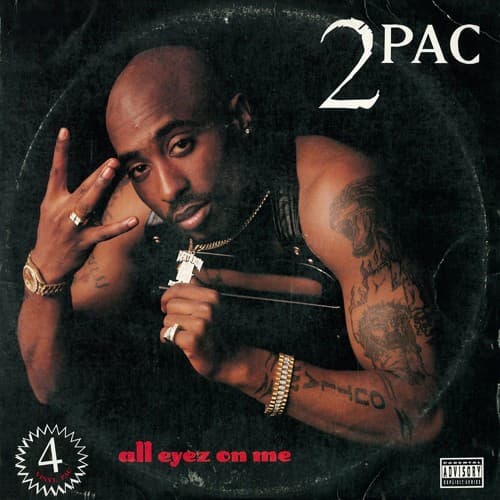
Tupac Amaru Shakur arrived in hip-hop carrying the weight of a lineage steeped in activism and struggle. Born in East Harlem in 1971 to Black Panther members, he absorbed political consciousness before he ever stepped into a recording booth. His family's transient lifestyle took him from New York to Baltimore, where he studied at the Baltimore School for the Arts, then to Marin City, California, where the streets provided a different education entirely. He joined Digital Underground as a roadie and backup dancer before launching a solo career that would redefine what rap could communicate. His debut, 2Pacalypse Now, arrived in 1991 with a political edge that drew criticism from the vice president of the United States. Within five years, he had become the most polarizing and commercially dominant figure in hip-hop, releasing music at a pace that suggested he knew his time was limited. All Eyez on Me, his double album on Death Row Records, moved over nine million copies and stands as one of the genre's definitive statements. His murder in Las Vegas in September 1996 at age twenty-five cut short a career that was still accelerating, leaving behind a catalog of released and unreleased material that continues to generate new albums decades later.
Raw Emotion Meets Poetic Precision
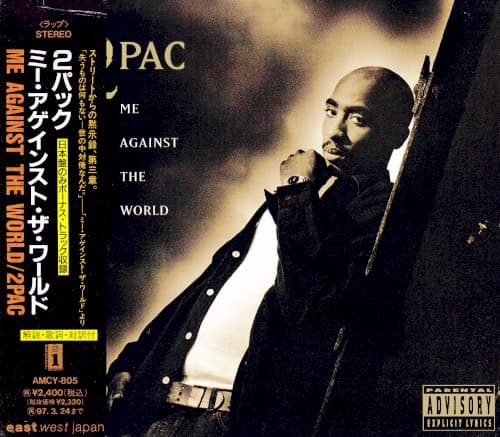
What separated 2Pac from his contemporaries was the emotional directness of his delivery. Where many rappers of his era built personas around invulnerability, Tupac made vulnerability a weapon. His voice carried a rawness that made listeners feel addressed personally, whether he was raging against systemic injustice or mourning friends lost to violence. Technically, his approach prioritized clarity and feeling over complexity. He was not a multisyllabic technician in the Rakim mold, but his ability to ride a beat with conversational naturalism influenced an entire generation of rappers who valued authenticity over acrobatics. His writing toggled between street reportage, political commentary, and introspective confession, sometimes within the same song. Me Against the World demonstrated his capacity for sustained emotional depth, with tracks that explored paranoia, mortality, and maternal love with equal conviction. His production partnerships shifted dramatically across his career. The jazz-inflected boom-bap of his early work with producers like Easy Mo Bee gave way to the G-funk soundscapes of Death Row, where DJ Quik, Johnny J, and Dr. Dre built sonic beds that matched the California sun and shadow of his later writing. The Death Row era production favored synthesizer pads and rolling basslines that became the definitive sound of mid-nineties West Coast rap.
Five Years That Changed Everything
The compressed timeline of 2Pac's career makes its output even more remarkable. From 2Pacalypse Now in 1991 to the posthumous release schedule that began immediately after his death, the volume of recorded material suggests an artist working with urgent awareness of his own mortality. Strictly 4 My N.I.G.G.A.Z. in 1993 expanded his range, balancing party tracks with social commentary in a way that broadened his audience without alienating his core. Me Against the World arrived while Tupac was serving a prison sentence, debuting at number one on the Billboard 200 and establishing him as a figure whose art transcended his legal troubles. The move to Death Row Records under Suge Knight's patronage represented a decisive shift. All Eyez on Me, released in February 1996, was hip-hop's first double studio album and a commercial juggernaut. The album captured Tupac at his most expansive, toggling between celebration and menace across twenty-seven tracks. His public feud with The Notorious B.I.G. and Bad Boy Records dominated hip-hop media throughout 1996 and contributed to the East Coast-West Coast rivalry narrative that defined the era. The Don Killuminati: The 7 Day Theory, recorded under the alias Makaveli and released two months after his death, revealed an artist whose creative pace showed no signs of slowing. The posthumous catalog, managed with varying degrees of quality, has produced over a dozen additional albums assembled from vault recordings.
Immortal Impact on Hip-Hop Culture
2Pac's influence on hip-hop extends beyond music into the culture's understanding of what an artist can represent. He embodied contradictions that reflected the communities he came from: intellectual and volatile, compassionate and confrontational, politically aware and street-immersed. These tensions made him a more honest mirror of his audience's reality than artists who projected one-dimensional images. His acting work in films like Juice, Poetic Justice, and Gridlock'd demonstrated range that suggested a parallel career might have flourished had he lived. The emotional openness he brought to tracks like Dear Mama and So Many Tears gave permission to subsequent generations of rappers to explore vulnerability without apology. Artists from Kendrick Lamar to J. Cole have cited his willingness to be emotionally transparent as foundational to their own artistic development. His political lineage, connecting the Black Panther movement to hip-hop activism, created a template that conscious rappers continue to reference. The sheer volume of his posthumous releases has complicated his legacy somewhat, as material of varying quality has been assembled and released with diminishing returns. But the core catalog, particularly the four studio albums released during his lifetime, remains untouchable. At his best, 2Pac made rap music that felt like it could change the world, and for millions of listeners, it did.