Queensbridge's Darkest Export: The Mobb Deep Story
The sound hits you before the words do — a piano loop stretched thin over grimy drums, sparse and suffocating, like winter air in a project stairwell. That's Mobb Deep. For over two decades, the Queensbridge duo of Havoc and Prodigy carved out the coldest corner of East Coast hip-hop, building an aesthetic so stark and uncompromising it became its own subgenre. Where other mid-90s rap sought crossover appeal or radio polish, Mobb Deep doubled down on claustrophobia, paranoia, and street realism delivered with surgical precision.
Havoc and Prodigy — Kejuan Muchita and Albert Johnson — emerged from the same Queensbridge Houses that produced Nas, MC Shan, and Marley Marl, but their vision was bleaker, their sound more skeletal. They didn't glorify street life so much as document its psychological weight, the constant vigilance required to survive it. Prodigy's sickle cell anemia lent an urgency to his writing, a preoccupation with mortality that permeated every verse. Havoc's production stripped boom bap down to its essentials — minimal loops, hard drums, negative space used as weaponry. Together they created something that felt less like music and more like transmission from the dark side of the American dream.
Their influence extends far beyond their commercial peak. The atmospheric dread of Mobb Deep's mid-90s work became a template for everyone from Griselda to Freddie Gibbs, proof that hip-hop's power doesn't require anthems or pop hooks — sometimes the most lasting impact comes from refusing to compromise, from staying true to a vision even when it means staying underground.
The Anatomy of Mobb Deep's Sonic Minimalism
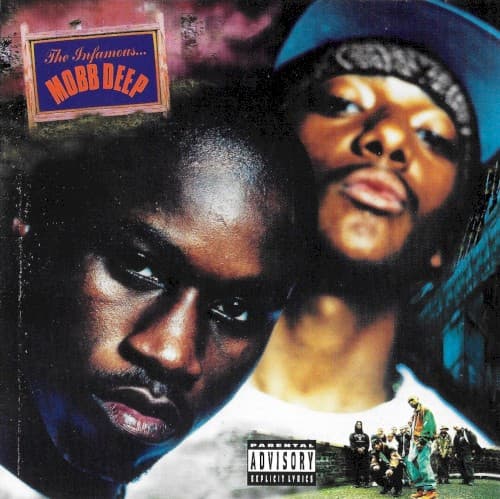
Havoc's production philosophy was subtraction, not addition. While contemporaries layered samples and filled every gap, he built tracks around what wasn't there — silence as tension, empty space as threat. His signature sound crystallized on The Infamous: minor-key loops, often just four or eight bars, repeated until they became hypnotic. Drums hit hard but never cluttered, snares cracking like gunshots in empty hallways. Bass lines stayed low and menacing, felt more than heard. The result was music that sounded like paranoia, tracks that made you check over your shoulder.
Prodigy's delivery matched the production's economy. His flow was conversational but deliberate, each word chosen for maximum impact, no wasted syllables. He rarely raised his voice — the monotone itself became menacing, detached in a way that made the violence he described feel bureaucratic, procedural. When he threatened, it sounded like reporting facts. Havoc provided contrast with a slightly higher register and more rhythmic variation, but both MCs understood the power of understatement. They never oversold their street credentials because they didn't need to.
The duo's best work exploited dynamics most rappers ignored. They'd let beats breathe for whole bars, vocals dropping out to let tension build. Hooks were minimal, often just a repeated phrase or looped sample rather than full choruses. This anti-commercial approach became their signature — Mobb Deep tracks felt like field recordings from the projects, raw and unvarnished. Even when they worked with bigger budgets on later albums, that essential griminess remained. You could clean up the mix but not the mindset.
From Juvenile Hell to The Infamous: Mobb Deep's Ascent
Their 1993 debut Juvenile Hell arrived stillborn, a forgettable entry in a crowded field. The duo was young, still finding their voice, and the production lacked the distinctive character that would later define them. But the commercial failure proved instructive — it taught them they couldn't compete by following trends. Instead, they'd need to create their own lane, something so specific to their experience and environment that no one else could replicate it.
The transformation happened fast. Between 1993 and 1995, Havoc honed his production skills obsessively, stripping away everything extraneous. Prodigy's writing sharpened, his imagery growing more vivid and his perspective more fatalistic. When The Infamous dropped in April 1995, it sounded like nothing else in hip-hop. "Shook Ones Pt. II" became an instant classic, its piano loop and opening lines entering the canon of great hip-hop moments. The album went gold, but more importantly, it established Mobb Deep as the gold standard for street rap authenticity. Nas appeared on "Eye for an Eye," a cosign from QB's reigning king that validated their approach.
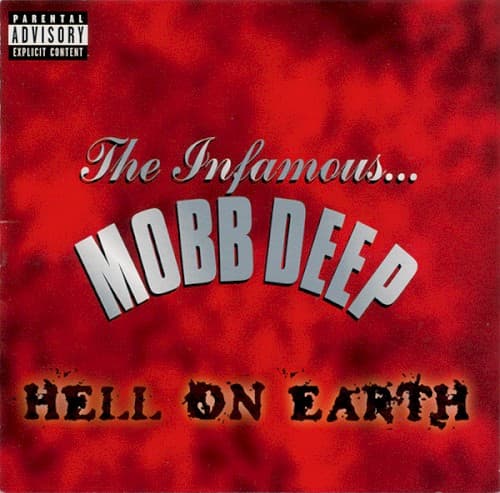
Hell on Earth arrived in 1996 while the duo was still hot, doubling down on the bleakness. If The Infamous was winter in Queensbridge, Hell on Earth was the coldest night of that winter — even darker, even more nihilistic. Tracks like "Drop a Gem on 'Em" and "G.O.D. Pt. III" refined the formula to its purest form. The album debuted at number six on the Billboard 200, proving underground aesthetics could achieve mainstream visibility without compromise. Commercially, this was their peak.
The late 90s and early 2000s brought Murda Muzik (1999), which spawned the radio hit "Quiet Storm" featuring Lil' Kim — their biggest crossover moment. The remix, produced by the Neptunes, showed they could adapt to shinier sounds without losing their core identity. But subsequent releases faced the challenge every cult act encounters: how to evolve without betraying what made you essential. Amerikaz Nightmare (2004) and Blood Money (2006) had strong moments but felt like variations on a theme rather than evolutions. The duo's chemistry remained intact, but the culture had moved toward snap music and ringtone rap, leaving little room for their particular strain of darkness.
Prodigy's 2007-2011 prison sentence for gun possession created an unexpected renaissance. His absence made fans appreciate what they'd taken for granted, and the reunion album Infamous Mobb Deep (2014) felt like a return to form, stripping back to the essentials that had made them matter. Their final collaborative work before Prodigy's sudden death in June 2017 from complications related to sickle cell anemia showed a duo still committed to their aesthetic, still refusing to chase trends even as hip-hop had transformed around them.
Mobb Deep's Enduring Influence on Street Rap Aesthetics
The last two decades of underground hip-hop are unthinkable without Mobb Deep's blueprint. Every artist who prioritizes atmosphere over accessibility, who uses minimalism as a weapon, who understands that the scariest threats are delivered in monotone — they're walking a path Havoc and Prodigy cleared. The Griselda movement's dusty aesthetic owes an obvious debt. Freddie Gibbs and Madlib's collaborative work channels that same paranoid energy. Even Drake, at his darkest and most introspective, is drawing from the well Mobb Deep dug.
Their technical influence is equally profound. Havoc's production approach — minimal loops, hard drums, maximum negative space — became a subgenre unto itself. Producers from Alchemist to Daringer cite him as a foundational influence. The way Mobb Deep structured songs, often with no traditional hook, liberated a generation of artists from pop-rap conventions. They proved you could build a career on uncompromising vision, that commercial success didn't require commercial sound.
Prodigy's death in 2017 sparked an outpouring that revealed how deeply the duo had embedded themselves in hip-hop's consciousness. Tributes came from across the spectrum — underground purists and mainstream stars alike. His passing also prompted critical reevaluation of his writing, recognition that his preoccupation with death and disease wasn't posturing but lived reality, that his detachment was a survival mechanism. Posthumous releases and archival projects continue to emerge, evidence that the vaults still contain gold. The Infamous remains in regular rotation for anyone serious about understanding 90s hip-hop, its influence undiminished by time. Mobb Deep didn't change with the culture because they didn't need to — they built something permanent.