Style & Context
Influences
Afrocentric art, comic books, pop art, digital design
Location
It speaks to a global hip-hop community, but particularly the vibrant New York scene where many featured artists originated.
Visual Language
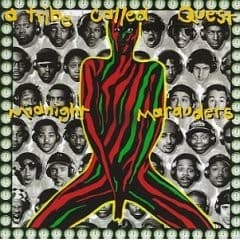
The blend of illustrative vibrancy and stark photography creates a dynamic visual texture reflective of hip-hop's diverse artistic expressions.
Symbols
Faces of Hip-Hop
The collage of fellow artists signifies the interconnectedness and collaborative spirit within the early 90s hip-hop community.
Zebra-striped Woman
This figure represents the album itself as a sentient entity, delivering an introductory 'transmission' that unifies the musical experience.
Clocks Border
The repeating clocks around the perimeter visually echo the 'Midnight Marauders' theme, suggesting nocturnal journeys and timeless artistry.
Where Sound Meets Image
The cover's collective portrait perfectly aligns with the album's warm, communal vibe, where smooth jazz samples and introspective lyrics create a shared journey. The 'A Tribe Called Quest' voice on tracks like 'Midnight Marauders Tour Guide' is embodied by the central woman, literally speaking to the listener. It visually cues the listener into an album that's both a celebration of hip-hop's past and a thoughtful push towards its future, much like the faces surrounding the central figure.
This cover left an indelible mark, proving that album art could be both conceptually rich and an ode to community. Its collective portrait approach has been referenced and admired, inspiring a sense of unity in subsequent hip-hop visuals. It stands as a testament to the power of representation and collaborative spirit in the genre.