Style & Context
Influences
Military documentation, punk album minimalism, corporate branding design, aviation photography
Location
This wasn't Hollis Queens or the South Bronx speaking—this was Lower East Side punk kids weaponizing hip-hop production techniques against rock radio.
Visual Language
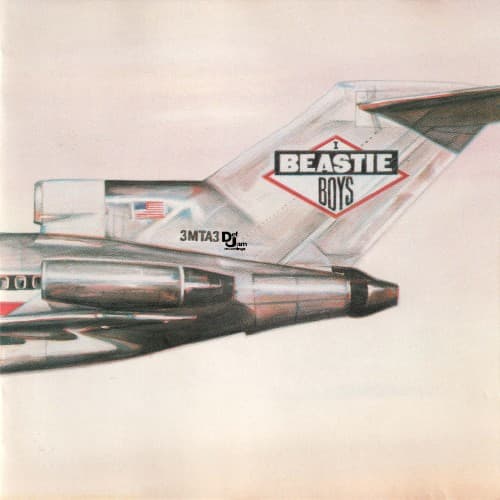
The clinical framing and institutional aesthetic subverts both hip-hop's street photography tradition and rock's performance-based imagery with corporate detachment.
Symbols
Fighter jet tail section
The aircraft represents the Beastie Boys as kamikaze pilots attacking the music establishment's airspace with unprecedented firepower.
Beastie Boys logo placement
Positioned like military insignia, the branding transforms rap crew identity into combat unit designation, merging street credibility with organized aggression.
Registration number 3MTA3
The alphanumeric code mimics official military markings, lending bureaucratic legitimacy to three kids with zero authority beyond their sonic arsenal.
Where Sound Meets Image
The fighter jet mirrors the album's sonic assault strategy—heavy metal guitars sampled and repurposed as weapons, punk energy fused with breakbeats, party anthems delivered with military precision. Tracks like 'Fight For Your Right' and 'No Sleep Till Brooklyn' function as air raids on radio formats, while the tail section's partial view suggests the larger war machine listeners are hearing throughout Licensed to Ill's 44-minute campaign. The cold, mechanical aesthetic perfectly captures the album's deliberate provocation and genre-smashing approach, where rock instrumentation became ammunition for hip-hop's expansion.
This cover established that hip-hop album art could embrace corporate minimalism and subversive appropriation instead of graffiti tags and urban realism. The design's influence echoes through every rap album that later used luxury brands, corporate logos, or institutional imagery to signal power and cultural conquest. It proved album covers could communicate aggression through stark symbolism rather than explicit imagery, paving the way for minimalist hip-hop design that trusted audiences to decode the statement.