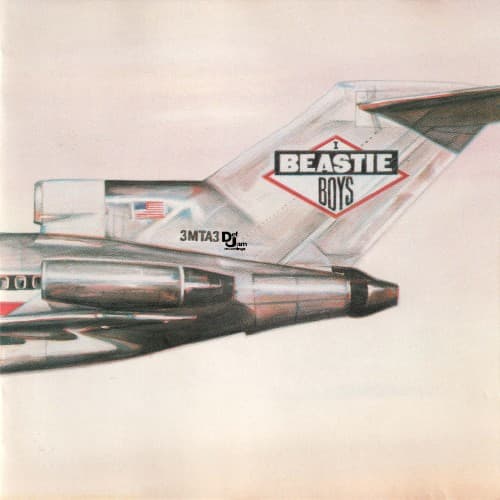
Beastie Boys Licensed to Ill — Three White Kids from New York Hijacked Hip-Hop and Nobody Knew What Hit Them
Three Jewish kids from Manhattan convinced America that hip-hop could sell beer commercials and destroy frat house furniture in equal measure. That sentence alone explains why Licensed to Ill remains the most misunderstood platinum record in the genre.
Critics called it cultural appropriation. Purists called it a joke. Suburban teenagers called it the greatest party tape ever pressed. All three groups were right, and all three missed the point.
Rick Rubin built the sonic foundation with the same stripped-down philosophy he brought to LL Cool J and Run-DMC, but here he wired Led Zeppelin riffs into drum machines and dared anyone to call it inauthentic. The Dust Brothers added sample chaos. The Beastie Boys brought enough self-awareness to walk the line between parody and commitment without falling off either side. What emerged was not a hip-hop album trying to be rock, but a bastard hybrid that refused to apologize for existing.
Is this the album that opened hip-hop to white suburban audiences, or the one that reduced the culture to keg-stand soundtracks? The answer lives somewhere in the grooves between those two accusations, and thirty-eight years later, the album still has not picked a side. It does not need to.
Licensed to Ill succeeded because it sounded like nothing else in 1986, and even now, nothing else sounds quite like it. The album moved four million copies in its first year and became the first rap record to hit number one on the Billboard 200. Def Jam had no idea what they had shipped until college radio started playing it nonstop and rock stations followed. By the time the Beastie Boys realized their joke had been taken seriously by the exact people they were mocking, the tour buses were already rolling and the beer companies were cutting checks.
Riffs, Breaks and the Blueprint for Genre Collapse
Rubin recorded this album like he was producing a punk band that happened to rap. Live drums clash with 808 kicks. Guitar samples do not sit politely in the background—they dominate entire songs.
The production philosophy rejects the soul-sampling warmth of East Coast hip-hop and replaces it with distortion, hard rock loops, and beer-commercial aggression. Every beat sounds like it was built to rattle car speakers in parking lots, not headphones on subway commutes.
The Dust Brothers handled the sample architecture, pulling from AC/DC, Led Zeppelin, and Black Sabbath with the same irreverence the Beastie Boys brought to the booth. Rubin mixed it all with the raw edge of a garage rock demo. Vocals sit forward. Drums punch hard.
Nothing feels polished. The roughness was intentional—Rubin wanted it to sound live, immediate, dangerous.
Lyrically, the album operates in a grey zone between satire and sincerity that still confuses people. Are they mocking frat culture or celebrating it? The answer is both, and neither.
Lines about partying, girls, and beer sound ridiculous enough to be jokes, but the delivery never winks. Ad-Rock, MCA, and Mike D trade verses with enough conviction that the humor becomes secondary. They sound like they believe every word, even when the words are absurd.
The vocal interplay between the three MCs remains one of the album's strongest assets. No single voice dominates. They pass the mic like a relay race, finishing each other's lines, interrupting punchlines, creating a chaotic energy that mirrors the production. The chemistry feels natural, not scripted.
You can hear them enjoying themselves, which makes the humor land harder.
But the album has a ceiling. The one-note party themes wear thin by the back half. Songs start to blur together. The joke stops being funny around track ten.
Licensed to Ill needed more range, more depth, something beyond beer and basslines. The Beastie Boys would figure that out on Paul's Boutique, but here, they are still trapped inside the cage Rubin built for them.
The Trajectory from Chaos to Hangover
The album opens with maximum aggression and never apologizes. The first stretch establishes the sonic template—hard rock samples, rapid-fire verses, zero subtlety. Every song in the opening run sounds designed to start a fight or a party, possibly both.
The energy peaks early and stays elevated through the middle section, where the biggest singles live. The sequencing frontloads the hits, which makes commercial sense but creates a back-heavy momentum problem.
The middle section contains the tracks that defined the album's legacy and cemented its crossover appeal. This is where the album moves from underground rap curiosity to mainstream phenomenon. The pacing shifts slightly—less frantic, more groove-oriented, but still locked into the same party-rap formula. The sequencing here is smart.
The album never lets the tempo drop too far or the mood shift into introspection.
The back half loses steam. By the time the final stretch arrives, the joke has been told too many times. The production remains sharp, but the lyrical content starts to feel repetitive.
The album needed either more variety or fewer tracks. Cutting two songs would have tightened the experience and preserved the energy. Instead, Licensed to Ill ends on a strong individual track but a weak collective note. The closing run does not ruin the album, but it does not elevate it either.
The Album That Accidentally Changed Everything
Licensed to Ill sits in the middle tier of Beastie Boys albums—not their best work, but the most culturally significant. Paul's Boutique is the better album. Check Your Head is more musically adventurous.
But Licensed to Ill opened doors those albums walked through. It proved rap could sell to rock audiences without softening the edges. It showed Def Jam that crossover success did not require compromise. It gave suburban white kids permission to love hip-hop, for better and worse.
Who should listen? Anyone interested in the moment hip-hop broke into the mainstream. Fans of Rick Rubin's stripped-down production aesthetic. People who want to understand why rock and rap fusion became a thing in the late eighties and early nineties.
Skip it if you need lyrical depth or thematic complexity. This is not a thinking-man's rap album. It is a raw, loud, dumb-fun record that accidentally became important.
How has it aged? The production still hits. Rubin's minimalism sounds timeless compared to the overproduced rap-rock that followed in the nineties.
The humor has aged unevenly—some jokes still land, others feel frozen in 1986. The cultural baggage around white rappers has shifted, which makes listening to Licensed to Ill a more complicated experience now than it was then. The album does not apologize for what it is, and that refusal to explain itself remains its greatest strength.
Essential tracks to start with: the opening run and the two biggest singles. If those grab you, the rest of the album will work. Similar albums to explore: Run-DMC's Raising Hell for the Rubin-produced East Coast sound, and the first Def Jam compilations for context on what else the label was releasing in 1986.
Long-term influence: every rap-rock hybrid from the nineties owes something to this album, whether they admit it or not. Limp Bizkit exists because Licensed to Ill proved the formula could sell. Thirty-eight years later, Licensed to Ill remains the sound of three kids who stumbled into history while trying to make their friends laugh.
Track Listing
Rhymin & Stealin
▲The album opens by stealing from Led Zeppelin and making no apologies. Rubin loops John Bonham's drums from "When the Levee Breaks" and lets the Beasties ride the beat like they own it. The pirate-themed lyrics sound absurd on paper, but the delivery sells it. MCA's opening line sets the tone for the entire album—irreverent, confident, unapologetic. The production is sparse and hard, all drums and bass with minimal decoration. The beat switch halfway through adds just enough variety to keep the energy from flattening. This is not the best song on the album, but it is the perfect opener. It tells you exactly what you are about to hear: three guys rapping over rock breaks with zero regard for what hip-hop is supposed to sound like. The cultural appropriation debate starts here, and the Beastie Boys do not seem interested in defending themselves.
The New Style
▲Mike D takes the lead here, and the flow is sharper than anything on the opener. Rubin strips the production down even further—just drums, bass, and a minimal keyboard line. The simplicity forces the vocals forward. The interplay between the three MCs hits its stride. They are not just trading verses; they are finishing each other's sentences, creating a conversational rhythm that feels natural. The energy is high but controlled. This is the first track that shows the Beastie Boys can actually rap, not just yell over rock samples. The hook is minimal but effective. The beat never overstays its welcome. By the time the track ends, you are ready for more. This is where the album starts to separate itself from novelty-rap territory and establish its own identity.
She's Crafty
●Built on a sample from "Super Freak," which Rick James later sued over, this track walks the line between homage and theft. The bassline carries the entire song. The lyrics tell a story—rare for this album—about a girl who robs the narrator. The storytelling is crude but effective. The production is cleaner than the first two tracks, more polished, almost radio-ready. The Beastie Boys sound comfortable here, locked into the groove without forcing it. The track does not reinvent anything, but it does not need to. It is a solid mid-tempo cut that provides breathing room after the chaos of the opening stretch. The hook is repetitive but catchy. This is the kind of song that works better in context than in isolation.
Posse in Effect
●The braggadocio kicks back in. The beat is minimal—just drums and a simple bass loop. The vocals do all the heavy lifting. The Beastie Boys list their crew and their credentials, standard rap posturing delivered with enough humor to undercut the machismo. The production feels like a demo, rough around the edges in a way that works for punk but feels undercooked for hip-hop. The track is short, under three minutes, and it does not overstay its welcome. But it also does not leave much of an impression. This is filler disguised as a posse cut. It serves a purpose in the sequencing—it keeps the energy up between bigger moments—but it would not be missed if it disappeared from the tracklist.
Slow Ride
●An instrumental break that samples Babe Ruth and does nothing else. Thirty seconds of guitar and drums, no vocals, no development. It functions as a palate cleanser, a moment to breathe before the album kicks back into high gear. The production is solid but unremarkable. Rubin lets the sample ride and does not mess with it. The track exists to give DJs a break point and to add variety to the album structure. It works in that limited capacity. But calling it a song feels generous. It is a transition, nothing more.
Girls
●The most controversial track on the album, and not because it is edgy. The Beastie Boys reduce women to a repetitive chant—"Girls, all I really want is girls"—and repeat the joke for two and a half minutes. Some critics heard satire. Some heard misogyny. The truth is probably somewhere in the middle, and the Beastie Boys have spent decades trying to explain what they meant. The production is stripped-down, just drums and a simple guitar riff. The vocals are monotonous on purpose, emphasizing the absurdity of the lyrics. The track works as a one-note joke, but it wears out its welcome fast. It is catchy enough to stick in your head, annoying enough to make you wish it did not. This is the song that made suburban parents hate the Beastie Boys, and the song that made suburban teenagers love them.
Fight for Your Right
●The song that turned the Beastie Boys into a cultural phenomenon and a punchline simultaneously. Built around a simple rock riff and a chant-along chorus, the track became an anthem for every high school party in 1987. The lyrics mock suburban rebellion—skipping school, drinking beer, ignoring parents—but the delivery is so committed that the satire gets lost. Suburban kids heard it as validation. The Beastie Boys meant it as a joke. Both groups were right, and both groups missed the nuance. Rubin's production is perfect for the concept—loud, dumb, and impossible to ignore. The guitar riff is stolen from a dozen classic rock songs and reassembled into something that sounds vaguely original. The track is under three minutes, which is the only thing that saves it from becoming unbearable. This is not a great song. It is a great moment. The difference matters. "Fight for Your Right" defined the Beastie Boys for a generation, and they spent the next two decades trying to escape that definition.
No Sleep Till Brooklyn
▲The heaviest track on the album. Rubin brings in Kerry King from Slayer to play the guitar solo, which tells you everything you need to know about the production approach. This is not rap with rock influences—this is a straight-up metal track with rapping on it. The riff is massive, the drums are thunderous, and the Beastie Boys sound more energized than anywhere else on the record. MCA's verse about touring is the closest the album gets to autobiographical detail. The energy is relentless. The hook is simple but effective. The guitar solo shreds. This is the track that proved rap-rock fusion could work if everyone involved committed fully. The production is cleaner than most of the album, more arena-ready, designed to translate live. It works. "No Sleep Till Brooklyn" became a concert staple for a reason. It is loud, dumb, and undeniably fun.
Paul Revere
▲I first heard this track in a friend's basement in 1987, and we rewound it four times trying to figure out if the story was real or made up. The answer is it does not matter. The track is built around a simple drum loop and a narrative about a Wild West showdown, except it is set in modern-day Brooklyn and involves the Beastie Boys instead of cowboys. The storytelling is absurd, the delivery is deadpan, and the whole thing works because nobody tries to explain the joke. Rubin keeps the production minimal—just drums and bass, no unnecessary flourishes. The Beastie Boys trade verses like they are sitting around a campfire making up stories to entertain each other. The track feels loose, improvised, alive. This is the moment the album steps outside the party-rap formula and shows what the Beastie Boys could do when they stopped yelling and started writing. It is one of the best tracks on the record.
Hold It Now, Hit It
▲The beat is built from scratch samples and minimal instrumentation. The Beastie Boys use the space to showcase their vocal interplay, passing the mic back and forth with precision. The production feels more experimental than most of the album, more willing to let silence and negative space do the work. The lyrics are standard braggadocio, nothing groundbreaking, but the delivery elevates the material. The track moves at a mid-tempo pace, which provides a nice contrast to the high-energy chaos that dominates the rest of the album. The hook is repetitive but effective. This is a solid album track, the kind of song that does not demand attention but rewards it when you give it.
Brass Monkey
●Built around a sample of "Bring It Here" by Wild Sugar, the track is a love song to a cheap malt liquor cocktail. The lyrics are as dumb as they sound. The production is clean, almost too polished for the subject matter. The hook is catchy enough to get stuck in your head for days, which is both a strength and a curse. The Beastie Boys sound like they are having fun, which makes the track more enjoyable than it has any right to be. But by this point in the album, the joke is wearing thin. Another song about partying and drinking feels redundant. The track is well-executed, but it does not add anything new to the album's narrative or sound. It is filler disguised as a single.
Slow and Low
●Originally written for Run-DMC, the track has a more traditional hip-hop structure than most of Licensed to Ill. The beat is slower, the flow is more deliberate, and the production feels less chaotic. The Beastie Boys sound more focused here, less interested in yelling and more interested in actually rapping. The track works as a showcase for their technical skills, which often get overshadowed by the party-rap antics. But it also feels out of place on this album. The energy does not match the rest of the tracklist. It is a good song in the wrong context.
Time to Get Ill
●The album closer tries to recapture the chaos of the opening tracks but ends up feeling like a retread. The production is solid—Rubin knows how to build a beat—but the lyrics are the same party themes the album has been recycling for forty minutes. The Beastie Boys sound tired. The energy is there, but the enthusiasm is not. The track is not bad, but it is not memorable either. It ends the album on a functional note rather than a triumphant one. Licensed to Ill needed a stronger closer, something that elevated the experience or provided a new perspective. Instead, it ends with more of the same. The track works as a final party anthem, but it does not justify its placement as the album's last word.