Style & Context
Influences
Ethiopian religious iconography, WPA poster art, modernist collage, outsider art
Location
The Minneapolis independent scene valued substance and craft over the bling era dominating mainstream rap then.
Visual Language
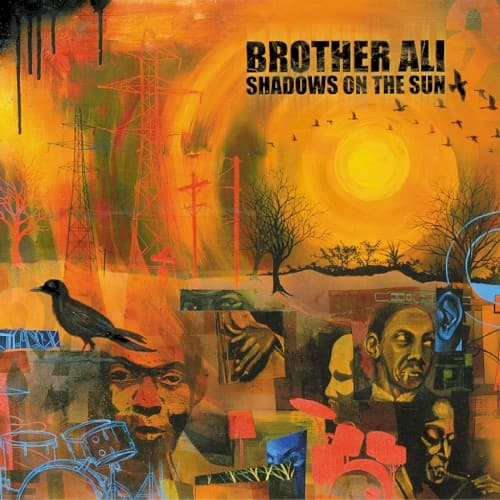
The technique creates depth through transparency and overlap, allowing multiple narratives to exist simultaneously within one frame.
Symbols
Multiple overlapping faces
The fragmented portraits represent the many identities within one consciousness and the complexity of self-knowledge.
Crow in foreground
The crow symbolizes wisdom and survival, connecting to Brother Ali's role as truth-teller in hip-hop.
Bare winter trees
The skeletal branches suggest stripping away pretense to reveal essential truths beneath surface appearance.
Where Sound Meets Image
The layered visual technique mirrors Brother Ali's multi-dimensional lyricism, where personal stories contain universal truths. The sunset imagery connects directly to the album title's exploration of darkness and illumination, shadow work and self-examination. The collage's fragments reflect how the album pieces together memoir, social commentary, and spiritual questioning into cohesive boom bap narratives. The warm colors match the soul samples and live instrumentation that ground Ali's introspective bars throughout the project.
This cover helped establish the visual language of underground hip-hop in the 2000s, proving album art could be painterly and complex rather than photographic and literal. The collage approach influenced countless independent rap releases that followed, particularly on Rhymesayers and similar labels. The design demonstrated that conscious rap deserved equally conscious visual presentation, elevating the entire subgenre's aesthetic standards.