Style & Context
Influences
Luxury streetwear graphics, gothic typography, early 2000s web aesthetics
Location
This minimalist cover speaks to the globalized digital spaces where contemporary hip-hop trends are forged, less about a specific street corner.
Visual Language
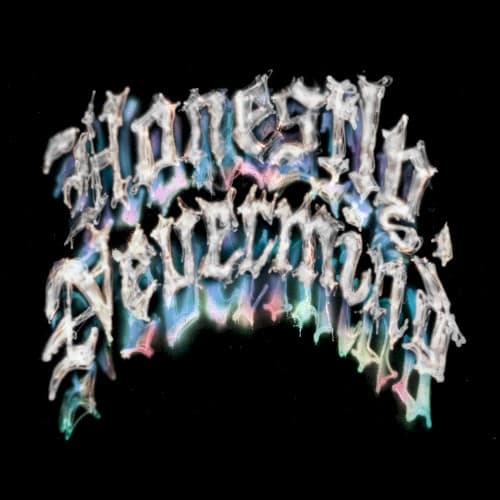
The cover leverages digital techniques to create a textured, metallic effect on a familiar font, blending traditional script with contemporary sheen.
Symbols
Chrome Hearts-esque Font
The distressed Old English font, reminiscent of luxury brands, signifies Drake's association with high fashion and street-luxe status.
Dripping Effect
The subtle dripping from the letters evokes a sense of decay or melting, possibly reflecting emotional vulnerability or an unbothered attitude.
Iridescent Sheen
The shifting pastel colors across the metallic text suggest an elusive or multifaceted persona, hard to pin down.
Where Sound Meets Image
The cover's detached, almost shimmering yet melancholic text directly mirrors the album's unexpected sonic direction, which delves into house, amapiano, and jersey club. The "Honestly, Nevermind" sentiment, presented in a seemingly cold, metallic drip, reflects themes of emotional distance and disinterest explored in tracks like "Falling Back" or "Sticky." This visual ambiguity prepares listeners for a project that challenges traditional hip-hop expectations, much like the cover defies conventional rap album imagery, opting for an understated, moody elegance. It signals a move away from the often overt bravado of his previous work.
This cover will likely be remembered for Drake's bold pivot away from his typical visual branding, opting for a starkly textual, luxury-adjacent design. It reinforced the notion that an artist of his stature can dictate trends, making a simple font a powerful statement within hip-hop's visual language. Its embrace of a digital, almost ephemeral aesthetic might inspire future artists to experiment with minimalist yet culturally loaded typography.