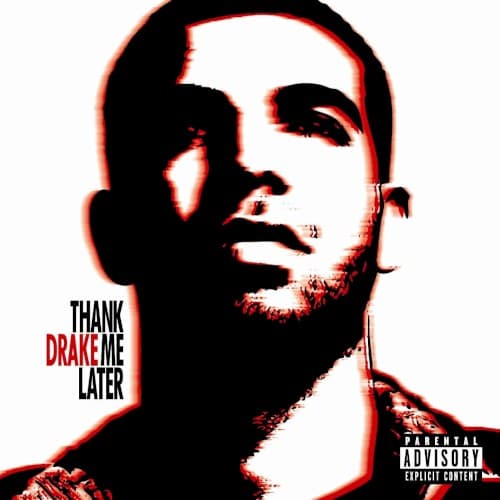
Style & Context
Influences
Early digital art, street art posters, lo-fi aesthetics, blog era design
Location
The cover's detached, almost alienated feel, subtly reflects the anonymity of the digital age, a contrast to traditional neighborhood narratives.
Visual Language
This photographic manipulation leans into early 2010s digital aesthetics, blending raw imagery with subtle, gritty technological noise.
Symbols
Distorted Glitch Effect
The digital distortion signifies Drake's transition from TV actor to a complex, evolving musical persona, reflecting identity shifts.
Drake's Upward Gaze
Drake's gaze, slightly upward, conveys ambition and a forward-looking perspective on his impending rise to rap stardom.
Red Outline
The vibrant red contours suggest both the raw emotion within his music and the intense scrutiny of fame.
Where Sound Meets Image
The cover's somber, yet ambitious, visual perfectly mirrors the atmospheric R&B and emo rap sensibilities woven throughout 'Thank Me Later.' Tracks like 'Find Your Love' and 'Fancy' are drenched in the same melancholic aspiration suggested by Drake's expression. The subtle distortion reflects the internal conflict and external pressures discussed in songs about newfound fame and loyalty, hinting at the emotional vulnerability that became a hallmark of his sound.
This cover helped define a minimalist, digitally-enhanced aesthetic for a new generation of hip-hop artists, moving away from ostentatious displays. Its starkness and introspective mood provided a template for covers that prioritized artistic concept over overt materialism, influencing many subsequent artists seeking a more thoughtful visual identity. The 'glitch' effect became a recognizable stylistic choice.