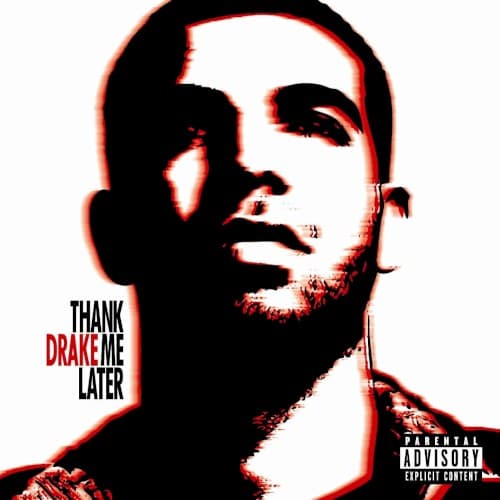
Drake Thank Me Later — The Debut That Chose Loneliness Over Victory Laps
No other debut arrives this conflicted about its own success. Most rappers spend their first album celebrating the climb or honoring the struggle. Drake spent his explaining why winning felt hollow. That contradiction — hunger wrapped in luxury, ambition soaked in melancholy — became the template for a decade of rap introspection that followed.
The timing made it stranger. Blog rap had peaked and crashed. Ringtone rap was dying. Radio wanted anthems but the internet wanted feelings.
Drake walked through that gap with a album that sounded expensive and emotionally bankrupt at the same time. Young Money had Lil Wayne at his commercial peak and Nicki Minaj about to explode. Drake was supposed to be the victory lap. Instead he made an album about how lonely it gets at the top before you even arrive.
The production leaned on 40's cold synth washes and Boi-1da's understated drums. No sample flips. No soul loops. Just space and reverb and Drake's voice filling the emptiness with complaints about women who wanted him for the wrong reasons.
It should have been insufferable. Somehow it worked. The album debuted at number one and went platinum in a month. Critics called it boring.
Fans called it honest. A decade later it sounds like the blueprint for every sensitive rapper who followed. Was Drake ahead of the curve or did he just get there first?
Cold Synths and Colder Conversations
The production here operates in shades of gray. 40 and Boi-1da build tracks that breathe but never explode. Synth pads hover in the background. Kicks hit soft.
Hi-hats whisper. Everything designed to let Drake's voice sit front and center without competition. It is restrained in a way most Young Money releases were not. Lil Wayne was doing backflips over Swizz Beatz drums.
Nicki was rapping over electro-bounce. Drake wanted something that sounded like four in the morning in an empty hotel suite. The lack of samples gives the album a sterile quality. Nothing feels lived-in or worn.
It is all new construction. Kanye was chopping old soul records into confessionals. Drake was building his misery from scratch with preset keyboards and 808s turned down to a murmur.
Lyrically the album circles the same obsessions. Fame before he fully has it. Women who liked him before versus women who like him now. The pressure to prove himself.
The exhaustion of trying. He switches between singing and rapping mid-verse without announcing the transition. It was not revolutionary — Bone Thugs and Nelly had done it — but Drake made it conversational instead of melodic.
The problem is the redundancy. By track eight the themes start folding back on themselves. How many different ways can you describe being lonely at a party? How many times can you question a woman's motives before it sounds like paranoia instead of insight?
The album never earns its darkness. Drake had not lost anything yet. He was mourning a normal life he willingly traded for this one. That disconnect makes some of the vulnerability feel manufactured.
When Wayne shows up he sounds more alive in sixteen bars than Drake does across forty minutes.
A First Half That Promises More Than the Second Delivers
The album front-loads its best material. The opening stretch moves with purpose. Each track sets a different mood but the sequencing feels intentional. You get the filmic build, the late-night confession, the defiant anthem, the victory lap.
It establishes the album's tonal range and shows Drake can do more than brood. The middle section sags under the weight of its own seriousness. The pacing slows. The tempos drop.
The guest features arrive to inject energy but they expose how static Drake's approach has become by that point. The tracks blur together into one long expensive meditation on dissatisfaction.
The back half tries to recover. The production gets slightly warmer. The hooks get stickier. But the momentum never fully returns.
By the time the album ends it feels longer than its forty-six minutes. The sequencing choice to bury the most radio-ready material in the second half makes sense thematically — this is not a party album pretending to be introspective — but it makes for an exhausting listen. You can feel Drake wanting the album to be taken seriously as a statement. The structure reflects that ambition.
But ambition and engagement are not the same thing. The album works best when you skip around. Treat it like a playlist instead of a journey and the songs breathe better. Try to sit through it front to back and you notice how much of it sounds like the same conversation happening in different rooms.
The Template That Launched a Thousand Sad Flexes
In Drake's discography this sits in the middle. Not as raw as the early mixtapes. Not as refined as the albums that followed. It is the moment before he figured out how to balance the singing and rapping without sacrificing momentum.
Before he learned that vulnerability works better in small doses than as the entire thesis. The album matters because it gave every rapper permission to be emotionally messy in public. Before this confessional rap meant talking about trauma or systemic failure. Drake made it okay to rap about your feelings regarding a text message.
That shift — from societal to personal, from political to romantic — redefined what counted as depth in hip-hop. Casual listeners should start with the first five tracks then jump to the features. Diehards will want to hear the whole thing to understand how Drake's sound evolved. But this is not an album that rewards repeat listens the way his later work does.
It is too uniform in tone and too insistent on its own seriousness. How it aged depends on your tolerance for early 2010s production and Drake before he became a meme. The synths sound dated now. The themes feel less novel after a decade of rappers copying the formula.
But the craftsmanship holds up. The vocal melodies are still sticky. The hooks still work. For fans who want more of this sound try Kanye West's 808s and Heartbreak for the Toronto melancholy without the rap.
Long-term this album's influence exceeds its quality. It is more important than it is great. Drake spent the next decade perfecting what he started here with Take Care. This is the rough draft.
Track Listing
Fireworks
▲The album opener builds slowly with piano chords that sound like they are underwater. Alicia Keys hums the hook and Drake raps about doubt and pressure with none of the bravado you expect from a debut single. The production gives him room to stretch syllables and the melody sits in your head for days after. It sets the tone perfectly — this will not be a celebration. The verse about his mother hits harder than the fame complaints. For an opening statement it establishes ambition and vulnerability in equal measure without tipping into self-pity. One of the album's best sequencing choices.
Karaoke
●Singing dominates here and the production strips back to almost nothing. Just keys and light percussion. Drake's voice carries the entire track with no safety net. The risk pays off in the verses but the hook feels underwritten. He needed another melodic idea to break up the repetition. Thematically it continues the loneliness thread but without adding new insight. The vocal performance is confident enough to make you forget how minimal the instrumental is. Works better as a late-night vibe than as a statement piece. Solid but not essential.
The Resistance
▲The hardest Drake raps on the album. The drums finally hit with weight and his flow tightens up. He sounds hungry here in a way he does not elsewhere. The defiance in the hook feels earned instead of performative. This is the clearest answer to anyone questioning whether he belonged in the conversation. The second verse where he addresses critics directly has more bite than anything in the album's second half. The sequencing is smart — two introspective tracks then this. It proves he can do more than brood. Should have been a single.
Over
▲The Boi-1da and 40 production here became the sound of 2010. That piano loop is immediate and the drums are massive compared to the rest of the album. Drake delivers the hook with enough conviction to make you believe he earned the victory lap even though the album keeps contradicting that claim. The verses are technically strong but lyrically safe. He is rapping about success without saying anything memorable about it. Still this was the song that convinced radio he could make anthems. It worked as a commercial move even if it feels like an outlier in the album's tracklist.
Show Me a Good Time
●The production tries for club energy but lands somewhere between sensual and sleepy. Drake's flow here is conversational and the hook is catchier than it has any right to be given how simple the melody is. The lyrics about a woman wanting to escape her relationship are standard R&B fare. Nothing offensive but nothing inventive either. It functions as a palette cleanser after four heavy tracks. You can hear him trying to prove he can make something lighthearted. The effort shows. Decent but forgettable.
Up All Night
●Nicki Minaj saves this track. Her verse has more personality than anything Drake does here. She is playful and aggressive and fully present in a way that exposes how much of the album Drake spends in his own head. His verses are fine but they disappear next to hers. The production is Boi-1da in autopilot mode. The beat does its job without taking risks. The hook is repetitive without being sticky. This is a clear case of a feature outshining the main artist. Nicki understood the assignment. Drake was still figuring out his lane.
Fancy
●T.I. shows up and immediately makes the track feel like an event. His verse is technically cleaner and more charismatic than Drake's. Swizz Beatz on the hook is a strange choice that almost works but the melody never fully clicks. Drake raps well here but he sounds like he is trying to keep up instead of setting the pace. The production aims for grand but lands closer to cluttered. It wants to be a posse cut but nobody sounds like they are in the same room. The chemistry is off. Should have been reworked or cut entirely.
Shut It Down
▼The Dream appears and the track shifts into full R&B mode. Drake sings more than raps and the production leans into the smoothness. It is pleasant but toothless. The kind of song that works in the background at a lounge but does not demand your attention. The hook is serviceable. The verses say nothing new about romance or desire. This is Drake on cruise control. Technically competent but emotionally flat. It exists to fill space in the tracklist. Skip-worthy on repeat listens.
Unforgettable
●Young Jeezy brings the energy this track desperately needs. His verse is the only moment in the album's second half where someone sounds excited to be rapping. Drake holds his own but Jeezy's presence highlights how much the album has been lacking in raw intensity. The production tries to match the energy but it still feels too polished. The mix is clean to the point of sterile. This needed to sound dirtier. The concept is strong but the execution is too safe. Jeezy's sixteen bars are the only reason to return to this one.
Light Up
▲Jay-Z's verse is technically flawless and thematically fitting. He raps about the cost of fame with the authority of someone who has actually paid it. Drake's verses are solid but they sound like a dress rehearsal next to Hov. The production is moody and spacious and gives both artists room to work. The problem is Drake chose to put this in the back half where the album's momentum has already stalled. This should have been in the first five tracks. The sequencing does it no favors. Still one of the album's highlights purely on the strength of the feature and the 40 production.
Miss Me
▲Lil Wayne arrives and reminds everyone why he was the best rapper alive in 2010. His verse is absurd and technically stunning and more fun than anything else on the album. Drake raps well but Wayne makes it sound effortless in comparison. The Boi-1da production is minimal and effective. The beat gives Wayne space to do his thing. Drake's hook is strong and the song has replay value that most of the album lacks. This is what the entire project should have sounded like — confident, playful, technically sharp. Wayne understood Drake needed a reminder that rap can be fun.
Cece's Interlude
▼Barely a minute long and unnecessary. Drake's engineer girlfriend sings and it adds nothing to the album's narrative or mood. It is a personal moment that should have stayed personal. Interludes work when they reset the energy or provide contrast. This one just interrupts the flow. Skip it.
Find Your Love
▲Kanye West and No I.D. on production and the beat is lush in a way nothing else here is. Live strings, warm bass, actual soul instead of synthetic melancholy. Drake sings the entire track and the melody is undeniable. This is the blueprint for every Drake ballad that followed. The lyrics are simple but effective. The vocal performance is confident. The production elevates it from good to great. This should have been the album's centerpiece. Instead it is buried at track thirteen. Criminal sequencing choice. Easily one of the three best songs here.
Thank Me Now
▼The album closes with Drake addressing his critics and justifying his place in the game. The production is understated and the verses are strong but the track lacks the emotional weight to function as a proper closer. It feels like a leftover idea that got tacked on because the album needed an ending. The hook is weak. The message is defensive instead of triumphant. After forty-five minutes of Drake explaining his feelings you want a payoff. This is not it. The album just stops instead of concluding.