Style & Context
Influences
Horror film posters, psychological thriller aesthetics, trap album minimalism
Location
The raw aesthetic reflects Zone 6 Atlanta's street documentation tradition filtered through luxury drug culture's psychological toll.
Visual Language
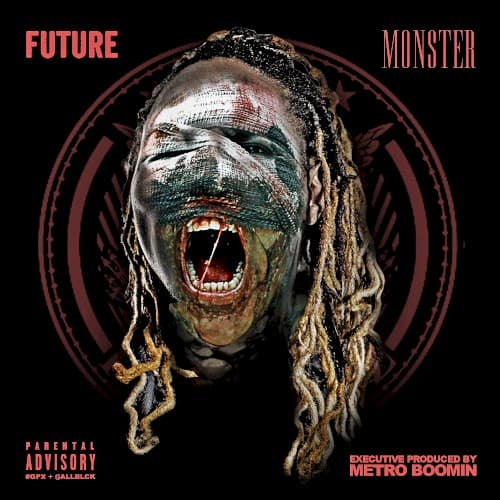
The digital manipulation creates painterly texture across skin tones, blending photography with abstract expressionist elements effectively.
Symbols
Face mask/covering
The obscured identity represents Future's persona dissolving into the lifestyle he chronicles throughout the tape.
Open mouth scream
This primal expression channels the raw pain and rage underlying trap music's celebratory excess and materialism.
Concentric circles
The repeating geometric patterns evoke disorientation and spiral addiction cycles explored across Monster's sixteen tracks.
Where Sound Meets Image
The distorted, almost melting face quality mirrors the slurred, auto-tuned vocal delivery Future employs throughout Monster's runtime. The aggressive scream captures tracks like 'Fuck Up Some Commas' and 'Monster' itself, where boastful energy barely conceals underlying desperation. The disorienting visual patterns reflect the project's 808-heavy production from Metro Boomin, Southside, and others, where relentless bass creates similar psychological pressure. The cover promises exactly what the tape delivers: sixteen tracks of uncut Atlanta trap with zero commercial compromise.
This cover established a visual template for dark trap that persists today. The psychological horror approach influenced mixtape aesthetics across SoundCloud rap, particularly artists exploring addiction and mental health themes. The minimalist text placement and central distorted figure became a formula replicated by countless underground artists. Monster's success proved trap projects didn't need glossy imagery to connect, opening space for rawer, more experimental visual approaches that matched the music's intensity.