From Dungeon Family Protégé to Trap Music Architect
Nayvadius DeMun Cash — known professionally as Future — emerged from Atlanta's Zone 6 with a vision that would fundamentally reshape hip-hop's sonic landscape. Born November 20, 1983, he spent his formative years absorbing the city's rich musical ecosystem, initially connecting with the Dungeon Family collective through his cousin, producer Rico Wade. This mentorship placed him adjacent to OutKast's creative orbit during his teenage years, exposing him to studio craft and Atlanta's boundary-pushing ethos long before he picked up a microphone seriously.
By the early 2010s, Future had developed a distinctive approach that merged street narratives with intoxicated melancholy, delivered through a voice that alternated between guttural clarity and narcotic slur. His breakout period between 2011 and 2012 established him as trap music's most emotionally complex practitioner — someone who could make hedonism sound like existential crisis. Where previous Atlanta stars had perfected trunk-rattling aggression or playful wordplay, Future weaponized vulnerability, turning Auto-Tune into an instrument of emotional distortion rather than mere pitch correction.
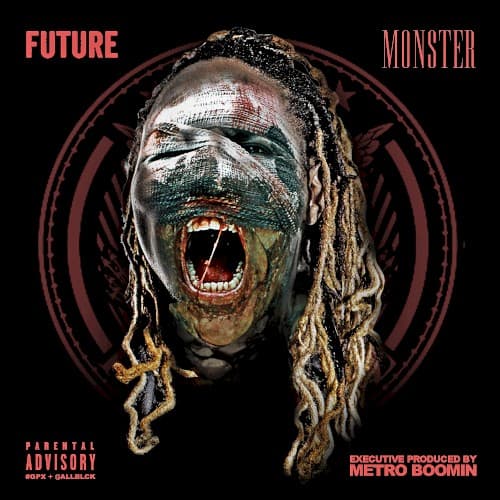
His impact extends far beyond commercial success. Future essentially created the template for modern melodic trap, influencing everyone from mainstream pop-rap crossovers to SoundCloud-era experimentation. His 2014 mixtape run — particularly Monster — represents one of hip-hop's most sustained creative peaks, proving that prolific output and artistic ambition weren't mutually exclusive. Three decades into his life and over a decade into his recording career, Future remains trap music's most consistent innovator, someone who redefined what emotional honesty could sound like over 808-driven production.
Codeine Dreams and Auto-Tune Alchemy: Future's Sonic Identity
Future's production aesthetic centers on cavernous low-end frequencies, skeletal hi-hat patterns, and atmospheric synth work that creates space for his voice to operate as both lead instrument and textural element. His primary collaborators — Metro Boomin, Southside, Zaytoven, DJ Esco — construct beats that feel simultaneously claustrophobic and vast, mirroring the psychological states Future explores lyrically. The signature Future sound involves 808s tuned to resonate in your chest cavity, trap drums programmed with machine precision, and melodic elements that suggest beauty deteriorating in real-time.
Vocally, Future occupies territory between rapping and singing that previous generations would have considered unviable. His delivery technique involves stretching syllables across multiple pitches, using Auto-Tune not to mask deficiencies but to amplify emotional resonance. When he chants "mask on, fuck it, mask off" or elongates words into wordless moans, he's utilizing the full spectrum of his voice as expressive tool. This approach influenced an entire generation of artists who realized melody and street credibility weren't opposing forces. His flow patterns often ignore traditional bar structures, creating hypnotic repetitions that build intensity through accumulation rather than variation.
Thematically, Future operates in contradiction. He glorifies excess while documenting its consequences, celebrates street life while revealing its emptiness, projects invincibility while admitting profound loneliness. His best work — particularly the Monster mixtape rated 9.2 by this publication — captures this duality with uncompromising honesty. Songs function as emotional purges, cyclic mantras that mirror the repetitive patterns of addiction and heartbreak. The production choices reinforce these themes: reverb-drenched vocals suggesting distance from oneself, distorted frequencies evoking altered states, minimal arrangements creating sonic voids that lyrical content can't quite fill. Future doesn't resolve these contradictions; he transforms them into aesthetic fuel.
Mixtape Monarchy to Mainstream Domination: Charting Future's Ascent
Future's recording career began in earnest with 2010's "Racks" remix, but his breakthrough arrived with 2011's "Tony Montana," a street anthem that introduced his drowsy cadence and quotable hooks to wider audiences. The Streetz Calling mixtape series and True Story established his regional dominance, leading to an Epic Records deal and 2012's Pluto — his commercial debut that spawned radio hits while maintaining trap authenticity. Songs like "Turn On the Lights" revealed his melodic sensibilities, proving he could craft hooks that resonated beyond Atlanta's city limits without diluting his core sound.
The 2014-2015 period represents Future's creative zenith. He released three mixtapes in seven months — Monster, Beast Mode, and 56 Nights — that collectively redefined what prolific output could achieve artistically. Monster arrived January 2014 with production almost exclusively from Metro Boomin and Southside, creating a cohesive sonic universe where every track felt like transmission from rock bottom. The mixtape's emotional rawness and production innovation elevated it beyond promotional material into essential listening. Songs like "Codeine Crazy" and "Throw Away" captured relationship dissolution with pharmaceutical precision, while "Move That Dope" demonstrated he hadn't sacrificed club impact for introspection. This run established Future as trap's poet laureate, someone who could balance commercial viability with genuine artistic statement.
DS2 (Dirty Sprite 2) arrived in July 2015 as his commercial apex, debuting at number one and solidifying the sound his mixtape trilogy had perfected. What Fabolous or Cam'ron had done with punchlines, Future did with atmosphere — creating a signature approach so distinctive that imitators immediately revealed themselves. His 2016 collaboration with Drake, What a Time to Be Alive, and subsequent solo releases like EVOL and FUTURE (2017) maintained commercial momentum while experimenting with different sonic textures. The surprise release strategy of dropping FUTURE and HNDRXX one week apart in February 2017 — with both debuting at number one — demonstrated his commercial dominance while attempting to separate his hard-edged material from more melodic, relationship-focused content.
The late 2010s and early 2020s saw Future navigating the challenge every prolific artist faces: maintaining relevance without creative stagnation. Albums like The WIZRD (2019), High Off Life (2020), and I Never Liked You (2022) delivered chart success and signature moments without quite recapturing the desperate intensity of his mid-decade work. His Super Freaky Girl collaboration controversy and ongoing label negotiations revealed industry complexities beneath the music. Recent collaborative projects, including another Drake team-up and ventures with Metro Boomin, suggest Future understands his legacy partly depends on elevating younger talent while reminding audiences why he remains trap's most influential voice. At 40, he's shifted from hungry innovator to established institution — still capable of innovation but no longer needing to prove anything.
Future's discography strategy has always favored volume: over a dozen mixtapes, nine solo studio albums, and countless guest appearances create a catalog that rewards deep exploration while potentially overwhelming casual listeners. This approach mirrors his thematic obsessions — excess as creative fuel, repetition as hypnotic technique, prolific output as artistic statement. The challenge now involves curation: determining which Future deserves historical preservation versus what functions as commercial necessity.
Trap's Emotional Architect: Future's Influence on Modern Hip-Hop
Future's most significant contribution involves expanding trap music's emotional vocabulary. Before him, the subgenre largely trafficked in aggression, hustler narratives, and hedonistic celebration. He introduced psychological complexity — using the same production templates to explore depression, heartbreak, pharmaceutical dependency, and existential confusion. When artists from Juice WRLD to Lil Uzi Vert to Travis Scott built careers on melodic introspection over trap production, they were working in territory Future had mapped. His influence extends beyond direct sonic imitation into permission structure: he proved street credibility and emotional vulnerability could coexist, that Auto-Tune could be artistic tool rather than industry crutch.
The technical innovation shouldn't be understated. Future's vocal approach — that slurred, melody-adjacent delivery — required production partnerships that could complement rather than compete with his voice. His work with Metro Boomin essentially created the modern trap production blueprint, one built on negative space, 808 science, and atmospheric tension. Listen to contemporary trap from any region, and you'll hear Future's fingerprints: the stretched syllables, the narcotic pacing, the way hooks function as mantras rather than traditional choruses. His influence appears in artists who've never directly cited him, embedded in trap's structural DNA.
Culturally, Future represents Atlanta's transition from regional sound to global dominance. He arrived after OutKast proved Atlanta could produce visionaries, after T.I. and Jeezy established trap's commercial viability, but before trap became the default mode for hip-hop worldwide. His timing and talent positioned him as the bridge — someone who could honor Atlanta's legacy while pushing the sound forward. The question now involves longevity: whether Future's music will be remembered as definitive documentation of 2010s hip-hop or if his prolific approach will dilute his legacy. History suggests artists who perfect a sound often get overshadowed by those who invent new ones. But Future didn't just perfect trap — he made it feel things.