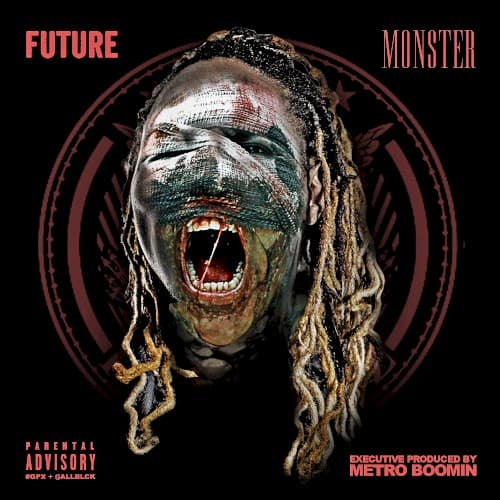
Future Monster — The Heartbreak That Built the Future
The pain is louder than the bass. That is the first thing you notice when you finally sit down with this album front to back, when you stop treating it like background music for late drives and actually listen to what Future is saying under all that Metro Boomin production. For years the narrative was simple: Future made turn-up music, Future made strip club anthems, Future was the king of reckless abandon in the trap lane. Monster is where that story breaks down completely.
The album arrived barely a month into 2014 carrying the weight of a very public breakup, a custody battle playing out in tabloid headlines, and a rapper who had spent two years on top of Atlanta radio suddenly having to explain himself to people who thought they already knew who he was. What makes this project different from everything Future had done before is how comfortable he sounds being uncomfortable. The flex tracks still hit, the drug references still pile up bar after bar, but underneath all that bravado sits something closer to confession.
How many trap albums have you heard where the best song is sixteen minutes of a man talking himself in circles over a suspended piano loop?
Monster does not sound like an artist trying to reclaim momentum. It sounds like someone using music as the only language that still makes sense when everything else has fallen apart.
When Metro Stopped Playing It Safe
Metro Boomin was twenty years old when he made most of these beats. That fact matters because the production on Monster does not sound like a young beatmaker trying to prove himself — it sounds like someone who already understood that space hits harder than noise. The hi-hats snap with the precision of a metronome counting down to nothing, the 808s arrive heavy but never overstay their welcome, and the melodic elements float through the mix like they are trying to leave before the song ends.
This is minimal trap architecture at its most effective.
No unnecessary layers, no guest producers filling out the runtime, just Metro building dark rooms and letting Future fill them with whatever he needs to get out. The chemistry between producer and rapper here is almost telepathic. Metro knows exactly when to pull back and let Future's voice carry the weight, exactly when to drop in a synth line that mirrors the melody Future is already half-singing. It is production that listens.
Lyrically this is Future at his most contradictory, which somehow makes it his most honest. One song he is throwing away relationships like they mean nothing, the next he is drowning in regret over a piano that sounds like it is being played underwater. The vocal delivery shifts constantly — from the slurred AutoTune runs that became his signature to moments of startling clarity where you can hear every word.
He is not trying to hide behind the effects anymore.
He is using them to say things he cannot say straight. The only real weakness is that the album does not know when to end. Sixteen tracks is too many for a project this emotionally raw, and the middle stretch loses some of the focus that makes the opening and closing runs so devastating. A tighter tracklist could have pushed this into untouchable territory — but would Future have sounded this raw if he had edited himself?
The Descent
The sequencing on Monster works like a slow spiral. The opening stretch comes in hot with the kind of energy that made Future a fixture on Atlanta radio — pure momentum, pure flex, the sound of someone trying to drown out everything else with volume. Then somewhere around the middle the mask starts slipping. The project does not announce the shift with a dramatic beat switch or a spoken-word interlude.
It just quietly stops pretending that everything is fine.
By the time you reach the back half you are no longer listening to trap music in any traditional sense. You are listening to someone work through grief in real time, using the same 808s and hi-hats that soundtracked the celebration just twenty minutes earlier. The pacing is deliberate in a way that makes you feel the weight of what Future is carrying. The songs get slower, the spaces between the drums get wider, the AutoTune gets thicker until his voice sounds like it is coming from the bottom of a pool.
This is not an album that builds to a climax. It descends. And Codeine Crazy does not offer resolution or redemption — it just ends. The sequencing never rushes to make a point, never forces a narrative arc that does not exist in the material.
The Blueprint for Everything After
Monster is the second-best project Future has ever made, and the most important. It sits just below DS2 in his discography but towers over almost everything else in the trap lane from that era. This is the album that gave Future permission to stop performing happiness he did not feel, the album that proved drugs and melancholy could coexist in the same song without one diminishing the other.
Who should listen to this: anyone who thinks trap music is just party music, anyone who wants to understand how Future became the most influential Atlanta artist of the 2010s, anyone who has ever used forward motion to avoid sitting still with their thoughts. Who might not connect with it: listeners who need clean narrative arcs, people who prefer their trap music without the emotional weight, anyone looking for guest verses to break up the intensity.
Monster has aged like a time capsule that only gets more relevant. The production still sounds ahead of its time, the vocal approach that felt experimental in 2014 became the default template for half the SoundCloud generation, and the emotional honesty opened the door for every sad trap album that followed. If you only have time for three tracks, start with the title cut, Throw Away, and Codeine Crazy — that sequence alone contains more emotional range than most rappers manage in a full career.
If you are working backward through Future's catalog, Monster is where the switch flips. Everything before it sounds like a warm-up. Everything after it sounds like a response. For similar deep dives into production-driven emotional trap, check Rodeo by Travis Scott or Nothing Was the Same by Drake.
For more Atlanta trap that doubles as therapy, try Thugger's Barter 6 or Young Nudy's Anyways. Monster did not just change Future's career. It changed what trap music was allowed to sound like when the party ended and the lights came on.
Track Listing
The Intro
▲Minimalist scene-setting that does exactly what an intro should do: establish the sonic palette and get out of the way. Metro lays down a skeletal beat with just enough low-end rumble to let you know what kind of project this is going to be, and Future comes in with his voice already halfway to slurred, already coated in effects. There is no grand statement here, no thesis paragraph. Just vibes and a warning.
Radical
▲The first real song and it hits like Future reminding everyone he can still make a club record when he wants to. The 808s knock hard enough to shake door panels, the hi-hats are on double-time, and Future rides the pocket with the kind of effortless flow that made him a radio fixture in the first place. The hook is simple to the point of hypnotic — just a phrase repeated until it burrows into your skull. This is trap fundamentals executed at the highest level. Metro keeps the instrumental clean and focused, no unnecessary flourishes, just drums and bass doing all the heavy lifting. Lyrically it is pure flex mode, the kind of bars that sound better in a car than on a page. What makes it work is how locked in Future sounds with the production. Every ad-lib lands exactly where it needs to, every melodic run hits the pocket Metro left open for it. This is the sound of two people who have spent enough time in the studio together to communicate without words. Not the most memorable track on the project, but a perfect statement of intent: Future is still dangerous, still in control, still the best at this particular style of Atlanta trap. The energy here sets up the emotional descent that comes later. You need this high point to understand how far the fall goes.
Monster
▲This is the moment where Future stops warming up and starts making a case for himself. The title track is pure menace, Future growling his way through verses that feel like a threat and a promise at the same time. Metro builds the beat around a synth line that sounds like it is circling overhead, waiting for something to die. The drums hit with the kind of weight that makes you check your rearview. What separates this from a standard trap banger is the edge in Future's voice. He is not just rapping about being dangerous — he sounds genuinely unhinged, like he is trying to convince himself as much as the listener. The hook is a chant, the verses are a warning, and the whole thing has the energy of someone who just stopped caring about consequences. I heard this for the first time in a parking lot outside a Lenox Square and watched two different cars turn their systems up trying to match the bass. That is the test for a track like this: does it make other people want to compete? Monster passes. This is Future at his most visceral, the song that gave the whole project its title and its attitude. It is not the best track here, but it might be the most necessary. Everything that follows makes more sense because this song exists.
Abu's Boomin
●Short interlude that feels more like Metro Boomin leaving his tag on the project than an actual song. Future barely shows up, and when he does it is just ad-libs and fragments of melody over a beat that sounds like it is still loading. Not much here beyond vibes, but it works as a brief reset before the next run. Filler in the best way — it does not overstay its welcome.
Fuck Up Some Commas
▲The most quotable song Future has ever made and somehow still underrated. This is minimalism as a flex — Metro strips the production down to just drums and a bassline that could crack foundations, and Future fills the empty space with one of the catchiest hooks in trap history. The whole song is built around a single idea, and Future rides that idea for three minutes without ever getting boring. What makes it work is the delivery. Future is not yelling, not straining, just letting the words tumble out in a half-sung slur that makes every bar sound effortless. The repetition becomes hypnotic. By the third chorus you are locked in, and by the end you are repeating it without realizing you started. This is the kind of song that takes over radio and strip clubs and graduation parties, the kind of track that people who do not even like Future know every word to. It is also proof that Future does not need complexity to make something undeniable. The simplest idea executed perfectly will always beat a complicated idea executed halfway. I have watched this song clear out a room and bring everyone to the floor more times than I can count. That is not hype, that is just what happens when a beat this hard meets a hook this sticky. A decade later and it still sounds exactly like Atlanta at 2 AM with the windows down.
Throw Away
▲The first real crack in the armor. Future spends four and a half minutes trying to convince himself that he can walk away from a relationship that is clearly still living in his head rent-free. Metro builds the beat around a melancholic piano loop and lets Future spiral over it, his voice drenched in AutoTune until it sounds less like rap and more like a distress signal. The hook is devastating in its simplicity: throw away, throw away, like he is trying to will himself into not caring through sheer repetition. It does not work. You can hear it in his voice. This is the first time on the project where the drugs stop being a flex and start sounding like self-medication. Lyrically he is all over the place — one bar he is talking about other women, the next he is admitting he still answers her calls. The contradictions are the point. This is not a man who has moved on. This is a man performing moving on and failing in real time. What makes it one of the best songs Future has ever recorded is how raw it sounds. There is no distance between the emotion and the delivery. He is not writing about heartbreak, he is in it, and Metro's production gives him all the space he needs to bleed out. The song does not resolve. It just ends. That is more honest than any neat conclusion could ever be.
After That
●A brief return to the flex mode, but even here the cracks are showing. The beat knocks, Future sounds engaged, but there is a weariness creeping into his voice that was not there on the earlier bangers. The hook tries to recapture some of that reckless energy from the opening stretch, but it lands differently now. You have heard Throw Away. You know what he is running from. Still a solid track with enough energy to keep the momentum going, but it feels more like a brief distraction than a statement. The kind of song that works better in a club than in headphones late at night.
My Savages
●Pure Atlanta street energy, Future shouting out his crew over a beat that sounds like it is being played through blown speakers in the best way possible. Metro keeps the production grimy and aggressive, all distorted bass and clattering hi-hats. Future matches the intensity, his flow staying in the pocket while the energy stays high. This is the kind of track that reminds you Future came up in a very specific scene, surrounded by very specific people, and he has not forgotten where he is from even as his profile grows. Not a standout, but necessary for the album's sense of place. You need these moments to ground the emotional tracks in something concrete.
2Pac
●The beat sounds like a horror movie score, all minor-key synths and rattling percussion. Future floats through it sounding more detached than menacing, like he is watching himself from a distance. The song never quite builds to anything — it just maintains the same eerie atmosphere for three minutes and fades out. Interesting sonically but one of the weaker moments on the tracklist. It feels like Metro and Future experimenting with a vibe that does not fully develop.
Gangland
●Mid-tier trap that does not add much to the conversation. The beat is solid, Future sounds competent, but nothing here feels essential. It is the kind of track that gets skipped after a few listens once you know where the real highlights are. Functional filler that keeps the runtime moving but does not leave much of an impression. You could remove this from the tracklist and the album would not lose anything critical.
Fetti
●Another standard trap cut that leans into the money and excess talk without bringing much new energy to the formula. Metro's production is clean but unremarkable, and Future sounds like he is running through the motions. Not bad, just forgettable. The kind of track that disappears into the middle of the album and never demands a second listen. Monster's weakest stretch is right here, a handful of songs that feel like they were included to pad the runtime rather than because they had something urgent to say.
Hardly
●Slightly better than the tracks immediately before it, but still not essential. The hook has a little more personality, and Future sounds more engaged, but it is still solidly in the filler category. Metro tries to inject some energy with a more uptempo beat, but it does not quite land. Skippable.
Wesley Presley
●Named after Future's alter ego, this feels like it should be a bigger statement than it is. The production has some interesting textures, and Future experiments with his flow a bit more than usual, but the song never coheres into something memorable. It is caught between trying to be a banger and trying to be introspective, and it does not fully commit to either direction. Decent enough, but not a highlight.
Showed Up
▲The energy picks back up here. Future sounds locked in again, the beat has some real knock to it, and the hook actually sticks. This is the kind of track that should have come earlier in the tracklist to maintain momentum. It is not going to make anyone's top five Future songs, but it is a reminder that even on his weaker moments he can still craft something that works. A solid late-album cut that does its job without trying to do too much.
Mad Luv
●Brief and surprisingly tender, at least by Future's standards. The production is lighter, almost pretty, and Future lets his voice ride the melody without burying it in effects. It is a palette cleanser before the closing track, a moment of calm before the final descent. Not much meat on the bones here, but it works as a transition. The kind of song you appreciate more in context than on its own.
Codeine Crazy
▲The greatest song Future has ever recorded and it is not particularly close. Sixteen minutes of Metro Boomin playing the same suspended piano loop while Future talks himself in circles, trying to justify his drug use and his lifestyle choices and his heartbreak, contradicting himself every thirty seconds, sounding more lost with every bar. This is not a rap song in any traditional sense. It is a confession, a spiral, a breakdown set to music. The structure is almost nonexistent — Future just keeps going, verse after verse, no real hooks, no catchy phrases, just raw thoughts tumbling out faster than he can organize them. What makes it work is how present he sounds. Every word feels like it is being pulled out of him in real time, no writing, no polish, just Future in a booth at four in the morning saying everything he has been holding back for the entire album. The production is perfect because it refuses to get in the way. Metro just lets that piano loop ride, lets the space breathe, gives Future all the room he needs to fall apart. I have listened to this song hundreds of times and it still hits the same. The moment near the end where his voice cracks and he just keeps going, the way he admits he is drowning and then immediately tries to play it off, the complete absence of bravado or performance — this is as honest as trap music has ever been. Codeine Crazy is why Monster matters. Everything else on the album is great, some of it is excellent, but this is the song that separates Future from every other rapper working in this lane. No one else was willing to be this vulnerable, this messy, this human. It is a perfect closer because it does not wrap anything up. It just leaves you sitting in the wreckage with him, waiting for the piano to fade out.