Style & Context
Influences
Marvel Comics, manga action panels, film noir lighting, kung-fu cinema
Location
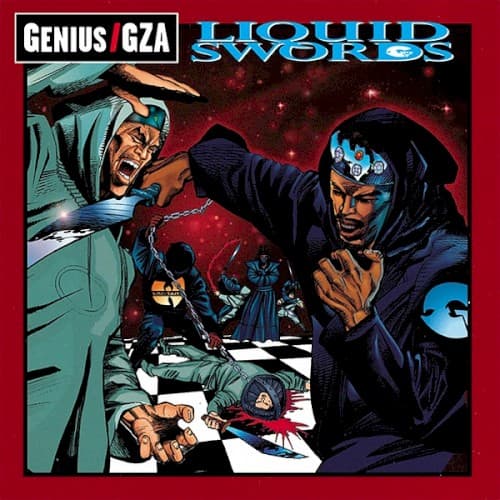
This visual speaks directly to Staten Island's isolation where the Wu studied strategy games and kung-fu flicks.
Visual Language
The sequential art style mirrors how Wu-Tang consumed martial arts films and comic books as Brooklyn kids.
Symbols
Checkered floor battlefield
The chessboard ground literalizes GZA's lyrical strategy where every move in the rap game requires calculated thinking.
Samurai headband on GZA
The metal headpiece connects Wu-Tang's obsession with martial arts philosophy to hip-hop's competitive warrior mentality.
Multiple fallen bodies
Each collapsed figure represents defeated opponents in rap battles where GZA's lyrics cut like the sharpest blade.
Where Sound Meets Image
The cover perfectly mirrors the album's cold, sparse production where GZA's multisyllabic patterns slice through RZA's minimalist beats like surgical instruments. The cosmic setting reflects songs like 'Liquid Swords' and 'Shadowboxing' where abstract wordplay creates science fiction narratives from street realities. The violence depicted remains stylized and strategic rather than gratuitous, matching how GZA's bars destroy opponents through intellect rather than aggression—every punch here represents a perfectly placed rhyme scheme.
This cover established comic book illustration as legitimate hip-hop art when photography dominated the genre, influencing everyone from MF DOOM's masked persona to Deltron 3030's sci-fi aesthetics. The chess-as-rap-battle metaphor became so embedded in hip-hop that it now feels inseparable from Wu-Tang's cultural footprint, spawning countless imitators.