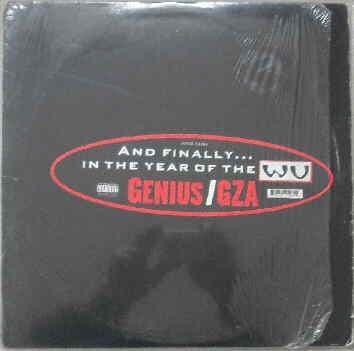
GZA/Genius Liquid Swords Single — Three Versions of the Same Sword
Play the first three tracks back to back and try to explain why a label thought listeners needed the same song three times on one disc. You cannot. This is not an album. It is not even an EP in the traditional sense.
It is a promo single with multiple edits of the same title track, padded with two versions of a deep cut. Geffen shipped this to radio and retail in late 1995, banking on the Wu-Tang name to move units during the Christmas push. The strategy made sense on paper. Liquid Swords the album had just dropped to critical praise.
RZA's production was colder than anything on the East Coast. GZA's writing was operating at a level most rappers could not touch. But this single is a strange artifact. It offers no new material.
No exclusive B-side. No remix that reimagines the original. Just three mixes of the title track and two versions of an album track that never had radio potential in the first place. Who was this for?
DJs already had the album version. Fans who wanted Liquid Swords owned the full-length. Casual listeners were not checking for a five-track promo that repeated itself. This is the kind of release that only makes sense in the mid-nineties, when labels flooded the market with singles to juice sales charts and keep product moving.
It worked for a minute. Then the internet killed the format.
When the Blade Has No Edge
The sound here is pure RZA winter. Brittle strings. Kung-fu dialogue. Drums that crack like ice underfoot.
The Liquid Swords beat is one of the coldest instrumentals in hip-hop history, built from a Willie Mitchell sample chopped so clean it sounds like it was frozen and shattered. GZA's delivery matches the temperature. No inflection. No urgency.
Just a monotone flow that cuts through the mix like a scalpel.
His writing operates on a different frequency than most Wu-Tang members. Where Raekwon piles images and Ghostface freestyles fever dreams, GZA constructs puzzles. Every line connects. Every metaphor extends.
The title track is a masterclass in controlled aggression, with references to chess, swordplay, and street survival woven so tightly you need multiple listens to catch everything. But repetition kills impact. Hearing the same verse three times in a row exposes how much this song relies on atmosphere. Strip away the mystique and you are left with a talented writer working within a very narrow emotional range.
The LP version is the definitive cut. The clean version neuters the aggression. The late night radio edit does nothing the LP version does not do better. What does a third version of the same track actually add?
Labels fares worse. The beat is solid, built around a smoky jazz loop that would work on any nineties New York album. But the concept wears thin fast. GZA spends two verses explaining how record labels exploit artists.
It is a valid critique. It is also didactic. The song has no rewind value because it has no emotional core. You respect the message but do not return to it.
The GZA mix changes nothing essential. Slightly different EQ. Slightly tighter drums. Not enough variation to justify a second version.
This single suffers from a fundamental problem. It assumes the strength of the original material will carry a release with no added value. That assumption only works if you are offering something fans cannot get elsewhere.
Three Cuts of the Same Cloth
The sequencing here is not designed for listening. It is designed for format. Radio gets the clean edit. DJs get the LP version.
Stores stock whichever version fits their demographic. But as a listening experience, the first three tracks form an unintentional study in how censorship weakens hip-hop. The late night radio edit pulls punches. The clean version strips context.
Only the LP version delivers the full picture. By the time you reach the middle section, fatigue has set in. Labels arrives without momentum because the single has already spent fifteen minutes circling the same idea. The alternate mix does not refresh anything.
It just extends the runtime. There is no arc here. No build. No payoff.
Just five tracks that could have been two. The back half feels like filler because it is filler. Promos like this were never meant to be experienced front to back. They were tools.
You picked the version you needed and ignored the rest. Judged as a single, this works. Judged as a listening experience, it fails.
A Relic of a Dead Format
In GZA's discography, this sits nowhere. It is not an album. It is not a significant release. It is a promotional tool that outlived its purpose the moment the single format collapsed.
Liquid Swords the album is a top-tier Wu-Tang project and one of the best solo records the Clan ever produced. This single is a footnote. If you want to hear Liquid Swords, stream the album version. If you want to understand how nineties labels milked catalog, this is a useful case study.
But there is no reason to return to this release in 2026. The LP version of the title track remains essential. It belongs on every East Coast hip-hop playlist. The rest of this single does not add anything to the conversation.
Labels has moments of sharp writing, but the song never escapes its own lecture. Fans who discovered GZA through streaming have no reason to seek this out. Collectors might appreciate it as a period piece. For everyone else, it is five tracks where two would have been enough.
Similar releases worth exploring include Raekwon's Incarcerated Scarfaces single and Ghostface Killah's Daytona 500 promo. Both offer more variety than this. Long-term, this single matters only as evidence of how the music industry used to operate. Play the album, skip the promo.
Track Listing
Liquid Swords (Late Night radio)
●The censored radio edit strips the aggression out of one of the coldest battle raps ever recorded. GZA's chess metaphors and swordplay imagery survive intact, but the bite is gone. Every curse removed is a gap in the flow. Every edit is a reminder that this version was designed for program directors, not listeners. RZA's production still hits. The strings still shiver. But the performance feels defanged. You can hear where the edits were made, and the seams show. This is the version that played on late-night mixshows in 1995, wedged between commercials and station IDs. It served its purpose. It introduced the song to audiences who would never hear the album version on air. But it has no lasting value. If you grew up hearing this edit first, it might hold nostalgia. For everyone else, it is a compromise.
Liquid Swords (clean)
▼The clean version goes further than the radio edit, scrubbing every reference that might offend a retail buyer. The result is a song that barely resembles the original. Whole bars disappear. Punchlines lose setup. The flow stumbles over gaps where words used to be. GZA's writing is too dense for this kind of surgery. His verses are built on internal rhyme schemes and multi-syllabic patterns that collapse when you remove pieces. What remains is a skeletal version of a classic, kept alive by RZA's untouchable production. The beat still sounds like winter. The sample still cuts. But the vocal performance is a shell. This version exists because Walmart and other big-box stores refused to stock explicit rap in the mid-nineties. It moved units. It put the song in front of suburban kids whose parents would not let them buy the real thing. But it is not the song GZA wrote. It is not the song anyone should remember.
Liquid Swords (LP version)
▲This is the version that matters. GZA opens with the sharpest first verse in Wu-Tang's catalog, setting up metaphors that will echo through the entire album. The chess imagery is not decoration. It is structure. Every line builds on the last. Every bar extends the central conceit. RZA's production is operating at peak clarity here, mixing the Willie Mitchell sample with kung-fu dialogue and letting the drums hit just hard enough to keep the track moving without overwhelming the words. GZA's monotone delivery is often misread as lack of emotion, but it is the opposite. He is so in control that he does not need to raise his voice. The confidence is in the precision. Every syllable lands where it should. No wasted motion. The hook is minimal, just a looped vocal refrain that reinforces the title without cluttering the track. This is boom bap at its most refined. No excess. No filler. Just a beat, a voice, and a concept executed at the highest level. The song holds up because it never chased trends. It was cold in 1995. It is still cold now.
Labels (clean)
●The concept is stronger than the execution. GZA breaks down how record labels exploit artists, using label names as wordplay anchors for a two-verse critique of the industry. It is clever writing. Some of the puns land hard. But the song has no emotional weight. It reads like a lecture. The beat is competent, a smoky jazz loop with steady drums, but it does not push the song anywhere. GZA's delivery stays locked in the same register for the entire track, which works on Liquid Swords the title track but feels flat here. The clean version makes it worse. Removing the few curse words that gave the song any edge leaves a track that feels like a public service announcement. You respect the message. You understand why GZA wanted to say it. But you do not come back to it. The song exists in the space between commentary and entertainment, never fully committing to either. It is album filler elevated to single status because labels needed content.
Labels (GZA mix)
▼The differences between this and the clean version are so minor that most listeners will not notice them. The drums hit slightly harder. The bass sits a bit deeper in the mix. The vocal might be a hair louder. But the core problem remains. The song is didactic. No amount of mixing will fix that. GZA's wordplay is still sharp. The puns still work. But the track lacks replay value because it has no emotional core. It is an idea, not a feeling. The GZA mix does not add a verse. It does not include a feature. It does not reimagine the concept. It is just a slightly different EQ on a track that did not need a remix in the first place. This is the kind of bonus version that only exists to pad a single's runtime and give DJs options. It worked in 1995, when format variety mattered for radio play. In 2026, it is redundant. If you are listening to this single, you have already heard Labels once. Hearing it again with minor mixing tweaks adds nothing.