The Genius Behind Wu-Tang's Most Cerebral Rhymes
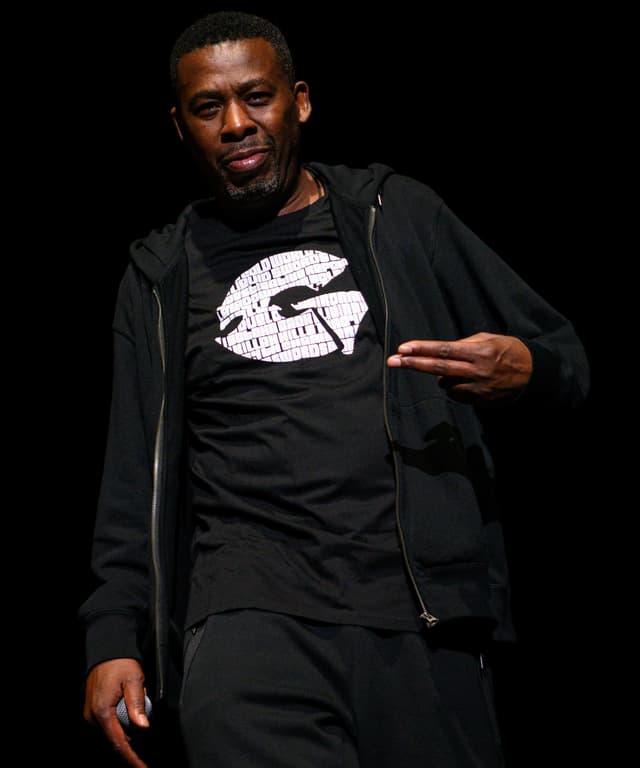
Gary Grice emerged from Staten Island's Park Hill projects as GZA—later adopting the full moniker GZA/Genius—and became the eldest architect of the Wu-Tang Clan's revolutionary sound. Born in 1966, he predated most of his Wu-Tang brothers not just in age but in industry experience, having released the ill-fated "Words from the Genius" on Cold Chillin' Records in 1991 before the Clan formed. That commercial failure taught him patience and sharpened his approach to the craft. When RZA assembled the collective that would reshape hip-hop's landscape, GZA brought something the crew desperately needed: calculated lyrical precision and a strategic mind that matched RZA's production vision.
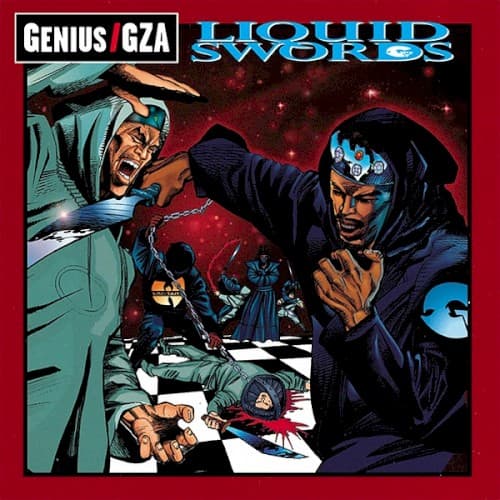
His reputation as the most lyrically dense member of Wu-Tang isn't folklore. Where Method Man brought raw charisma and Ghostface delivered emotional stream-of-consciousness, GZA constructed verses like mathematical proofs. Each line connects to the next through internal logic rather than pure braggadocio. His 1995 solo debut "Liquid Swords" became the template for how a Wu-Tang solo album could sound—stark, cinematic, and uncompromising. The album showcased RZA's production at its coldest and GZA's writing at its sharpest, creating what many consider the definitive Wu-Tang solo statement despite its divisive reputation among modern listeners.
Beyond the booth, GZA represents hip-hop's intellectual wing. His fascination with science, chess strategy, and vocabulary expansion pushed the genre's boundaries when gangsta narratives dominated. He's lectured at MIT and Harvard about the intersection of science and hip-hop. He's taught kids through educational initiatives. This commitment to knowledge transforms his music from mere entertainment into something resembling thesis work—dense, demanding, rewarding for those willing to study.
Minimalist Precision: How GZA Weaponizes Syllables
GZA's vocal delivery operates on principles opposite to mainstream accessibility. His tone sits in a narrow register—deliberate, monotone by design, devoid of melodic flourishes. This isn't limitation. It's focus. By stripping away vocal acrobatics, he forces listeners to engage with the words themselves. His flow moves like a chess grandmaster playing speed rounds: no wasted motion, every placement calculated for maximum tactical advantage. He rarely raises his voice, never resorts to ad-libs for emphasis, trusts his construction to carry weight.
His production choices reflect this minimalism. "Liquid Swords" pairs him with RZA's most austere work—sparse drums, ominous strings, samples that feel lifted from forgotten kung-fu soundtracks. The production creates negative space, allowing each syllable room to breathe and resonate. Where other rappers might layer hooks and melodic bridges, GZA prefers extended verses that unfold like short stories. His collaboration "4th Chamber" exemplifies this aesthetic: industrial clanging, Ghostface's manic energy contrasting against GZA's measured dissection of street philosophy.
His lyrical mechanics deserve study. Multi-syllabic rhyme schemes stack across bars, internal rhymes create hidden patterns, metaphors extend across entire verses rather than functioning as isolated clever lines. On "Shadowboxin'" he constructs an elaborate chess-as-battle metaphor that never breaks character. This isn't punch-line rap or quotable one-liners for social media. It's architecture. Verses reward repeated listening because the full structure only reveals itself over time. His vocabulary pulls from science, street knowledge, and abstract philosophy simultaneously, creating dense meaning layers that can feel impenetrable on first exposure.
From Cold Chillin' Failure to Wu-Tang's Strategic Mind
GZA's career began with a lesson in industry betrayal. His 1991 debut "Words from the Genius" for Cold Chillin' Records suffered from mismanagement, poor promotion, and commercial indifference. The album vanished. Most artists would've quit. GZA analyzed the failure, identified what went wrong, and began building the foundation for something bigger. He'd already been teaching his younger cousins RZA and Ol' Dirty Bastard about the music business. When RZA proposed forming a collective that would control their own destiny, GZA understood the vision immediately.
Enter the Wu-Tang (36 Chambers) in 1993 established the template, but GZA's contributions often get overlooked in favor of Method Man's breakout charisma or ODB's wild energy. Listen closer: "Clan in da Front" opens with GZA's voice, immediately setting the intellectual tone. His verse on "Protect Ya Neck" demonstrates the technical precision that would define his solo work. He wasn't the flashiest member, but he provided structural integrity to the Clan's sound.
The release of "Liquid Swords" in November 1995 represented Wu-Tang's creative peak. Recorded in RZA's basement, the album cost almost nothing to produce yet sounds expansive—a testament to RZA's sample wizardry and GZA's uncompromising vision. The title track became an underground anthem, its haunting strings and chess metaphors creating an atmosphere of paranoid brilliance. "Cold World" featured Inspire's sung hook interpolating Stevie Wonder, adding rare melodic warmth to GZA's frozen narratives. "Shadowboxin'" paired him with Method Man for one of Wu-Tang's finest posse cuts. Critical reception treated the album as an instant classic, though its actual commercial performance disappointed compared to other Wu-Tang solo efforts.
His subsequent albums struggled to recapture that lightning. "Beneath the Surface" in 1999 arrived after Wu-Tang Forever's sprawling excess, and GZA seemed lost without RZA's singular production focus. Tracks featured more conventional beats, guests felt obligatory rather than essential, and the conceptual unity evaporated. "Legend of the Liquid Sword" in 2002 attempted to reclaim his throne but suffered from inconsistent production and a hip-hop landscape that had moved toward Southern dominance and pop-rap crossover. "Pro Tools" in 2008 came eight years later—an eternity in hip-hop terms—and found GZA sounding increasingly out of step with contemporary trends despite maintaining his lyrical density.
The long-promised "Dark Matter" album, rumored since 2008 and intended to explore scientific concepts, became hip-hop's most infamous vapor project. GZA discussed it in interviews for over a decade. He played snippets at lectures. He promised collaborations with scientists and educators. The album never materialized. Whether perfectionism, label issues, or creative paralysis caused the delay remains unclear. What's certain: GZA's recording output essentially ceased while his legend grew through the enduring power of "Liquid Swords" and Wu-Tang nostalgia tours.
His pivot toward education and advocacy gave his later years purpose beyond album cycles. He's performed lectures about hip-hop's capacity for teaching science. He's worked with NASA on outreach programs. He's become hip-hop's unofficial ambassador to academia, proof that the genre contains intellectual rigor beneath the surface aesthetics. These activities cement his legacy beyond record sales or chart positions, positioning him as hip-hop's philosopher-king even as his musical relevance faded.
The Cipher Supreme: GZA's Enduring Influence on Lyrical Craft
GZA's impact on hip-hop operates quietly, beneath the surface of mainstream recognition. He's not referenced in pop culture the way Method Man is. He doesn't have Ghostface's prolific output or RZA's production empire. His influence lives in the approach—the belief that hip-hop can be intellectually rigorous, that lyrics can function as literature, that commercial compromise isn't mandatory. Artists like Aesop Rock, Billy Woods, and Armand Hammer owe direct debt to GZA's willingness to prioritize density over accessibility.
"Liquid Swords" remains his defining statement, an album whose reputation has only grown as hip-hop's critical apparatus matured. Its stark production aesthetic influenced the underground movement of the late 90s and early 2000s, proving that minimalism could hit harder than maximalist excess. The album's chess metaphors and street philosophy created a template for concept albums that trusted listeners to work for understanding. Producers from every era study its sonic palette—those cold strings, those spare drums, that negative space.
His commitment to education distinguishes him from peers. While other golden-era artists tour on nostalgia or complain about modern rap, GZA engages with science education, lectures at universities, and explores how hip-hop's linguistic complexity can teach physics and chemistry. This work matters beyond his discography. It positions hip-hop as pedagogical tool rather than mere entertainment, validating the genre's intellectual legitimacy to audiences who might otherwise dismiss it. Whether "Dark Matter" ever emerges becomes irrelevant when measured against this broader cultural contribution. GZA proved that a rapper could be a scholar, a teacher, a strategic mind—and that sometimes, genius isn't about how many albums you release but how deeply you explore the possibilities of language.