Style & Context
Influences
FBI wanted posters, Public Enemy's confrontational design, N.W.A's street realism, Black Panther imagery
Location
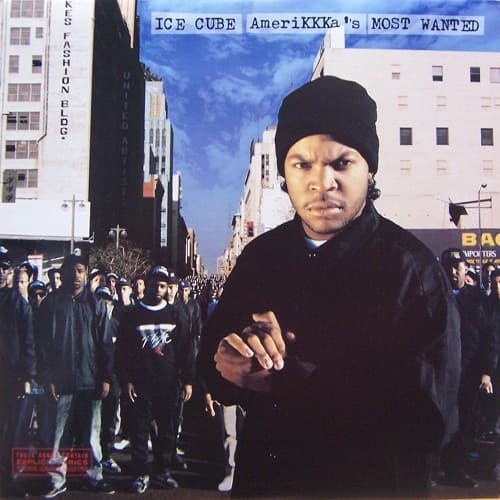
South Central Los Angeles appears as contested territory where everyday street presence becomes criminalized through institutional fear and media representation.
Visual Language
The raw photographic approach strips away album cover glamour, presenting unfiltered street documentation that demands America reckon with its creation.
Symbols
'AmeriKKKa' spelling
The triple-K spelling explicitly connects American institutions to the Klan's legacy of racial terror and systemic oppression.
FBI 'Most Wanted' framing
Cube reclaims the criminalization of young Black men, wearing the label as armor against a hostile justice system.
All-black clothing uniform
The crew's monochrome dress code signals solidarity, urban camouflage, and the funeral-ready reality of gang culture.
Where Sound Meets Image
The cover's documentary starkness mirrors the album's cinematic production approach, where Bomb Squad's dense East Coast soundscapes frame Cube's West Coast narratives. His central positioning with crew flanking reflects the album's structure—solo spotlight backed by collective strength. The FBI text treatment connects directly to tracks dissecting police harassment, while the street corner setting provides visual context for the vivid neighborhood storytelling throughout. The confrontational direct-address pose matches the album's refusal to explain or apologize for its perspective on American racism.
The 'AmeriKKKa' spelling became permanent hip-hop shorthand for systemic critique, adopted by everyone from Kendrick Lamar to activists. The FBI aesthetic influenced decades of hip-hop covers playing with criminal justice imagery, from Tupac's mugshots to contemporary trap artists. Most significantly, the cover established the template for politically conscious gangsta rap—street credibility weaponized as social commentary rather than mere posturing. Its refusal of glossy presentation helped legitimize raw documentary photography as valid album art approach.