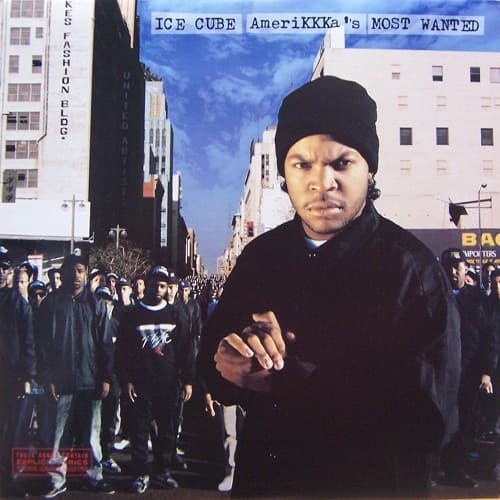
Ice Cube AmeriKKKa's Most Wanted — The Sound of a Man on Fire
Chuck D once described the sessions for this album as organized chaos — a West Coast kid letting East Coast producers strip his sound down to the studs and build it back harder. Ice Cube landed in New York with a duffel bag full of anger and a career to prove. N.W.A. had kicked him out over money disputes, and every major label exec was waiting to see if he could stand alone without Dre's beats propping him up.
The Bomb Squad answered that question in the first thirty seconds.
This was not the polished G-funk that would later define California rap. This was static and sirens and samples stacked so dense they felt claustrophobic. Cube brought the West Coast venom, the Bomb Squad brought the New York noise, and the collision produced the angriest solo debut hip-hop had ever heard. The album did not just establish Cube as a solo force — it redrew the map of what West Coast rap could sound like when it stopped chasing funk samples and started chasing blood.
When the Bomb Squad Moved West
The Bomb Squad had already revolutionized hip-hop production with Public Enemy, but this collaboration felt like a different experiment entirely. Hank Shocklee and Eric Sadler did not soften their approach for a Los Angeles rapper — they doubled down. The bass hits lower, the samples layer thicker, the air feels thinner. Cube's voice cuts through the chaos because it has no choice.
His delivery stays West Coast direct, but the beats force him to punch harder than he ever did with N.W.A. Every song sounds like it was recorded in a basement with the lights off and the door locked. The production philosophy here was maximum aggression — no space for melody, no room for hooks that might soften the blow. Even the funk samples get mangled beyond recognition.
Where Dre would let a bassline breathe, the Bomb Squad chokes it until it gasps.
Cube's lyrical focus stays locked on systemic racism, gang politics, and the industry that tried to silence him. His perspective sharpened after leaving N.W.A. — less party, more war reporting. He catalogs police violence, economic desperation, and Black male rage with the precision of someone who knows he has one album to prove himself. His vocal tone carries a controlled fury that never tips into shouting.
He sounds like a man who already knows he won the argument.
The album has flaws. A few tracks in the middle stretch feel redundant in their anger, and the album's relentless intensity makes it exhausting to sit through in one session. Some sequencing choices bury stronger moments behind weaker ones. But those complaints feel minor when measured against the album's ambition — this was a statement of independence, and it needed to hit this hard to work, didn't it?
Forty Minutes of Controlled Demolition
The album opens with controlled violence and never lets the tension drop. The first stretch establishes Cube as a target and a threat simultaneously — the industry wants him dead, the streets want him crowned. By the time the middle section arrives, the album has already made its case, but it keeps stacking evidence. The sequencing here occasionally stumbles — a few tracks in the back half could swap positions without losing momentum.
But the pacing never collapses. Even when the subject matter repeats, the production stays unpredictable enough to maintain forward motion. The closing stretch does not offer resolution or hope. It ends with defiance and a dare.
The album structure mirrors Cube's mindset — no compromises, no fade-outs, no safe landings. You finish the album feeling like you witnessed something that was not meant for casual consumption. This was not designed to soundtrack a summer. It was designed to document a moment when one rapper decided he would rather burn the industry down than let it bury him.
The Blueprint for Rage
This is Ice Cube's best album, and it is not particularly close. Everything he made after this either chased radio play or softened the edges. This one stands alone as the purest distillation of his talent — the writing, the politics, the unfiltered anger. It ranks among the five most important solo debuts in hip-hop history, and it remains the loudest proof that West Coast rap did not need funk samples to sound dangerous.
Fans of uncompromising political rap should start here. Listeners who prefer smoother production or more varied subject matter might struggle with the relentless intensity. But anyone who wants to understand how hip-hop sounded when a twenty-year-old decided to weaponize his voice should play this front to back.
The album has aged remarkably well. The Bomb Squad production still sounds abrasive and modern, and Cube's critiques of systemic racism feel more relevant now than they did in 1990. If anything, time has made this album more essential, not less.
Essential tracks to start with: The Nigga Ya Love to Hate, Endangered Species (Tales From the Darkside), The Bomb. If you love this, try The Predator for Cube's commercial peak or Death Certificate for his most controversial follow-up. For similar aggression, check Public Enemy's It Takes a Nation of Millions to Hold Us Back or Scarface's The Diary.
The album's long-term influence shaped every politically charged West Coast record that followed. Without this, there is no Rodney King response, no Bompton sound, no Kendrick Lamar writing about Compton like it was a war zone. Cube proved that Los Angeles rap did not need to sound sunny. Sometimes it just needed to sound true.
Track Listing
Better Off Dead
▲The album opens with a sample loop that sounds like a car alarm stuck in a tunnel. Cube enters with zero preamble, immediately cataloging the threats against him — the industry, the government, former groupmates. His flow stays measured even as the subject matter escalates. The Bomb Squad production here establishes the template: layered chaos, no melodic escape routes, bass that rattles the frame. Cube sounds like he recorded this verse in one take with his jaw clenched. The hook barely exists — just Cube repeating the title over a siren. This is not a song designed to ease you into the album. It is designed to let you know that nothing on this record will offer comfort. I heard this for the first time in a '88 Caprice on Crenshaw, summer of '91, and even then it sounded like something recorded in a different decade. The aggression has not dated. If anything, it feels more urgent now than it did then.
The Nigga Ya Love to Hate
▲This is the album's thesis statement. Cube catalogs every reason the industry, the media, and white America want him silenced, then dares them to try. The production here is slightly more structured than the opener — a bassline that actually repeats, a vocal sample that functions as a counter-melody. But the song still sounds like it was mixed in a basement during a blackout. Cube's writing sharpens here. Every verse contains at least three quotable lines, and his perspective shifts between defiance and dark humor. He sounds genuinely amused that people expect him to soften his message for radio play. The hook is one of the most memorable on the album — simple, direct, infinitely repeatable. This became Cube's signature song for a reason. It captured his entire persona in three minutes: unapologetic, intelligent, and fully aware that his honesty would cost him. The track holds up as one of the five best solo Cube songs ever recorded. It is the first track I recommend to anyone who wants to understand why he mattered beyond the movies.
AmeriKKKa's Most Wanted
▲The title track strips the production down to almost nothing — a skeletal drum pattern, a single sample chopped into fragments, and Cube's voice pushed so far forward it feels like he is rapping directly into your ear. The song functions as a courtroom address, with Cube laying out every charge America has filed against young Black men and flipping each one into an indictment of the system itself. His flow here is slower and more deliberate than on the previous tracks. He wants every word to land. The Bomb Squad gives him space to work, and he fills it with some of the most precise political writing on the album. No wasted bars, no filler lines. This is journalistic rap before that term existed. The song has no traditional hook, just a repeated vocal stab that sounds like a judge's gavel. It is one of the quieter moments on the record, but it might be the most cutting. The writing here influenced every West Coast political rapper who followed — from Paris to Kendrick.
What They Hittin' Foe?
●Cube shifts focus here to gang politics and dice games, cataloging a day in the neighborhood with the same attention to detail he brings to larger systemic critiques. The production loosens slightly — more funk influence, less industrial noise. The Bomb Squad still keeps the mix dense, but there is actual breathing room between elements. Cube's storytelling shines here. He paints scenes without over-explaining, trusting the listener to fill in context. His vocal delivery stays conversational, almost casual, which makes the violence in the lyrics land harder. The hook is minimal, just Cube repeating the title over a looped vocal sample. The track functions as a palate cleanser between the album's heavier political moments, but it never feels lightweight. Cube treats street-level drama with the same seriousness he brings to institutional racism. Solid album track, not a standout, but it earns its place in the sequencing.
You Can't Fade Me / JD's Gaffilin'
●This double-track experiment splits into two distinct sections. The first half is Cube at his most misogynistic, rapping about a woman trying to trap him with a pregnancy claim. The writing is sharp but deeply uncomfortable — Cube's perspective here reflects the worst of early-nineties hip-hop gender politics. The second half shifts to a story about his DJ getting hustled, and the tone lightens considerably. The production stays chaotic throughout, with the Bomb Squad layering samples so thick it is hard to identify individual elements. Cube's flow adapts to both narratives without losing momentum. The track works better as a showcase for his storytelling range than as a cohesive song. The sequencing decision to split it into two parts helps, but it still feels like two separate ideas that got stitched together in the studio. I skip the first half more often than not. The second half holds up better.
Once Upon a Time in the Projects
▲Cube drops into pure narrative mode here, telling a story about growing up in the projects with cinematic detail. The production pulls back to let the writing breathe — still dense, still aggressive, but with more dynamic range than most of the album. Hank Shocklee lets a piano sample sit in the mix long enough to establish mood before chopping it apart. Cube's vocal performance here is the most controlled on the record. He sounds like he is reading from a script he memorized years ago. Every detail lands with precision: the roaches, the police raids, the neighbors who disappeared. This is reportage disguised as a rap song. The hook barely exists, just Cube repeating the title in a deadpan monotone. The track builds tension without ever offering release. By the final verse, you feel the weight of the story without Cube needing to explain the moral. This is one of the album's best pure writing showcases, and it influenced every West Coast narrative rapper who followed. Kendrick's Compton storytelling starts here.
Turn Off the Radio
▲Cube aims directly at commercial radio and the industry gatekeepers who refused to play his music. The production here is lighter, almost playful by this album's standards — a funkier bassline, clearer samples, actual space in the mix. The Bomb Squad gives Cube room to breathe, and he uses it to deliver one of the album's most accessible tracks. His writing here balances humor and critique. He mocks radio censorship while simultaneously proving he can write hooks that would dominate airwaves if given the chance. The irony is intentional — this song about being too raw for radio is one of the most radio-friendly tracks on the album. The hook is catchy, the production is cleaner, and Cube's flow stays locked in the pocket. The track functions as a breather in the album's relentless first half, and the sequencing works perfectly here. You need this moment of relative levity before the album dives back into darkness. Solid track, still gets rotation.
Endangered Species (Tales From the Darkside)
▲This collaboration with Chuck D is the album's centerpiece. Two of hip-hop's most important voices trading verses about police violence, systemic racism, and Black male survival in America. The production here is peak Bomb Squad — chaotic, abrasive, relentless. Samples crash into each other, the bass punches holes in the mix, and the drums sound like they were recorded in a parking garage. Cube and Chuck D do not compete — they collaborate. Their flows complement each other, and their perspectives align perfectly. Cube brings the West Coast street-level view, Chuck brings the East Coast institutional critique, and the two approaches merge into one of the most powerful political rap songs ever recorded. The song has no traditional hook, just a repeated vocal sample that sounds like a warning siren. It is nearly five minutes long and feels like it ends too soon. This is the track that proves the Bomb Squad collaboration was not just a marketing gimmick — it was a genuine creative partnership. The song still sounds urgent thirty-five years later. If anything, it sounds more relevant now than it did in 1990. Essential listening for anyone who wants to understand political hip-hop.
A Gangsta's Fairytale
▲Cube flips nursery rhyme imagery into a story about gang violence and street survival. The concept is simple but effective — Little Red Riding Hood becomes a gang member, the Big Bad Wolf is a rival set. The production here is slightly more playful than most of the album, with the Bomb Squad sampling children's music and warping it into something sinister. Cube's writing walks the line between satire and horror. He treats the fairy tale structure seriously, never winking at the audience. The result is unsettling — a song that should be funny but lands as a genuine critique of how violence warps childhood in certain neighborhoods. The hook uses a distorted children's choir sample, and it is one of the most memorable moments on the album. The track works as both a storytelling showcase and a thematic statement about how gang culture consumes everything, even innocence. I played this for someone who grew up in Compton, and they said it was the most accurate depiction of their childhood they had ever heard in a rap song. That is how you know the concept worked.
I'm Only Out for One Thang
▼Cube returns to misogyny here, rapping about sex with the same bluntness he brings to political critique. The writing is technically proficient but thematically exhausting. The production stays aggressive, with the Bomb Squad layering funk samples under a relentless drum pattern. Cube's flow stays sharp, but the subject matter adds nothing to the album's larger themes. This is filler disguised as a banger. The hook is repetitive, the verses cover familiar ground, and the track feels like it exists because every rap album in 1990 needed at least one song about sexual conquest. It is not offensively bad, but it is skippable. The sequencing here hurts the album's momentum — coming right after A Gangsta's Fairytale, this track feels like a regression. I skip it most times through.
Get Off My Dick and Tell Yo Bitch to Come Here
▼Another misogynistic track, this one aimed at rival rappers and their women. Cube's writing here is crude even by early-nineties standards. The production is dense and chaotic, but it cannot save a song built on a concept that has aged terribly. The Bomb Squad tries to salvage it with aggressive drums and layered samples, but the track still feels like the album's weakest moment. Cube's flow stays technically strong, but the subject matter undermines any credibility he built with the political tracks. This is the kind of song that makes it hard to defend early-nineties hip-hop to skeptics. It is juvenile, mean-spirited, and adds nothing to the album's legacy. I wish this track did not exist. It is the only moment on the album where Cube sounds like he is trying to impress his friends instead of making art. Skip it.
The Drive‐By
▲Cube narrates a drive-by shooting from the perspective of the shooter, walking through every detail with journalistic precision. The production here is minimal by Bomb Squad standards — a simple drum loop, a haunting bassline, and Cube's voice pushed forward in the mix. The song functions as reportage, not glorification. Cube's tone stays detached, almost clinical, which makes the violence land harder. He does not editorialize or moralize — he just describes the mechanics of the act and the aftermath. The writing is uncomfortably good. Every detail rings true, from the adrenaline before the shooting to the paranoia afterward. The song has no hook, just Cube narrating over a loop that never changes. It is one of the most unsettling tracks on the album, and it is supposed to be. This is not a song you enjoy. It is a song you respect for its honesty. The track influenced every gangsta rap narrative that followed — from Scarface to Kendrick, this is the blueprint for how to write about violence without romanticizing it.
Rollin' Wit The Lench Mob
●Cube introduces his crew here, giving each member a verse and letting the Lench Mob establish their own identity. The production stays aggressive, with the Bomb Squad keeping the tempo high and the mix dense. Cube's verse is the strongest, but his crew holds their own. The track functions as both a posse cut and a declaration of independence — Cube proving he has his own team now that N.W.A. is behind him. The energy stays high throughout, and the chemistry between the rappers feels genuine. The hook is simple but effective, just the crew chanting the title over a looped vocal sample. The track works as a late-album energy boost, reminding the listener that Cube is not alone in his fight. Solid posse cut, not a standout, but it earns its place in the sequencing.
Who's the Mack?
▲Cube returns to the tension between street credibility and commercial success, questioning who really controls the narrative in hip-hop. The production here is funkier than most of the album, with the Bomb Squad letting a bassline groove instead of chopping it into fragments. Cube's writing sharpens as the album nears its end. He sounds more reflective here, less purely aggressive. The hook is one of the catchiest on the album, and the track could have been a single in a different timeline. The sequencing here works well — after the chaos of the previous tracks, this moment of relative accessibility feels earned. Cube proves he can still write a banger without compromising his message. Solid late-album track that holds up in rotation.
It's a Man's World
▲Yo-Yo takes the mic here for the album's only female perspective, flipping the title and calling out the misogyny that dominates the rest of the record. The production stays Bomb Squad aggressive, and Yo-Yo matches Cube's intensity bar for bar. Her writing is sharp and unapologetic, and she does not soften her critique to fit the album's tone. The track works as a necessary corrective to the gender politics that weigh down several other songs. Yo-Yo's presence here proves that Cube was at least aware of the contradictions in his own writing, even if he did not fully resolve them. The sequencing decision to place this near the end of the album feels intentional — a moment of pushback before the final statement. The track holds up as one of the best early examples of a female rapper holding her own on a male-dominated album. Yo-Yo deserved more shine than she got.
The Bomb
▲The album closes with its most musically adventurous track. The Bomb Squad layers jazz samples, funk loops, and chaotic drums into a production that feels like controlled demolition. Cube's flow adapts to the shifting tempo, and his writing stays locked on the album's central themes — systemic oppression, Black male rage, survival in America. The song builds tension without ever offering resolution. By the final verse, Cube sounds exhausted but defiant, and the production mirrors that emotional arc. The track ends abruptly, no fade-out, no final statement. It just stops, leaving the listener in silence. The sequencing decision to end here is perfect — the album does not offer hope or closure because Cube is not interested in providing either. This is a document of anger, and anger does not resolve neatly. The track stands as one of the most ambitious closers in hip-hop history, and it still sounds like nothing else thirty-five years later. I have listened to this album hundreds of times, and The Bomb still catches me off guard every time it ends. That abrupt cut to silence hits harder than any fade-out could.